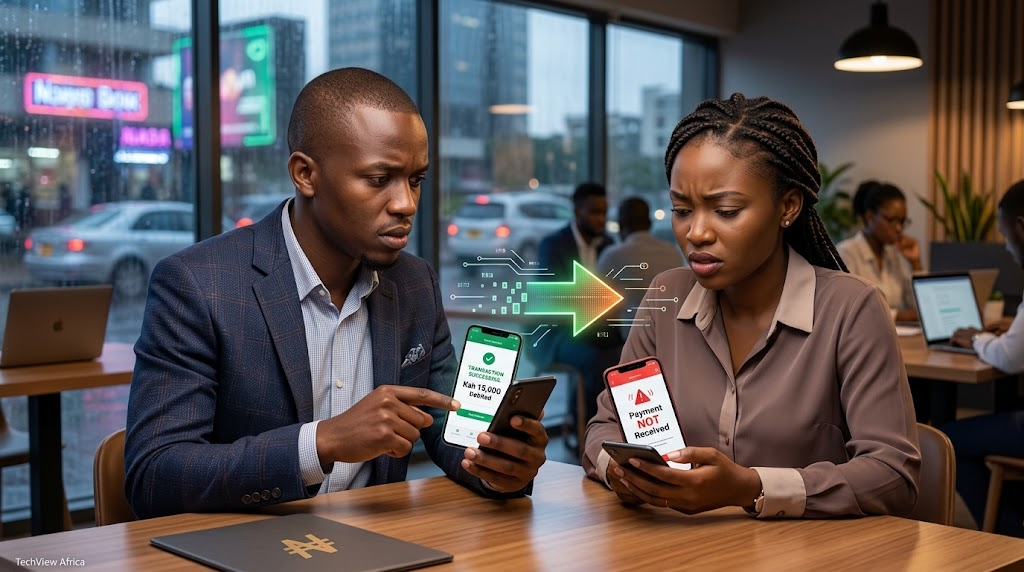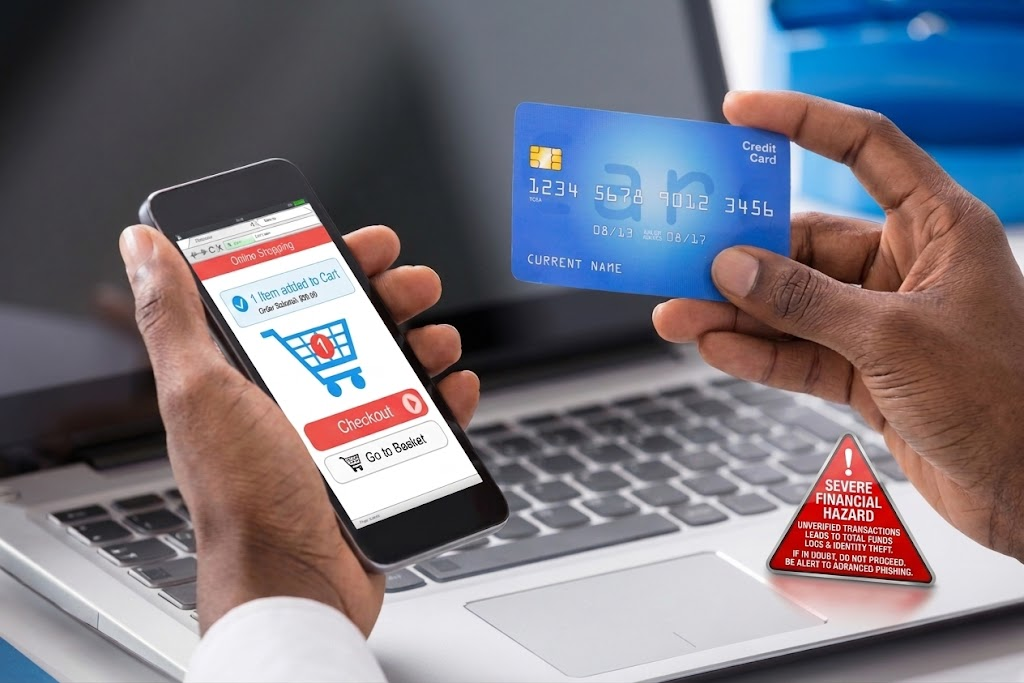

A transfer receipt, debit alert or “successful” screen proves very little to the person receiving the money. Before releasing goods or providing a service, confirm the payment through your own bank account or trusted payment channel.
Fake Bank Alert or Real Payment? Here’s How to Verify It Properly
A customer shows you a “successful transfer” receipt and you receive what looks like a bank alert. Before handing over the goods, make sure the money actually reached your account. Digital transfers have made payments faster and more convenient across Africa, but they have also created an opportunity for a simple form of fraud, the fake bank alert.
A buyer may show a convincing transfer receipt, present a debit notification on their phone or even cause you to receive a message that looks similar to a genuine bank alert.
But none of those things, by themselves, proves that your account has actually been credited. For businesses, online sellers, ride-hailing drivers and anyone accepting transfers, the safest rule is simple: Verify the money from your own account before releasing anything.
What Is a Fake Bank Alert? A fake bank alert is a fraudulent notification intended to make someone believe that a payment has been completed when the recipient has not actually received the funds. Scammers may use manipulated screenshots, imitation SMS messages, fake transfer receipts or other forms of social engineering.
The Central Bank of Nigeria warns that social-engineering scams rely on manipulating victims through trust, urgency or deception and recommends independently verifying suspicious financial activity. The most important mistake to avoid is treating the customer's evidence as your confirmation.
1. Check Your Actual Account Balance This should always be your first step. Open your bank's official mobile application, internet-banking platform, USSD service or another trusted channel and confirm that the expected amount is reflected in your account. Do not rely only on the SMS alert. Messages can be delayed and a message appearing on your phone should not be treated as stronger evidence than the account itself. If you normally had ₦150,000 and someone claims to have transferred ₦50,000, verify that the balance and transaction history actually reflect the payment. Your own bank record matters more than the sender's screenshot.
2. Never Accept a Transfer Screenshot as Proof of Payment A screenshot can look extremely convincing. It may contain: - * The bank's logo - * Your name - * Your account number - * The correct amount - * A transaction reference - * A “Successful” message - * The correct date and time But digital images can be edited. Even a genuine-looking transfer screen proves only what appears on the sender's device. It does not independently establish that funds have reached your account. NIBSS describes its Instant Payment system as a real-time electronic funds-transfer platform and provides transaction-status mechanisms precisely because the actual status of a transfer matters.
3. Look at Your Transaction History—not Just Notifications Suppose you receive an SMS saying: Credit Alert: ₦250,000 Do not stop there. Open your account and locate the corresponding transaction. Check: - Amount: Is it exactly what you expected? - Time: Does it match the customer's payment? - Sender details: Do they make sense? - Available balance: Has your usable balance actually increased? This also protects you from confusion when several customers are making similar payments at the same time.
4. Do Not Be Pressured by “I Have Been Debited” A common situation goes like this: “I've already been debited. The problem is your bank. Give me the goods, the money will enter later.” The sender may genuinely have been debited. Interbank payment problems can happen. But that does not mean a merchant should automatically assume the transaction has reached the beneficiary.
NIBSS Instant Payment includes a Transaction Status Query, which allows participating financial institutions to check the status of an earlier transfer. If there is genuinely a payment problem, it should be resolved through the banks or payment providers. For a significant transaction, it is safer to wait for confirmation than to release an expensive item based solely on the sender's claim.
5. Nigerian Users Can Check Certain NIP Transactions NIBSS currently provides an NIP Transaction Tracker through `5655#`. According to NIBSS, the service allows a sender to check the status of qualifying NIP transfers made within the previous 48 hours using the phone number linked to the sender's account. The service can indicate whether a transaction was successful, unsuccessful or has yet to be processed. This can be useful when a legitimate customer says: “My account was debited, but you haven't received the money.” However, notice the important distinction, the tool helps investigate the transaction. It should not replace confirmation on the beneficiary's own account.
6. Beware of Urgency and Distraction Fake alert scams often work best when the seller is busy. Imagine a crowded shop. Several customers are waiting. Someone transfers ₦400,000 for a smartphone and immediately pushes their screen toward you: “See? Successful. I need to leave now.” That urgency is precisely when you should slow down enough to verify. The CBN lists urgency and manipulation among common features of social engineering fraud and advises consumers to verify suspicious requests rather than relying on appearances. A genuine customer may be impatient. That does not change your payment procedure.
7. Keep Business Payment Verification Consistent Businesses can reduce fraud by creating one simple rule for every customer: No confirmed credit, no release of goods. Apply it equally whether the buyer is a stranger, regular customer or someone claiming to be in a hurry. For businesses processing many transfers, separate payment confirmation from sales conversations where possible.
Train employees not to approve transactions simply because: * A customer shows a receipt * A phone receives an SMS * Someone says their account was debited * The buyer appears trustworthy * The buyer threatens to cancel the purchase
A consistent procedure removes much of the emotional pressure scammers depend on. What If the Sender Was Debited but You Were Not Credited? Not every missing payment is fraud. A genuine electronic transfer can occasionally require investigation.
NIBSS states that banks can use its Transaction Status Query to determine the status of previously initiated NIP payments. If the sender has genuinely been debited: 1. Keep the transaction reference and receipt. 2. Ask the sender to confirm the transaction through their bank or the appropriate NIBSS status service. 3. Check your own account through official banking channels. 4. Contact your bank if the transfer is confirmed successful but your account remains uncredited.
If fraud is suspected, the CBN advises customers to contact their financial institution promptly and report suspected scams to the appropriate authorities.
TechView Africa's 30-Second Payment Check
Before handing over goods, ask: - Is the money visible in my own account? - Does my available balance reflect it? - Can I see the transaction in my banking history? - Am I relying only on the customer's phone or screenshot? - Is the customer pressuring me to ignore my normal verification process?
If you cannot independently confirm the payment, do not treat a screenshot as cash. The safest business rule remains remarkably simple: See the money in your account, not merely on someone else's screen.
Use official channels to verify this information. Never share a password, OTP, PIN or full card details with someone who contacts you unexpectedly.
Frequently asked questions
Is an SMS from my bank proof of payment?
No. Notifications can be delayed, spoofed or incomplete. Check the official account record.
What if the customer shows a successful screenshot?
Treat it as a lead, not proof. Confirm the payment in your own official account before releasing goods.
Should I send money back if someone says they overpaid?
Confirm the original transaction with your bank first. Do not act on a screenshot or pressure call.
Central Bank of Nigeria (CBN) & Nigeria Inter-Bank Settlement System (NIBSS)
Follow TechView Africa on WhatsApp
Get TechView Africa updates on WhatsApp. Follow our channel for practical technology news, product guides and digital trends from Nigeria and across Africa.