

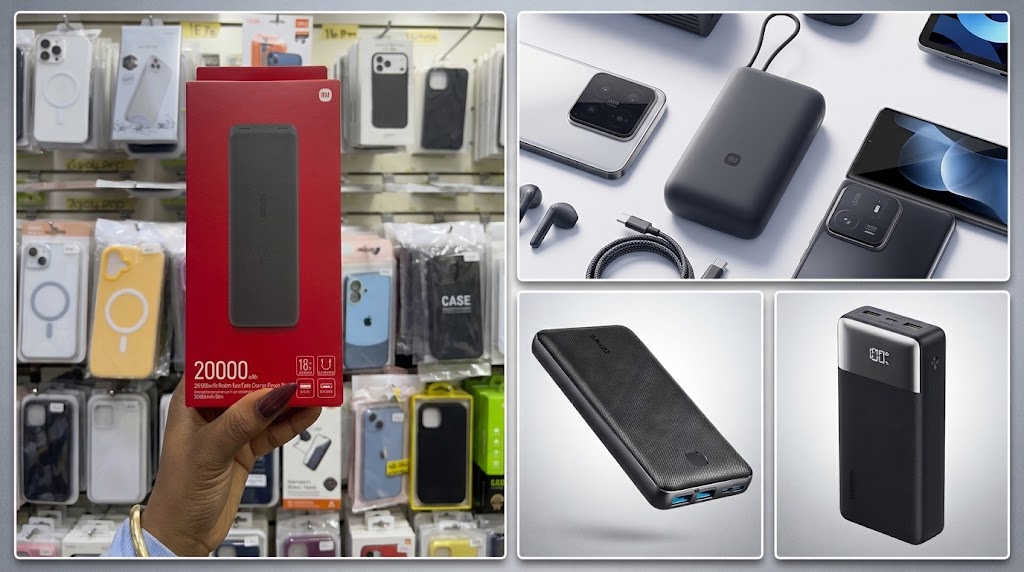
Do not compare power banks using mAh alone. Check watt-hours, rated output capacity, charging wattage and credible independent measurements.
20,000mAh on the Box, Far Less at the USB Port: We Checked Popular Power Banks Sold in Africa
A power bank labelled 20,000mAh does not necessarily deliver 20,000mAh through its USB ports. Our comparison of published specifications from four popular power-bank brands found that cell capacity, rated output and independently measured usable capacity are different figures.
For Nigerian buyers, understanding that difference can prevent unrealistic expectations about how many times a power bank will charge a phone.
How TechView Africa conducted this analysis: We independently examined manufacturer specifications for four 20,000mAh power banks from Redmi, Xiaomi, Anker and Oraimo, comparing advertised battery capacities, rated USB outputs and energy specifications. For Redmi and Xiaomi, we converted the published output ratings into watt-hours and calculated how much of each product's advertised battery energy its rated output represents. We also examined independent laboratory findings from TechGearLab to provide broader context.
Our analysis identifies important differences in how manufacturers present battery capacity and what those figures mean for Nigerian consumers. Sources were reviewed on 16 October 2026. Our calculations are distinguished from manufacturer ratings and third-party measurements; no physical discharge testing was conducted by TechView Africa.
Why 20,000mAh does not mean 20,000mAh at USB output
Most lithium-ion power banks advertise battery-cell capacity at a nominal voltage of around 3.7 volts. However, charging a smartphone requires the power bank to convert that energy to a different output voltage, commonly 5V or higher.
That conversion uses energy. A typical 20,000mAh battery rated at 3.7V stores approximately 74 watt-hours (Wh): 20Ah × 3.7V = 74Wh
At a theoretical 5V output with no conversion losses, that energy would equal 14,800mAh. Real power banks deliver less because their electronics are not perfectly efficient.
This is why manufacturers often publish two different numbers: the battery's internal capacity and its rated output capacity at a specified voltage.
What four popular power-bank specifications reveal
The table below distinguishes figures published by manufacturers from calculations and independent measurements.
| Power bank | Manufacturer-published cell capacity | Rated USB output or evidence status |
|---|---|---|
| Redmi Fast Charge 20000 | 20,000mAh / 74Wh | 12,000mAh at 5.1V, according to Xiaomi's official specifications. |
| Xiaomi Power Bank 20000 (Integrated Cable) | Two 10,000mAh cells / 74Wh equivalent | 13,000mAh at 5V, according to Xiaomi's product documentation. |
| Anker PowerCore Essential 20000 | 20,000mAh nominal capacity | A model-specific rated 5V usable-capacity figure was not established in this comparison. Anker's separate educational calculation must not be treated as this model's measured output. Anker's power-bank rated capacity. |
| Oraimo PowerNova L21 | 20,000mAh / 77Wh | No separate rated 5V usable-capacity figure identified on Oraimo's Nigerian product page. |
The Redmi and Xiaomi figures are particularly useful because they show exactly what their manufacturers claim at the USB-output voltage. For readers comparing Xiaomi's broader range of devices, our Redmi Phone Prices in Nigeria (2026) guide examines current smartphone models, battery specifications and Nigerian retailer prices. It provides useful context when choosing a power bank to accompany a Redmi phone.
For example, Redmi's specified 12,000mAh at 5.1V is not evidence that the missing 8,000mAh has disappeared. The 20,000mAh and 12,000mAh ratings describe charge capacity at different voltages, with conversion losses also affecting the usable output. The two numbers should not be subtracted as though they were measured under identical electrical conditions.
Anker's calculation explains the difference
Anker offers a useful explanation in its official support documentation. For a hypothetical 20,000mAh power bank storing 74Wh, the company assumes an illustrative conversion efficiency of 82%. That gives approximately 60.7Wh at the output, equivalent to 12,140mAh at 5V.
This is a manufacturer's illustrative calculation, not an independent test result or a verified specification for the Anker PowerCore Essential 20000.
The same 20,000mAh label can hide different specifications
Oraimo's PowerNova L21 illustrates another important distinction. Its Nigerian product documentation specifies 20,000mAh / 77Wh and a maximum charging output of 30W.
Those numbers measure different things. Watt-hours describe stored energy, while watts describe the rate at which power can be delivered.
A 30W power bank is not necessarily capable of charging more devices overall than a 22.5W model. Charging speed depends on the receiving device, supported charging protocols, temperature and other conditions.
For consumers comparing products in Nigeria, rated output capacity, watt-hours and charging power can be more informative together than the headline mAh number alone.
What independent laboratory testing found
Manufacturer specifications are one source of evidence. Independent discharge testing provides another.
In its Best Power Banks comparison, updated on 22 November 2024, TechGearLab reported results from nine power banks evaluated using instruments including a digital multimeter and simulated electrical loads.
Its published table shows measured usable capacity ranging from 68.92% to 83.57% of the manufacturers' claimed mAh figures across those nine tested products. That is approximately 69–84%, rounded.
The results support an important general point: real-world usable capacity can be substantially lower than the figure advertised on a power bank, although the exact result varies by model and testing conditions.
What Nigerian buyers should check before purchasing
Authenticity also matters when buying charging accessories from independent sellers. Our guide to nine checks before buying on Facebook Marketplace in Nigeria explains how to examine a seller, inspect electronics and verify payment before completing a purchase.
When comparing power banks, look beyond the largest capacity figure printed on the packaging.
- Watt-hours (Wh): A more useful measure when comparing the total stored energy of batteries.
- Rated output capacity: Look for a figure expressed in mAh at a specified voltage, such as 5V.
- Maximum output power: Check whether the advertised charging speed is compatible with your phone.
- Independent test results: Where available, look for clearly documented discharge measurements of the exact model.
- Authenticity and warranty: Check the model number, manufacturer documentation and seller's warranty rather than relying only on marketplace descriptions.
A buyer purchasing a power bank for regular commuting, university use, travel or periods without electricity should also consider how many devices it needs to support and whether it can recharge quickly when electricity is available.
Our Recommendation
Do not assume that a 20,000mAh power bank will deliver 20,000mAh directly to your phone. The manufacturer specifications examined here show why that expectation is misleading. Redmi publishes a rated output of 12,000mAh at 5.1V, while Xiaomi publishes 13,000mAh at 5V for its integrated-cable model. That difference largely reflects how capacity is expressed at different voltages and the electrical losses involved in charging.
For Nigerian buyers, the better purchasing decision is to compare watt-hours, rated USB output, charging speed, independently tested performance and warranty, rather than treating the biggest mAh figure as an automatic guarantee of more phone charges.
Sources & Verification
Xiaomi — Redmi Fast Charge Power Bank 20000 official specifications
Xiaomi — Power Bank 20000 (Integrated Cable)
Anker Support — Why Is the Rated Capacity of Power Banks Lower Than Expected?
Frequently asked questions
Why is a 20,000mAh power bank rated around 12,000–13,000mAh at 5V?
Because the internal cells are measured at a lower voltage and some energy is lost converting that voltage for USB output.
Is Wh better than mAh for comparing power banks?
Usually, yes. Watt-hours make it easier to compare stored energy when voltages differ.
Will a 20,000mAh power bank charge a 5,000mAh phone four times?
Usually not four complete times because both the power bank and phone lose some energy during charging.
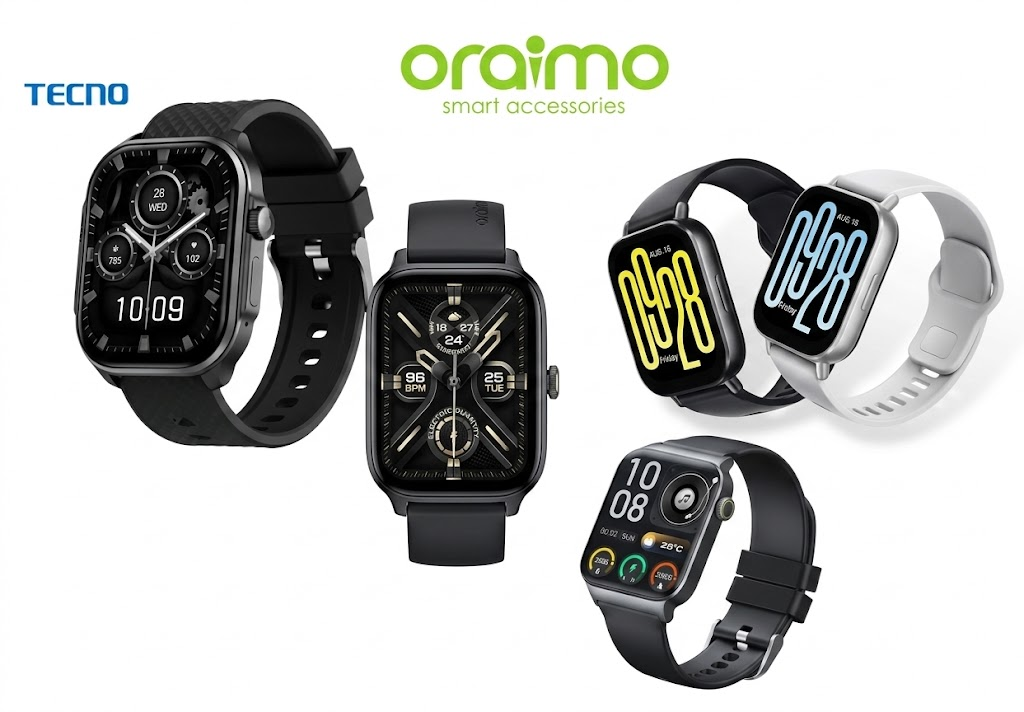
Best Affordable Smartwatches for Notifications and Basic Fitness Tracking

Best Affordable Earbuds for Clear Calls in Noisy Places
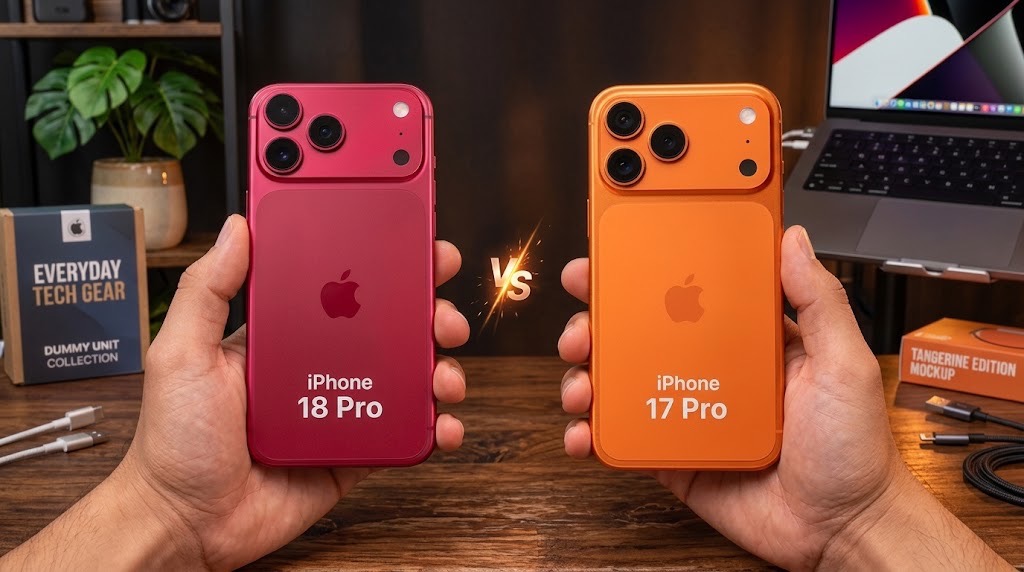
iPhone 18 Pro vs iPhone 17 Pro: What Changed, and Is It Worth Upgrading?

iPhone Duo vs iPhone 18 Pro Max: Foldable Screen or Apple’s Best Conventional iPhone?
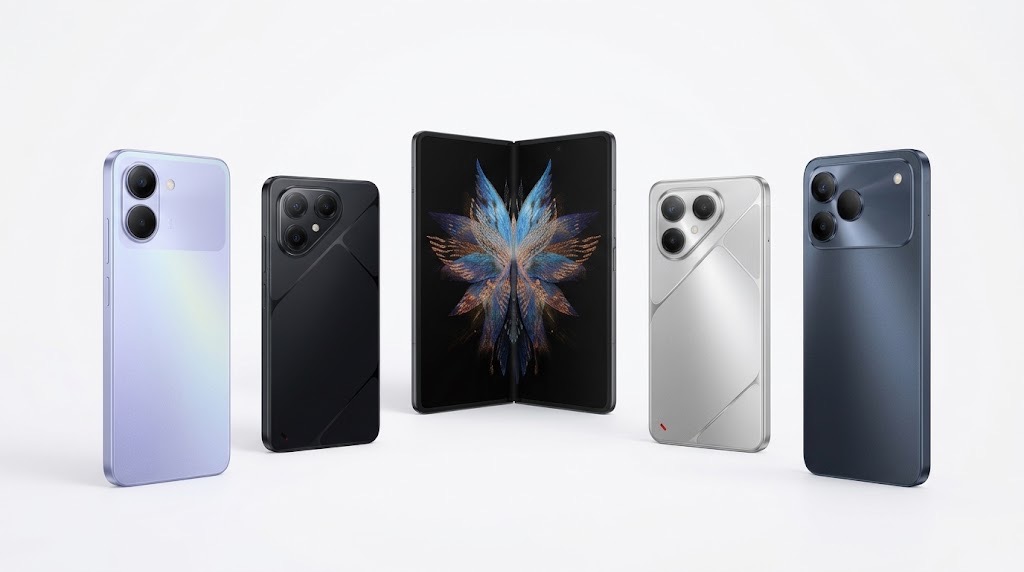
Tecno Phone Prices in Nigeria (2026): What Current Models Actually Cost
Meta VR Glasses vs Apple Vision Pro: Meta Moved the Computer Off Your Face
Redmi Phone Prices in Nigeria (2026): Current Models and What They Cost
Follow TechView Africa on WhatsApp
Get TechView Africa updates on WhatsApp. Follow our channel for practical technology news, product guides and digital trends from Nigeria and across Africa.
Leave a comment
Comments cannot be edited or deleted after posting. Please review your comment before submitting.
No comments yet. Start the conversation.