

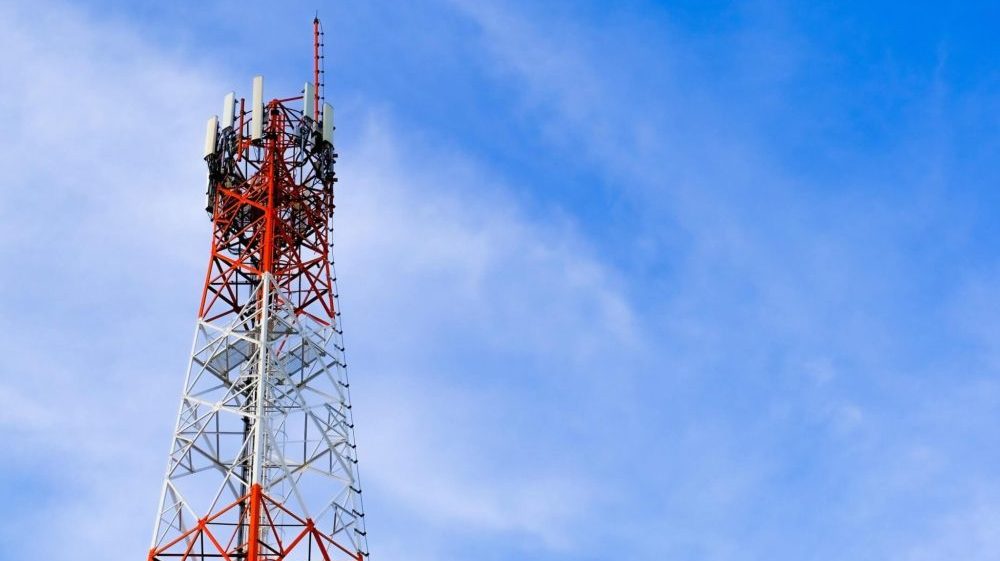
As extreme weather puts Africa’s mobile networks under pressure, operators must show how their climate-resilience measures protect telecom infrastructure and keep services running.
Climate risks could make keeping Africa’s mobile networks connected more expensive. But company disclosures show that the costs are not limited to repairing damaged towers. They include cooling investment, equipment impairment, insurance claims, backup power and the expense of restoring service.
MTN Nigeria’s 2025 audited financial statements provide a detailed breakdown. In its sustainability-related disclosures, the company records ₦81.0 million in property-and-equipment impairment associated with equipment damage from thunderstorms and flooding. It separately reports ₦573 million in insurance recovery for flood-related incidents. The same table links ₦2.2 billion capitalised under network infrastructure to high-efficiency cooling units deployed at critical sites, and records ₦352.6 million in network-maintenance savings from efficient cooling units and inverter solutions. MTN Nigeria’s 2025 audited financial statements provide the underlying figures.
These are different accounting entries, not figures to add together or offset. The impairment is not a complete estimate of flood damage, while an insurance recovery is not the total cost of the incident. But together they show why climate risks to telecom infrastructure in Africa are becoming an operational and financial issue, not simply a future engineering concern. The climate change impact on mobile networks extends beyond tower structures: flood risk to fibre-optic cables and supporting power or transport links can disrupt service even when a tower remains standing, while extreme heat increases cooling demands.
Climate Risks to Telecom Infrastructure in Africa Are Not Uniform
Africa-focused research has already mapped the physical threat. A PROPARCO study conducted by AXA Climate assessed more than 10,000 telecommunications assets and 15,000 kilometres of cable networks across nine African countries and territories. It examined mobile antennas, data centres, cable networks and submarine-cable landing stations, identifying exposure to extreme heat, floods, cyclones, wildfires and landslides. Nigeria was not among the study locations, so its findings should not be presented as a Nigeria-specific risk assessment.
The more useful question for operators is how those broad hazards translate into individual network decisions. Airtel Africa’s 2026 climate disclosures, for example, distinguish between markets: they identify tropical storms and cyclones as more localised risks in Madagascar and Malawi, while rising temperatures and cooling costs are more significant in arid markets including Chad, Niger and parts of northern Nigeria. Airtel also acknowledges that a significant number of its infrastructure sites are owned by tower companies and leased to operators. That matters because responsibility for site-level adaptation can be shared across companies.
A climate risk assessment for telecom infrastructure is a starting point, not evidence that vulnerable sites have been upgraded. Airtel’s country-specific modelling shows that the risk is not identical across its footprint; it does not, by itself, establish how many sites have been physically protected or how well they performed during an extreme-weather event.
What Operator Reports Reveal About Mobile Network Resilience in Africa
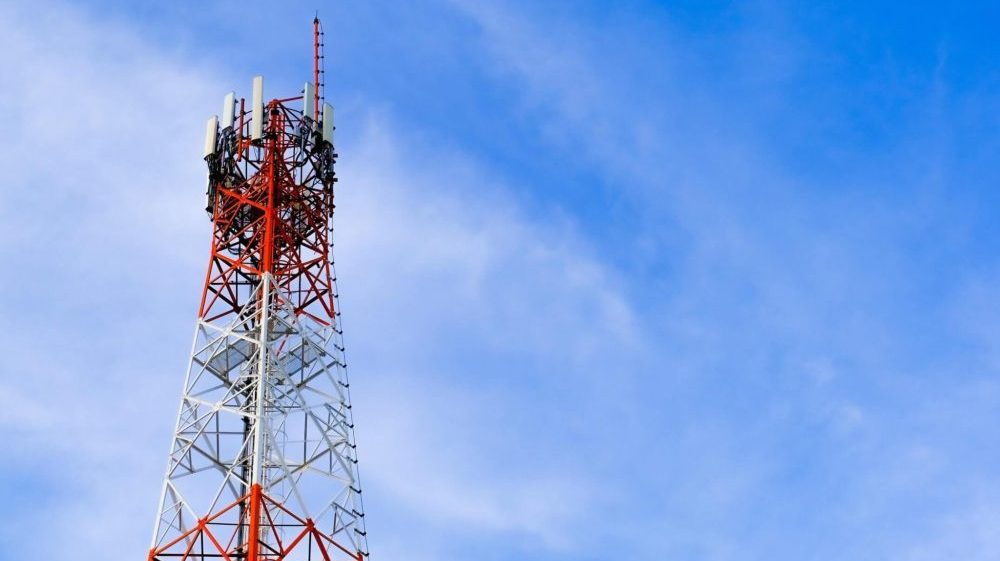
MTN Nigeria’s report identifies heat stress in northern states, Lagos and Abuja, and flooding exposure in coastal locations including Lagos, Port Harcourt and Calabar. It lists high-efficiency cooling and site-level assessments as responses to heat, and elevated equipment platforms, drainage improvements and insurance as responses to flooding. The disclosure does not provide a site-by-site count of completed flood upgrades, so the listed measures should not be mistaken for proof that every exposed site has been protected.
IHS Towers provides a more engineering-specific account in its 2025 Sustainability Report. For Nigeria, it says tower and foundation designs take account of historical local wind speeds; historical flood points inform where power systems and other infrastructure are installed; tower resilience is checked during annual inspections and before additional loads are added; and sites are elevated where necessary to reduce flood risk. This describes concrete engineering and inspection practices. However, the published account does not quantify how many Nigerian sites have been raised, how many inspections identified defects or how much these measures reduced outages.
Vodacom South Africa’s June 2025 climate-related financial analysis provides a different kind of evidence: actual flood-related claims. It lists three events: flooding in KwaZulu-Natal on 12 April 2022 and two events on 3 June and 6 July 2024, with insurance claims of approximately R22.4 million, R11.4 million and R19.7 million respectively. The amounts include property damage, additional costs of working and, in two cases, lost revenue. Vodacom says extra restoration costs included helicopter deployment for backup power and infrastructure repairs. It also says its mast “ring” configurations allow neighbouring sites to carry traffic when a site is affected.
Those are South African disclosures, not an Africa-wide cost estimate. They also represent insurance claims, not necessarily the final amount borne by Vodacom. The company says its insurance excess is capped at R7.5 million per event and considers flood risk less material financially because of its insurance coverage. The distinction is important: insurance can transfer part of the financial risk, but it does not prevent outages or remove the need to restore damaged infrastructure.
Together, these disclosures reveal why telecom network resilience is difficult to compare. MTN reports financial statement impacts and cooling investment; Airtel reports geographically differentiated exposure; IHS describes tower-level design and inspections; Vodacom records claims, restoration costs and a network-continuity measure. Across these four sets of disclosures, we found no common measure showing what proportion of climate-exposed sites remain connected during an event or how quickly mobile network service is restored.
Telecom Network Resilience in Nigeria: What MTN and the NCC Disclose
Nigeria’s regulatory framework goes beyond a general expectation that operators should prepare for emergencies. The Nigerian Communications Commission says its Guidelines on Disaster Recovery, 2023 are operative and that every licensee must prepare and submit a Disaster Recovery Plan.
The Guidelines also require providers to schedule comprehensive disaster-recovery tests at least twice a year, undertake risk and business-impact analysis at least every two years or after a critical business change, and review the plan annually. They include a provision for deployable mobile phone systems or portable base stations to be operational in strategic areas within eight hours of a request in affected major cities and within 12 hours in rural areas.
Those timeframes apply to the deployment of portable systems in a disaster; they are not a guarantee that every damaged base station or all services across an affected area will be restored within eight or 12 hours. Nor does the existence of the Guidelines prove that individual operators have passed their exercises or met the requirements. Publicly comparable results would be needed to assess that.
The stakes are particularly high in Nigeria, where mobile connections far outnumber fixed-fibre subscriptions. As mobile data use across Africa continues to grow, network outages can disrupt more than calls, affecting payments, business operations, messaging and access to online services.
Our Recommendation: Why Climate-Resilient Telecom Infrastructure Needs Measurable Results
Operators and tower companies should publish a small set of comparable, site-based measures: the number and proportion of sites exposed to major hazards; how many high-risk sites have been upgraded; the backup-power and cooling capability available under stated operating conditions; and the availability of alternative fibre or microwave routes.
After a major weather event, disclosures should identify affected sites, outage duration, customers or areas affected, time to restore service, repair and response costs, revenue impacts and insurance recoveries. Companies should also report the outcomes of disaster-recovery exercises not only that tests occurred and clarify which measures are the responsibility of the operator and which belong to the tower company.
That would let customers, regulators, investors and public authorities distinguish climate-risk plans from completed protection and tested continuity. The evidence already shows that storms, floods and heat have financial and operational consequences for telecom businesses. Building climate-resilient telecom infrastructure in Africa therefore requires more than announcing investment; it requires showing where protection has been installed and how it performs when extreme weather strikes.
Sources & Verification
GSMA research and industry findings — coverage by The Register
AXA Climate — Climate Risks and Telecom Infrastructure in Africa
Frequently asked questions
1. How does climate change affect mobile networks in Africa?
Flooding, extreme heat, storms and other severe weather can damage telecom infrastructure, disrupt power supplies, increase cooling costs and interrupt mobile services.
2. Which climate risks pose the greatest threat to telecom infrastructure in Nigeria?
Flooding and extreme heat are significant concerns. Floods can damage network equipment and supporting infrastructure, while high temperatures increase cooling requirements at mobile sites.
3. What are telecom operators doing to protect their networks from climate risks?
Measures disclosed by operators include improved site drainage, elevated equipment platforms, efficient cooling systems, backup power, stronger tower designs and flood-risk assessments. However, disclosures do not always show how many vulnerable sites have been upgraded or how effective the measures are.
4. What do Nigeria's NCC disaster recovery guidelines require telecom operators to do?
The NCC's 2023 Guidelines on Disaster Recovery require licensees to prepare and submit disaster recovery plans, conduct regular testing and review their plans. They also specify deployment timelines for portable mobile systems or base stations: within eight hours in major cities and no more than 12 hours in rural areas upon request.

Starlink Wants to Become a Mobile Network. What Could That Mean for Africa?
Nigeria Has Licensed STN for Mobile and Fixed Telecom Services: What That Actually Means
NCC Network Compensation: Are Nigerian Telcos Actually Paying Subscribers?

Why Does Your Mobile Data Finish So Fast

Nigeria Licensed Dozens of New Mobile Networks — So Why Haven’t Most Consumers Seen Them?

MTN FlyX vs 5G Router Unlimited: What “Unlimited” Really Means
Nigeria’s Project BRIDGE Could Give Chad a New Route to Global Connectivity
Follow TechView Africa on WhatsApp
Get TechView Africa updates on WhatsApp. Follow our channel for practical technology news, product guides and digital trends from Nigeria and across Africa.
Leave a comment
Comments cannot be edited or deleted after posting. Please review your comment before submitting.
No comments yet. Start the conversation.