

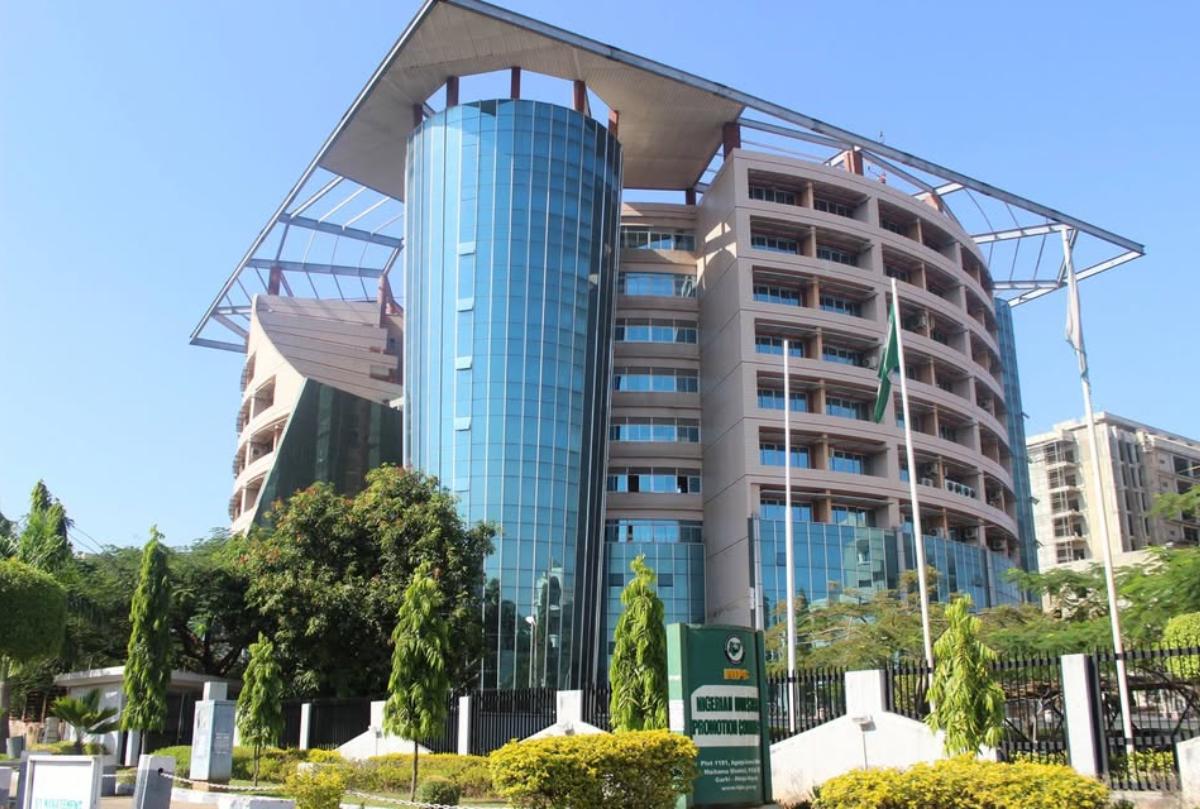
The NCC says compensation was offered to more than 75 million subscribers affected by poor network service, but publicly available records do not independently confirm how many received the correct airtime credits. TechView Africa’s investigation reveals a critical transparency gap and the need for verifiable operator-level payment records to establish whether all eligible subscribers were compensated.
NCC Compensation Nigeria: Can Telco Payouts Be Verified?
The NCC reports that compensation was offered to more than 75 million affected subscribers. However, the publicly available regulatory records do not establish how many eligible lines actually received the correct airtime credit.
Nigeria's telecom regulator says compensation was offered to more than 75 million affected subscribers under its network-quality compensation programme. But can Nigerians independently establish how many eligible customers actually received their airtime? That question remains unresolved.
TechView Africa's examination of the Nigerian Communications Commission's public records identifies a significant accountability gap: the regulator publishes compensation eligibility information and reports substantial implementation, but the available documents do not provide a complete breakdown of eligible subscribers, successful credits and airtime delivered.
This does not establish that operators failed to compensate customers. Instead, it reveals the difference between a regulatory compensation decision and independently verifiable payment.
What the NCC's 75-million compensation claim means
Following its 109th Board Meeting on 25 May 2026, the NCC reported that implementation of the compensation mechanism had resulted in airtime compensation being “offered to over 75 million affected subscribers”.
The communiqué also referred to operators reporting full compliance. However, the Commission said it was continuing to independently validate those claims and establish whether all eligible subscribers received their entitlements. The distinction is crucial, a regulatory statement that compensation was offered is not the same as documentary proof that every affected account was successfully credited.
The NCC's official documents repository contains the communiqué from the May meeting. What the statement does not provide is an operator-by-operator breakdown of how many subscribers qualified, the airtime value ordered or the number of successful transactions. Without those figures, the public cannot calculate a verified compensation-completion rate.
How Nigeria's network compensation works
The NCC compensation framework, which took effect in April 2026, requires qualifying mobile operators to compensate subscribers affected by poor network performance. The mechanism also covers qualifying service problems dating from November 2025. Compensation is determined by regulatory Quality of Service (QoS) measurements rather than an individual's general experience of weak signals.
A subscriber may qualify when their operator fails the applicable performance standards in an affected Local Government Area (LGA) and their line records at least one billed outgoing call, SMS or data session during the assessment period.
Importantly, subscribers do not have to apply, operators are expected to identify eligible lines and provide compensation automatically after the NCC completes its assessment and issues the relevant direction.
The compensation takes the form of unrestricted airtime that can be used for calls, USSD sessions and data subscriptions.
According to the NCC, operators must also send an SMS identifying the amount credited and explaining its purpose. The amount may vary according to billed usage and the severity of the operator's performance failure. Consequently, two customers using the same network in the same location will not necessarily receive identical credits.
What the NCC's eligible-LGA list reveals
One important transparency measure is the NCC's public list of LGAs eligible for compensation. The list identifies four essential fields: state, LGA, mobile network operator and assessment month. This is more useful than a general announcement that a particular telecommunications company provided poor service. It allows the public to examine compensation eligibility geographically and across assessment periods.
However, the information also demonstrates a significant limitation. A listed location establishes that the NCC approved compensation for an operator's qualifying performance failure. It does not establish the number of individual subscribers entitled to compensation or how many were actually credited.
These are different measurements. For example, a subscriber could live in an eligible LGA but fail to satisfy the framework's billed-activity requirement. Another subscriber might meet every eligibility condition but still need to establish whether the corresponding airtime was credited. The public list does not resolve that second question.
TechView Africa identifies the missing payment records
TechView Africa compared the NCC's compensation framework, eligibility register, Board communiqué, consumer complaint statistics, industry statistics and major-outage reporting system. The objective was to determine whether these separate records could establish an uninterrupted compensation trail.
The result is a clear documentary finding: Nigeria publishes several components of a compensation audit trail, but not a publicly reconcilable record of completed payments.
| Evidence source | What it establishes | What remains missing |
|---|---|---|
| NCC eligibility list | Affected operator, LGA and assessment month | Number of individually eligible lines |
| NCC compensation framework | Qualification and crediting requirements | Actual payout totals |
| NCC Board communiqué | Aggregate compensation offered and reported compliance | Verified recipients and delivered airtime |
| Consumer complaint records | Reported and resolved consumer complaints | Whether compensation reached eligible lines |
| Major-outage records | Reported service interruptions | A direct connection to compensation transactions |
This comparison matters because each dataset answers a different question.
Consumer complaints cannot serve as a substitute for compensation records. A billing complaint might have nothing to do with an LGA's network-performance assessment.
Similarly, the NCC's major-outage reporting directive operates separately from its LGA-based compensation framework. A recorded major outage therefore does not automatically mean every affected subscriber qualifies for compensation under the newer mechanism. The public evidence must be connected before meaningful conclusions about payment completeness can be drawn.
What would prove whether subscribers were compensated?
An independently auditable compensation system needs information covering three stages.
First, regulatory eligibility: which operator failed the relevant standard, where the failure occurred, when it happened and how many subscriber lines qualified.
Second, operator execution: how many credits were issued, their aggregate value, whether transactions succeeded and when the compensation exercise was completed.
Third, independent confirmation: the NCC's validation findings and, where appropriate, evidence from affected subscribers showing that credits reached their accounts.
The crucial missing measurements are the eligible-line count, successfully credited-line count and confirmed airtime value delivered for each compensation cycle.
With those figures, researchers could calculate payment coverage and investigate differences between compensation ordered and compensation received. Without them, a statement about millions of affected subscribers cannot establish whether the compensation obligation was completely discharged.
A proper subscriber-level investigation would additionally require authenticated credit messages, account records and a carefully selected geographic sample, with personal information removed. Such field verification was outside the scope of this documentary review.
TechView Africa did not establish an independently verified nationwide payment-completion rate from the public documents examined.
What affected subscribers should do
Nigerians who believe they should receive compensation can begin by consulting the NCC's official eligible-LGA register.
The relevant checks are the mobile operator, LGA, assessment month and whether the subscriber made a qualifying billed outgoing activity.
Eligible customers should then examine their SMS notifications and airtime records for a compensation credit.
The framework says the crediting process is automatic. Consumers should not need to pay a processing fee or disclose a password, PIN or one-time code to receive it.
Where compensation appears to be missing, the NCC advises consumers to complain first to their service provider and retain a complaint reference number. Unresolved complaints can be escalated through the NCC Consumer Portal.
These questions also sit within Nigeria's wider connectivity challenges. TechView Africa has previously examined more than 200,000 Nigerian broadband speed tests and the country's mobile-versus-fibre infrastructure gap. Those investigations provide context for network quality, not proof of individual compensation eligibility.
The remaining accountability question
Nigeria has established a regulatory mechanism that links poor mobile-network performance to compensation for qualifying subscribers. The NCC has also publicly reported that compensation was offered to more than 75 million affected subscribers.
What remains unavailable in the public records examined is the complete evidence necessary to establish how many eligible customers actually received the correct amount.
That is not proof of non-payment. It is a measurable transparency gap. Publishing operator-level compensation totals, completion figures and independent validation findings would make the scheme easier to scrutinise without exposing individual subscriber identities.
For consumers, the most important question is no longer simply whether compensation is required. It is whether the value ordered by the regulator can be traced all the way to the subscribers entitled to receive it.
Sources & Verification
NCC — Framework for Compensation of Consumers
NCC — LGAs Eligible for Compensation
NCC — Official Documents and Board Communiqués
NCC — Consumer Complaint Statistics
Frequently asked questions
1. Did the NCC confirm that 75 million Nigerians received compensation?
Not exactly. The Nigerian Communications Commission said compensation was offered to more than 75 million affected subscribers. However, it also stated that it was independently validating operators' compliance claims. The figure does not independently establish that 75 million people received the correct airtime credits.
2. How much compensation can I receive for poor network service in Nigeria?
There is no single fixed amount for every subscriber. According to the NCC compensation framework, the airtime credited depends on factors including the subscriber's billed usage and the operator's network performance in the affected area.
3. Will I receive NCC compensation if I use multiple SIM cards?
You may qualify on more than one line, but eligibility is assessed separately for each SIM. The relevant operator must have failed the applicable Quality of Service requirements, and each line must meet the qualifying activity conditions during the assessment period.
4. Does NCC airtime compensation expire or come with usage restrictions?
The NCC describes the compensation as unrestricted airtime, rather than an ordinary promotional bonus. It should be usable for eligible telecommunications services, including voice calls, USSD and data subscriptions, without additional compensation-specific restrictions.
5. What should I do if my LGA is eligible but I have not received compensation?
First, check the NCC's eligible-LGA list to confirm your operator and assessment month. If you believe your line qualified but was not credited, contact your network provider and retain the complaint reference number. Unresolved complaints can be escalated through the NCC Consumer Portal.
6. Does every network outage qualify for NCC compensation?
No. Compensation under the LGA-based framework depends on the NCC's assessment of specified network-quality indicators and the subscriber's eligibility. An isolated service interruption or an entry in the separate major-outage reporting system does not automatically establish entitlement to an airtime credit.

Starlink Wants to Become a Mobile Network. What Could That Mean for Africa?
Nigeria Has Licensed STN for Mobile and Fixed Telecom Services: What That Actually Means
Why Does Your Mobile Data Finish So Fast
Nigeria Licensed Dozens of New Mobile Networks — So Why Haven’t Most Consumers Seen Them?
MTN FlyX vs 5G Router Unlimited: What “Unlimited” Really Means
Nigeria’s Project BRIDGE Could Give Chad a New Route to Global Connectivity

Africell Secures $99.6 Million as U.S.–China Telecom Competition Intensifies
Follow TechView Africa on WhatsApp
Get TechView Africa updates on WhatsApp. Follow our channel for practical technology news, product guides and digital trends from Nigeria and across Africa.
Leave a comment
Comments cannot be edited or deleted after posting. Please review your comment before submitting.
No comments yet. Start the conversation.