


Microsoft’s MAI-DxO shows promise in diagnosing complex medical cases, but its strong benchmark results do not yet prove it can improve patient care in real hospitals. For Nigeria and other African countries facing healthcare workforce shortages, medical AI could help clinicians make better-informed decisions and use limited resources more effectively. The priority should be locally tested, cost-effective systems that support healthcare workers not replace doctors or distract from the need for better staffing, training and infrastructure.
What You Need to Know
Microsoft’s MAI-DxO scored 83.2% on difficult medical cases and 80.3% on a separate emergency-department dataset. The results suggest AI can support diagnostic reasoning, but they do not show that it is safe for routine care. For Nigeria, the opportunity is to help clinicians make better use of limited expertise not replace doctors or investment in healthcare.
The real story is not just the 83% score
Diagnosis involves more than recognising a disease. Clinicians ask questions, select tests, revise their thinking as results arrive and weigh the risk of missing something serious against the cost of further investigation.
Microsoft AI Diagnostic Orchestrator, or MAI-DxO, is designed to work through that sequence. It coordinates AI roles that propose diagnoses, request evidence and challenge emerging conclusions. In a study published in Science on 22 October 2026, Microsoft reported that the system outperformed physicians in two controlled evaluations.
The important questions are what was tested, how much the diagnostic process cost and whether the approach could help patients in health systems with very different resources.
What was actually tested?
Microsoft’s Sequential Diagnosis Benchmark (SDBench) used 304 difficult cases from The New England Journal of Medicine and 325 emergency-department cases from the MIMIC-IV-ED dataset. Participants began with limited information and had to request what they needed next, rather than choose an answer after seeing a complete case.
On the difficult cases, MAI-DxO achieved 83.2% accuracy, compared with 36.1% for physicians using reference resources and 22.3% without them. On emergency-department cases, it scored 80.3%, compared with 46.8% for physicians: gaps of 47.1 and 33.5 percentage points, respectively.
These are significant differences within the test, not proof that AI is 47 points better than doctors in everyday practice. The comparison involved generalist physicians working individually, not specialist teams. The exercises were text-based and did not test physical examinations, treatment decisions or patient outcomes.
Accuracy also has a cost
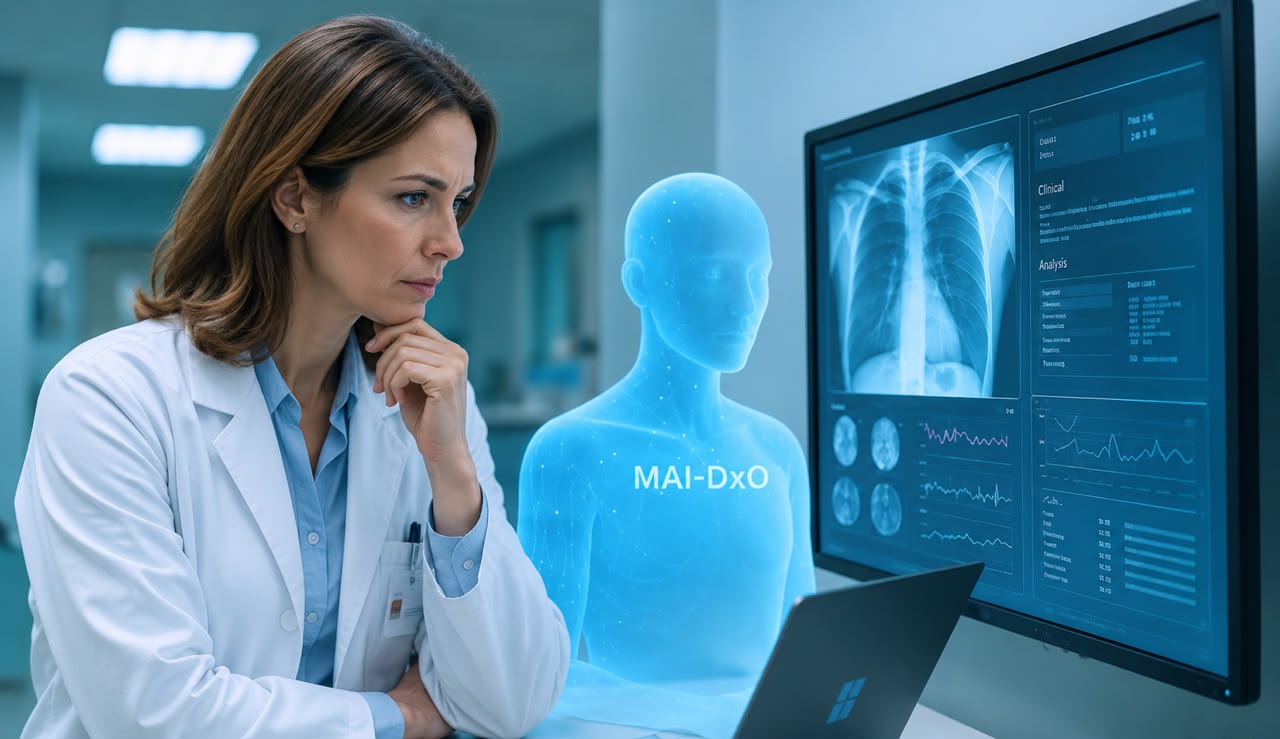
MAI-DxO measures both the final diagnosis and the investigations used to reach it. The highest-scoring configuration achieved 83.2% accuracy at an estimated US$5,431 per complex case. Physicians using reference resources averaged US$4,725. The highest-accuracy version was therefore not cheaper.
A budget-constrained configuration achieved 80.9% accuracy at US$2,241, about 53% below the physicians’ estimated work-up cost, while giving up 2.3 percentage points versus the unrestricted AI configuration.
These are estimates based on US healthcare pricing, not proven hospital savings. Software, training, oversight, integration and the cost of errors would also matter. We cannot simply convert the figures into Naira and call them savings.
What could Nigeria and Africa gain?
The potential benefit is not a machine taking over a consultation. It is structured support for clinicians handling complicated cases, working without nearby specialist input or deciding which diagnostic steps to take next. Properly validated, a tool like this might flag missing information, suggest alternative explanations or help prioritise referrals. These are possible applications, not capabilities proven by the benchmark in Nigerian hospitals.
The workforce context makes the question important. The World Health Organization’s 2026 report on Africa’s health workforce puts Nigeria’s doctor density at 4.1 per 10,000 people in 2024, while the WHO African Region averaged 3.86 against an estimated needs-based threshold of 11.8. AI could help clinicians use their time and expertise more effectively, but it cannot staff an empty ward, resolve industrial disputes or replace unavailable equipment.
Readiness also matters. A 2026 study of 761 Nigerian healthcare professionals identified lack of training (84.7%), poor infrastructure (71.1%) and tool cost (61%) as barriers to clinical AI adoption. This is one survey, not a definitive measure of every Nigerian facility, but it highlights practical constraints. Power, connectivity, patient-data protection, local disease patterns and access to recommended tests all affect whether a diagnostic suggestion can lead to care.
For African hospitals, AI needs to be assessed in local clinical settings rather than assumed to transfer directly from US case records. TechView Africa’s analysis of MORENA AI’s African-language benchmarks makes a related point: performance on a defined test does not guarantee reliability across real users and conditions.
What would count as proof?
Microsoft has announced a prospective study with Beth Israel Deaconess Medical Center in Boston, where patients will interact with the system and its performance will be compared with physicians’ independent assessments. That is an important next step, but it is not yet evidence of improved patient outcomes.
A Nigerian pilot should measure missed diagnoses, unnecessary tests, time to diagnosis, referral decisions, patient safety and total cost using local prices. It should compare the system with existing care and give clinicians the authority to challenge its recommendations. Because Microsoft developed both MAI-DxO and SDBench, independent replication will also be important.
Our guide to what AI agents should never be allowed to do unsupervised explains why meaningful human oversight matters when AI affects consequential decisions.
Our Recommendation
We see MAI-DxO as promising research, not a solution to Nigeria’s doctor shortage. Its results justify further investigation into whether AI can support difficult diagnostic decisions, but they do not establish readiness for routine clinical use. Nigeria and other African countries should consider carefully designed local pilots only when clinical staff, infrastructure, privacy protections and independent evaluation are in place.
The real test is not whether the system can score 83% on a benchmark. It is whether it helps healthcare workers deliver safer, more timely and affordable care without diverting attention from staffing, training and basic services.
Sources & Verification
Microsoft AI — Building Medical Superintelligence
Science — Sequential Diagnosis with Language Models
WHO Africa — State of the Health Workforce in Africa 2026
MICCAI 2026 — Nigerian healthcare workforce readiness for clinical AI
Frequently asked questions
Can MAI-DxO replace doctors?
The study does not establish that. Clinical testing is needed to determine whether the system can support patient care safely.
Does 83% accuracy mean it will correctly diagnose 83% of Nigerian patients?
No. The score comes from controlled benchmark cases, not a trial involving Nigerian patients or routine hospital care.
Could it reduce healthcare costs in Africa?
Possibly, but the published estimates use US pricing. Local trials must account for test availability, staffing, connectivity, training, oversight and the cost of errors.
INEC Has AI Safeguards, But Who Verifies Compliance?
MORENA AI Supports 12 African Languages, but How Accurate Is It?
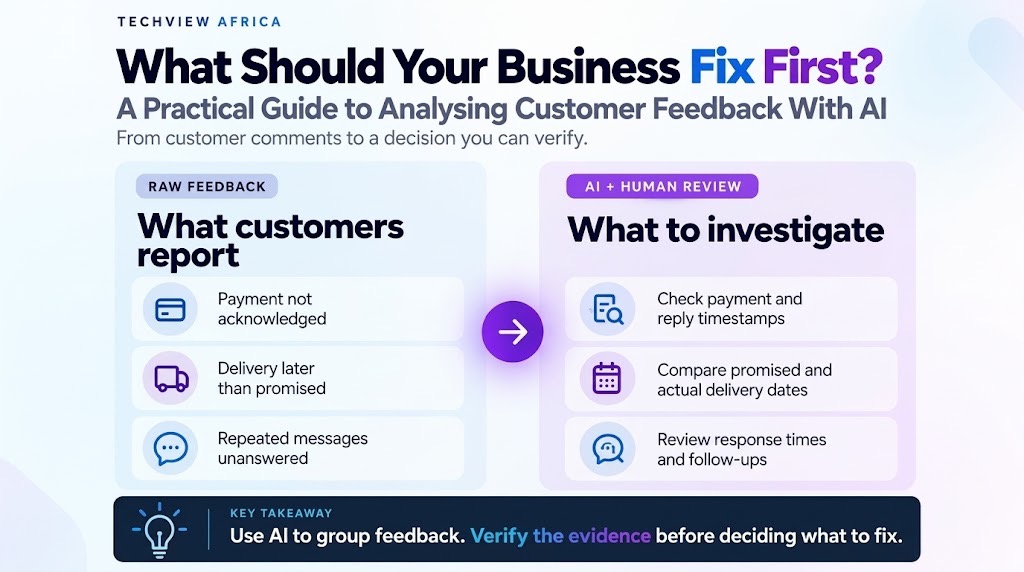
What Should Your Business Fix First? A Practical Guide to Analysing Customer Feedback With AI
From Idea to Clickable Prototype: How to Test a Product With AI Before You Build It

AI Sextortion: What to Do If Someone Threatens You With a Fake Explicit Image
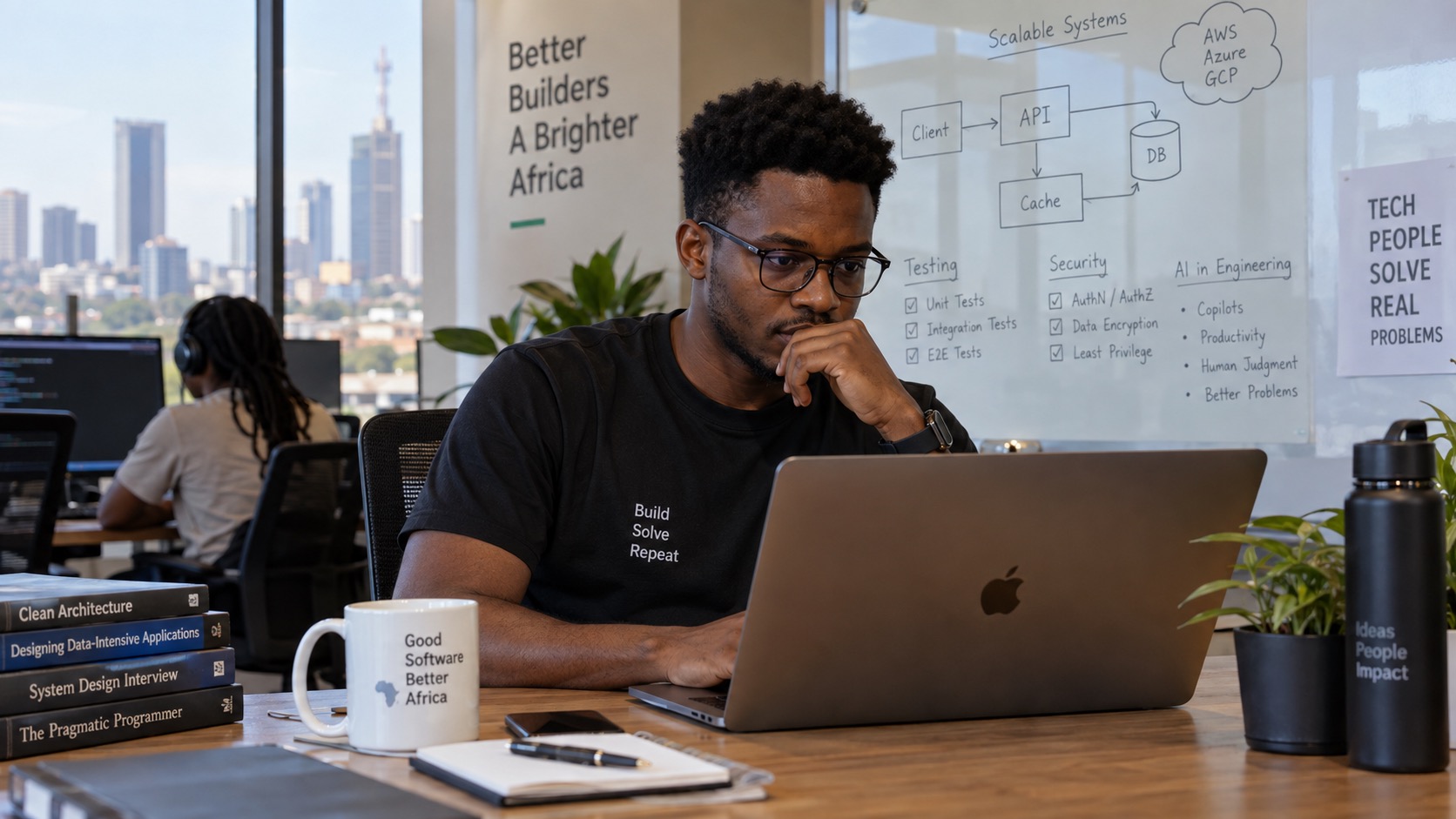
We Analysed Software Engineering Jobs in Africa: These 7 Skills Still Matter Even When AI Can Write the Code
Google Is Giving Nigerian Students Google AI Plus Free for One Year: Here’s How to Claim It
Follow TechView Africa on WhatsApp
Get TechView Africa updates on WhatsApp. Follow our channel for practical technology news, product guides and digital trends from Nigeria and across Africa.
Leave a comment
Comments cannot be edited or deleted after posting. Please review your comment before submitting.
No comments yet. Start the conversation.