

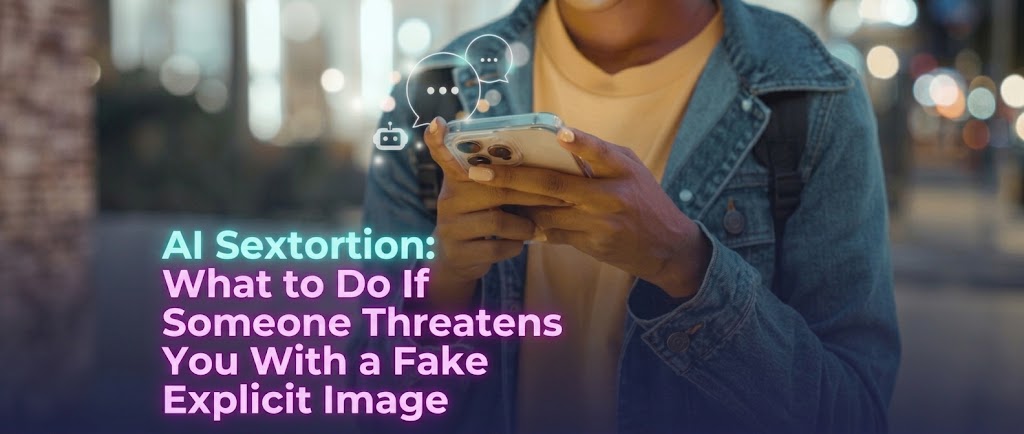
A fake image can still create a real blackmail threat. The important response is not proving immediately that the image is fake, but preserving evidence, refusing the demand and reporting the abuse through trusted channels.
AI Sextortion Is Rising: What to Do If Someone Threatens You With a Fake Explicit Image
If someone threatens to publish a real or AI-generated explicit image of you, do not pay them or send more images. Preserve evidence, stop engaging, report the account to the platform and submit the incident to the Nigeria Police Force National Cybercrime Centre.
A criminal trying to blackmail you with an explicit image may no longer need to possess a real photograph of you. Artificial intelligence can now be used to create synthetic intimate images that appear to depict a real person, giving sextortion scammers another way to threaten victims with embarrassment, financial loss or reputational damage.
Nigeria's National Information Technology Development Agency, through its Computer Emergency Readiness and Response Team, has warned about sextortion and the use of AI-generated explicit material. The warning comes during Cybersecurity Awareness Month and advises victims against paying money or sending additional images when threatened. The practical lesson is simple: whether the image is genuine or fabricated does not change the first steps you should take.
What exactly is sextortion?
Sextortion is a form of blackmail in which someone threatens to distribute intimate or apparently intimate material unless the victim complies with a demand.
The demand may involve money, more images, sexual contact or another action. Sometimes criminals first persuade a victim to send an intimate photograph. In other cases, they obtain an existing image through a compromised account or device. AI adds another possibility: the perpetrator may create the supposedly compromising material instead.
INTERPOL's African Cyberthreat Assessment 2026 identified digital sextortion and online harassment using AI-generated deepfakes and synthetic media among significant cyber threats. The organisation said approximately 600,000 sextortion detections were recorded by one of the partners contributing data to the assessment.
That does not mean all of those cases involved AI or occurred in Nigeria. It does show that synthetic media is becoming part of the wider cybercrime environment.
How can AI be used for sextortion?
A scammer may collect ordinary photographs from Instagram, Facebook, TikTok or another public account and use generative AI or image-manipulation software to create sexualised material that appears to feature the person.
The victim may then receive the image alongside a threat such as: pay immediately or it will be sent to relatives, colleagues, classmates or followers.
The underlying pressure resembles other social-engineering scams. The criminal wants the target frightened enough to act before verifying what has happened or asking for help.
That psychological pressure is something TechView Africa also found repeatedly when we examined 200 scam messages sent to Nigerians: fear and urgency are useful to scammers because they can reduce the time a victim spends thinking critically. AI simply gives that pressure a new type of evidence to exploit.
Do not pay just because the image looks convincing
NITDA's reported guidance warns against paying the person making the threat or sending additional material. There is a practical reason for that advice.
Payment does not give the victim control over copies of the image, the perpetrator's account or any material already sent elsewhere. It also does not guarantee that the person making the demand will stop.
A scammer who receives one payment may instead conclude that further pressure could produce another. The same principle applies if the image is obviously fake. Do not assume that exposing the fabrication to the perpetrator will make the threat disappear. Preserve the evidence and move to reporting.
Save evidence before blocking the account
Before deleting messages or blocking the perpetrator, preserve what investigators or platforms may need. Take screenshots showing the threatening messages, account name, username or phone number, profile details, payment requests and any bank or cryptocurrency information supplied.
Where possible, also preserve dates, times and links to relevant accounts or posts. Do not unnecessarily forward an explicit image to friends or groups simply to prove what has happened. Keep evidence contained and submit it through appropriate reporting channels when required.
If the attacker has also sent suspicious links or files, avoid opening them. Sextortion may be combined with credential theft, malware or attempts to take over an account.
TechView Africa's guide to deepfake voice scams makes the same broader point: convincing synthetic media should not be treated as proof that the person, event or claim behind it is genuine.
Report the account to the platform
The major social platforms provide mechanisms for reporting threats, harassment and non-consensual intimate imagery. Meta, for example, says threatening to share intimate images without consent violates its policies and provides guidance through its Intimate Image Abuse and Sextortion Safety Centre.
Report both the account and the specific offending content where the platform allows it. Removing or restricting the perpetrator's account will not by itself resolve every case, but it can limit contact and give the platform information it can use for enforcement.
Nigerians can report sextortion to the Police cybercrime centre
NITDA's reported advisory directs victims towards the Nigeria Police Force's cybercrime authorities. The Nigeria Police Force National Cybercrime Centre (NPF-NCCC) operates an official cybercrime reporting portal covering cybercrime investigations, online harassment, cyberstalking and related digital offences.
The Police has separately identified sextortion among the cybercrime threats targeting Nigerians. If you submit a report, provide the evidence you preserved rather than relying only on a description of what happened.
TechView Africa has also examined Nigeria's newer NPF Vigilant fraud-reporting platform, although sextortion and other non-financial cybercrime complaints should be directed through the appropriate Police cybercrime channel rather than assuming every fraud-reporting tool covers the same incidents.
Children and teenagers should involve a trusted adult
NITDA's warning specifically notes the vulnerability of children and teenagers. A young person may fear punishment, embarrassment or losing access to their phone if they tell someone what happened. That silence benefits the perpetrator.
If a child or teenager is being threatened, they should stop communicating with the account and tell a parent, guardian or another trusted adult as soon as possible.
Adults supporting them should focus first on preserving evidence, stopping contact and reporting the abuse rather than blaming the young person for how the conversation started.
Nigeria is already treating sextortion as a serious cybercrime problem
The warning does not exist in isolation. The Nigerian Financial Intelligence Unit currently lists an August 2026 report on money-laundering typologies linked to sextortion in Nigeria among its official typology publications.
Nigeria has also cooperated with international authorities in investigations involving alleged sextortion networks. In August 2026, the US Department of Justice announced the extradition from Nigeria of two Nigerian nationals to face separate sextortion-related prosecutions involving minors. Those cases involve allegations and criminal proceedings distinct from the AI-generated-image threat discussed here.
The wider point is that sextortion now sits at the intersection of cybercrime, social engineering, financial extortion and increasingly synthetic media. AI has not created the crime. It has reduced one of the barriers to carrying it out: obtaining a convincing image.
Our Recommendation
If someone threatens you with an explicit image, real, manipulated or completely AI-generated, do not pay, send additional material or continue negotiating.
Save the messages and identifying information first, report the offending account and content to the platform, then report the incident through the Nigeria Police Force National Cybercrime Centre where appropriate. If you are unsure whether an image is genuine, do not make proving that the first priority. The immediate problem is the extortion attempt itself.
For parents and guardians, make it clear to younger users that asking for help will not make the situation worse. Silence and continued engagement give the perpetrator more control.
Sources & Verification
NITDA — Computer Emergency Readiness and Response Team Unit
NITDA-CERRT — Official Cybersecurity Portal
Nigeria Police Force National Cybercrime Centre — Official Reporting Portal
Nigeria Police Force — Cybercrime Awareness Campaign Including Sextortion
INTERPOL — African Cyberthreat Assessment 2026
Nigerian Financial Intelligence Unit — Trends and Typologies
Frequently asked questions
Can someone use AI to create a fake explicit image of me?
Yes. Generative and image-manipulation tools can create synthetic or altered imagery depicting real people. A convincing image is therefore not proof that the depicted event actually occurred.
Should I pay someone threatening to publish an intimate image?
NITDA's reported guidance advises against paying or sending additional images. Payment does not guarantee deletion and may lead to further demands.
What evidence should I save?
Preserve screenshots of the threats, usernames, phone numbers, account details, payment requests, dates and any other information that could help identify the perpetrator or document the extortion attempt.
Where can I report sextortion in Nigeria?
You can report cybercrime through the Nigeria Police Force National Cybercrime Centre at its official reporting portal: https://nccc.npf.gov.ng/.
What if the explicit image is completely fake?
Treat the threat seriously even if you know the image is fabricated. Preserve the evidence, report the account and content, stop engaging with the perpetrator and use the appropriate law-enforcement reporting channel.

Fake Bank Alert or Real Payment: Here’s How to Verify It Properly

Meta Wants Muse to Help Run Small Businesses. Here’s What Owners Should Keep Under Human Control

16,326 Supabase Databases Had Readable Tables. The AI App Boom Is Scaling an Old Security Mistake

Before You Connect AI to Your Email, Files or Photos, Check These 5 Things
Nigeria Wants Banks and Telcos to Ask Before Checking Your NIN

That Customer Care Account in Your DMs May Be Fake: Here’s How to Check

SIM Swap Fraud: How Criminals Can Hijack Your Number Without Stealing Your Phone
Follow TechView Africa on WhatsApp
Get TechView Africa updates on WhatsApp. Follow our channel for practical technology news, product guides and digital trends from Nigeria and across Africa.
Leave a comment
Comments cannot be edited or deleted after posting. Please review your comment before submitting.
No comments yet. Start the conversation.