

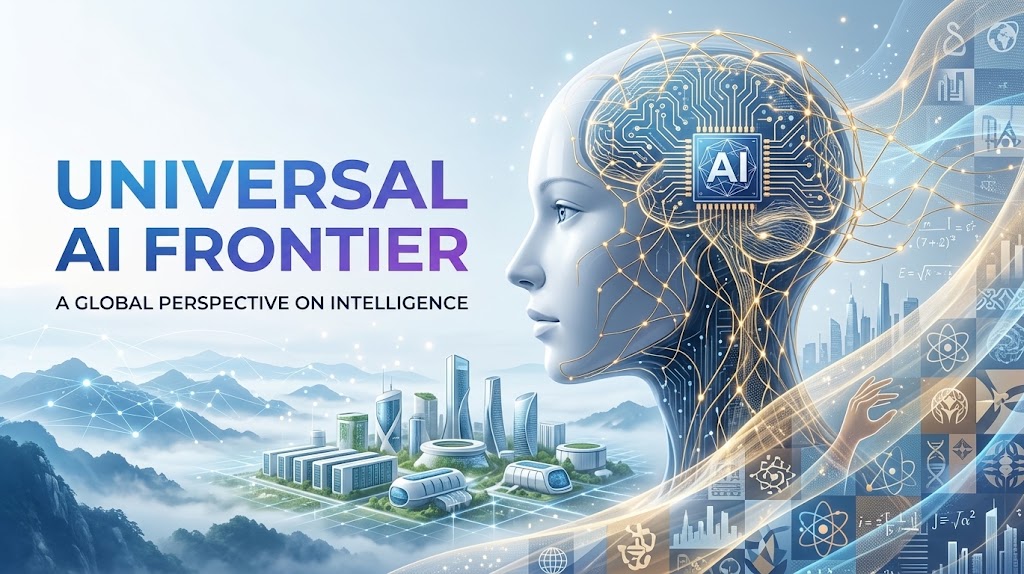
Smaller AI models can increasingly run on consumer hardware, reducing reliance on constant cloud access. For Africa, that could make some AI tools more practical where connectivity, data costs and privacy remain concerns.
Powerful AI no longer has to mean sending every request to a massive cloud data centre. A growing generation of smaller models can run directly on laptops, desktops and even mobile devices opening a different path to AI access.
Some capable AI models can now run directly on consumer computers rather than requiring every request to be processed in a remote data centre. Google describes models such as Gemma 3 and Gemma 3n as suitable for devices ranging from smartphones and laptops to desktop computers, depending on the model size. Microsoft has similarly developed compact Phi models that can operate locally on PCs and other edge devices. That does not mean a cheap laptop can suddenly run every advanced AI model.
Hardware still matters, but the direction is important: useful AI is increasingly becoming something that can operate on the device itself, potentially reducing dependence on expensive cloud computing and continuous internet access. For African users and developers, that could become particularly significant.
Smaller does not automatically mean basic
The biggest AI systems contain enormous numbers of parameters and generally require specialised computing infrastructure. Smaller language models take a different approach. Instead of trying to be the best model at every possible task, they can be designed or optimised to perform useful work with considerably fewer computing resources.
Microsoft's Phi-4-Mini technical report describes Phi-4-Mini as a 3.8-billion-parameter model designed to provide strong reasoning and multilingual capabilities despite its relatively compact size.
Google's Gemma 3 model documentation similarly includes models ranging from hundreds of millions to several billion parameters, with smaller variants intended for limited-resource environments.
These models will not outperform the largest cloud systems on every complex task, they do not need to, for summarising documents, classifying information, helping with writing, searching local files or powering specialised applications, a smaller model may be enough.
“Ordinary computer” still needs some qualification
Local AI should not be confused with AI that runs perfectly on every computer. Different models have very different hardware requirements.
Google lists its 4-billion-parameter Gemma 3 model for desktops and small servers, while Gemma 3n variants are specifically optimised for mobile devices and laptops.
Microsoft Research has also demonstrated Phi-family reasoning models operating on commodity laptop hardware. But memory, storage, processor speed and graphics hardware can significantly affect performance.
Microsoft's current on-device Phi-4-Mini implementation in Edge, for example, has specific storage and graphics requirements in its developer preview. So an older entry-level laptop may have a very different experience from a newer machine with more memory or dedicated AI hardware.
The important change is not that every PC can run every AI model. It is that data-centre-scale infrastructure is no longer necessary for every useful AI task.
Quantisation is helping models fit onto smaller machines
There is another reason local AI is becoming more practical: models can be compressed and optimised.
One technique is quantisation. AI models normally store numbers at particular levels of numerical precision. Reducing that precision can substantially reduce the memory and computing resources needed to run the model. Google's guidance for running Gemma locally explains that quantised versions can use 8-bit or 4-bit representations instead of higher-precision formats, allowing models to require less memory and compute.
There can be trade-offs, aggressive compression may reduce accuracy or capability depending on the model and task. But it gives developers another choice: instead of requiring more powerful hardware, they can sometimes accept a smaller model or lower precision. That matters when designing software for markets where premium computers are not the norm.
Why this could matter particularly in Africa
Cloud AI assumes reliable connectivity. That assumption does not work equally well everywhere. The GSMA's Mobile Economy Africa 2026 report estimates that almost one billion Africans still live within mobile-broadband coverage but do not use mobile internet, with device affordability, digital skills and relevant content among the major barriers. The Broadband Commission's State of Broadband in Africa also identifies affordability and quality of service as continuing challenges.
Local AI cannot solve those problems. A person still needs a capable device, and downloading a model initially may itself require several gigabytes of data. But after installation, some local applications can perform AI processing without sending every prompt, document or image across the internet. That could make certain services more practical where connections are expensive, unreliable or unavailable for periods of time.
Keeping processing local can also improve privacy
There is another advantage: information may not need to leave the device. Imagine using AI to search private documents, summarise business files or organise personal notes. A cloud-based system normally requires at least some information to travel to remote servers for processing. With a genuinely local model, that processing can instead happen directly on the computer.
Google specifically supports on-device Gemma deployment, while Microsoft's Phi Silica is designed to generate text directly on supported Windows PCs. Local processing does not automatically make an application secure. Malware, insecure software or poor access controls can still expose information. But it gives developers another privacy option: do the work without transmitting the data in the first place.
African developers could build more specialised AI
Smaller models may also change who can experiment with AI, but building or training frontier-scale models requires enormous resources. Running and adapting smaller open models can have a much lower entry barrier. That makes it easier for universities, startups and independent developers to experiment with applications designed around narrower problems, whether that involves business workflows, education, agriculture or African-language technologies.
Google's Gemma family, for example, provides downloadable model weights and tools for developers to customise models for particular tasks. The opportunity is not necessarily to build another general-purpose chatbot. It may be to create smaller AI that understands one useful problem extremely well.
The cloud is not disappearing
Local AI still has limits, large cloud models may remain better for difficult reasoning, enormous context windows, complex multimodal work and workloads requiring substantial computing power. Businesses also benefit from cloud systems because they can scale without requiring every user to own powerful hardware. The future is therefore unlikely to be entirely local or entirely cloud-based.
Applications may combine both, simple or sensitive tasks could happen on the device, while difficult requests are sent to more powerful cloud systems when necessary. That hybrid model could give users a better balance between capability, cost, privacy and accessibility.
Our Recommendation
The rise of smaller AI models deserves attention because it changes one of the assumptions surrounding artificial intelligence: that useful AI must always live somewhere else.
For Africa, local AI will not magically remove the cost of devices, electricity or connectivity. But reducing how often an application needs expensive remote computing or a constant internet connection can still matter. The most important progress may therefore not always come from creating the world's biggest model. Sometimes it will come from making a model small enough, efficient enough and affordable enough to run where people already are.
Sources & Verification
Google AI — Getting Started with Gemma
Microsoft Research — Phi-4-Mini Technical Report
Google AI — Gemma 3 Model Card
Microsoft Edge — On-Device Prompt API
Google AI — Running Gemma Locally
Broadband Commission — State of Broadband in Africa
GSMA — The Mobile Economy Africa 2026
Google AI — Gemma on Mobile Devices
Frequently asked questions
What is a small language model?
A small language model, often called an SLM, is an AI language model designed with fewer parameters and generally lower computing requirements than very large language models.
Can AI really run without the internet?
Yes, some models can run locally after the required model files and software have been installed. Individual applications may still require an internet connection for updates, external information or cloud-based features.
Can any laptop run a local AI model?
No. Hardware requirements vary considerably. Smaller models can run on many consumer computers, but available RAM, storage, processor performance and GPU or NPU capabilities affect which models can run comfortably.
Is local AI as good as cloud AI?
Not necessarily. Large cloud models can provide stronger performance on many difficult tasks. Local models can be attractive when speed, privacy, offline access or lower computing requirements matter more.
What is AI quantisation?
Quantisation reduces the numerical precision used to represent a model, which can lower its memory and computing requirements. Depending on the model and level of compression, there can be some loss of capability.
Why could local AI matter in Africa?
It could reduce dependence on continuous connectivity for some applications and give developers more options for building AI that runs on locally available hardware. It does not, however, remove challenges involving device affordability, electricity or digital skills.

Google Is Giving Nigerian Students Google AI Plus Free for One Year: Here’s How to Claim It
Meta Wants Muse to Help Run Small Businesses. Here’s What Owners Should Keep Under Human Control
50 Remote AI Jobs and Expert Projects Open Across Micro1, Mercor, Outlier and Handshake AI
16,326 Supabase Databases Had Readable Tables. The AI App Boom Is Scaling an Old Security Mistake
AI Detectors Keep Flagging Human Writing: Should Schools and Employers Trust Them?

AI Agents Can Now Act for You: What You Should Never Let Them Do Unsupervised
Recruiters Are Using AI Interviews, What Job Applicants Should Expect
Follow TechView Africa on WhatsApp
Get TechView Africa updates on WhatsApp. Follow our channel for practical technology news, product guides and digital trends from Nigeria and across Africa.
Leave a comment
Comments cannot be edited or deleted after posting. Please review your comment before submitting.
No comments yet. Start the conversation.