

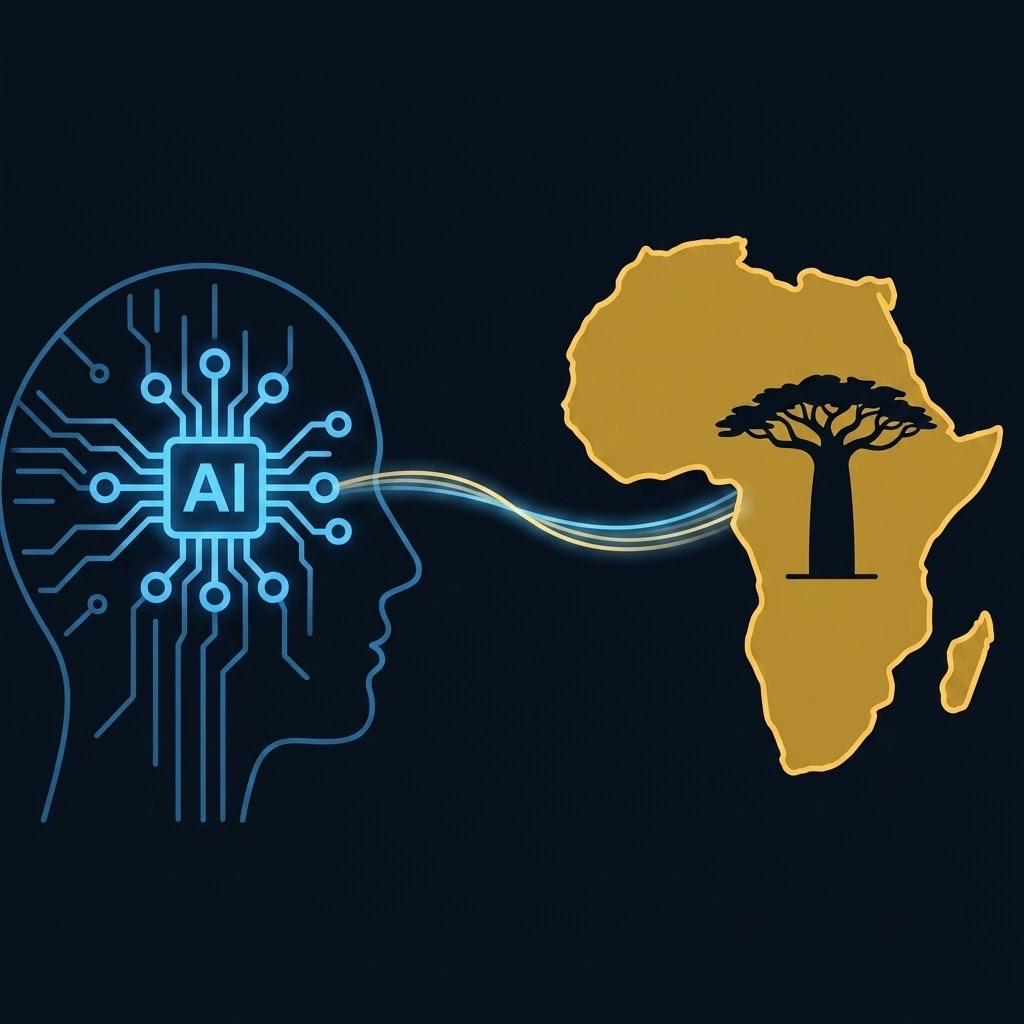
Africa’s AI skills shortage extends beyond programmers. Workers who can combine AI with practical expertise in fields such as data, cybersecurity, finance and governance could become increasingly valuable.
Africa does not simply need more people who can use an AI chatbot. As businesses and governments adopt artificial intelligence, the bigger opportunity may be for people who can combine AI knowledge with data, cybersecurity, law, finance and other practical skills.
Africa’s AI skills gap is easy to misunderstand. It does not simply mean the continent needs millions of machine-learning engineers. The more immediate challenge is broader: finding enough people who can use AI effectively in real organisations, work with data, evaluate outputs, manage risks and adapt technology to African needs.
The World Bank’s World Development Report 2026 identifies skills as one of the foundations developing economies need to benefit fully from AI. Its Digital Progress and Trends Report similarly places competency alongside connectivity, computing infrastructure and locally relevant data. That shortage is a problem for people deciding what skills to learn, however, it can also show where opportunities are developing.
The gap is bigger than coding
When people hear “AI skills”, they often picture someone building a large language model from scratch. Africa certainly needs researchers, machine-learning engineers, data scientists and other advanced technical specialists. The African Union’s Continental Artificial Intelligence Strategy specifically identifies creating, attracting and retaining AI talent as an important priority for the continent.
But most businesses adopting AI will not build their own ChatGPT competitor. They may instead need people who can prepare data, connect AI tools to existing systems, evaluate their accuracy, protect sensitive information and redesign workflows around them. That creates opportunities at several skill levels.
A lawyer who understands AI governance, a cybersecurity analyst who can assess AI risks, an accountant who can automate parts of financial analysis and a marketer who can properly evaluate AI-generated material may all become more valuable without becoming AI researchers.
Using an AI tool is not the same as solving a problem
This distinction could become increasingly important, opening an AI assistant and entering a prompt is relatively easy. Using AI safely inside a bank, hospital, government agency or growing company is considerably more complicated. Organisations need people who understand where information came from, whether an output can be trusted, which data should never be uploaded, when human review is required and whether automation is actually improving the process.
The broader digital labour market already shows this mismatch. A recent World Bank assessment of South Africa’s digital skills pipeline describes employers struggling to fill certain digital vacancies even while unemployment remains high. It also notes that companies want more than technical knowledge. Communication, problem-solving and workplace experience matter. AI is unlikely to remove that requirement, it may make it stronger.
Nigeria is already trying to build the pipeline
Nigeria provides a useful example of how governments are responding. The country’s National Artificial Intelligence Strategy calls for AI skills development covering areas such as curriculum reform, teacher training, reskilling and specialised talent development. The Federal Government’s 3 Million Technical Talent programme is also building skills across AI, data science, cybersecurity, software development and other digital fields.
One more specialised initiative, the DeepTech_Ready programme, was launched by 3MTT and Data Science Nigeria with Google.org support to provide 20,000 young Nigerians with advanced training across areas including machine learning, computer vision, natural-language processing and data science. These programmes demonstrate the scale of interest, but training numbers should not become the only measure of success. A certificate does not automatically make someone employable, what matters is whether people can apply their knowledge to genuine problems.
Some of the best opportunities may sit between disciplines
This is where Africa’s skills shortage becomes particularly interesting. Many valuable AI-related careers may never contain “AI” in the job title. Financial institutions will need professionals who understand automated systems and financial risk. Companies will need cybersecurity teams capable of assessing new AI-related threats. Governments will need procurement and policy specialists who can evaluate AI suppliers. Organisations handling personal information will need privacy and responsible-AI expertise.
African languages create another important area. AI systems still have uneven support for many languages and local contexts. Developing better datasets, speech technologies, translations and evaluation methods requires people who understand language and culture as well as technology. AI therefore creates opportunities for more than computer-science graduates. Domain expertise plus AI literacy may become one of the strongest combinations.
The opportunity is not automatic
There is a danger in turning the skills gap into a simplistic message: Learn AI and a job will appear, that is not guaranteed. The World Bank’s 2026 assessment warns that developing economies still face barriers involving electricity, connectivity, computing capacity, skills and institutions.
Learning opportunities are also unequal, someone with reliable broadband, a capable laptop and access to mentors has a very different starting point from someone trying to complete advanced technical training through an expensive mobile connection. And producing more qualified workers does not automatically produce more African jobs.
Countries also need businesses that invest, research institutions that can retain skilled people and technology ecosystems where those skills can be used productively. Otherwise, Africa can train talent without capturing enough of the economic value that talent creates.
What should beginners actually learn?
The strongest starting point is probably not attempting to master every new AI product. Build foundations first. Understand data, learn how digital systems work, develop analytical thinking, know that AI can confidently produce incorrect information and learn to verify outputs rather than automatically trust them.
Then connect AI to a useful field. For a developer, that could mean APIs, machine learning and cloud systems. For a cybersecurity professional, AI security and governance may become valuable. For someone in law, privacy, regulation and responsible AI offer another direction. A designer may focus on AI-assisted workflows while developing the human judgment required to decide what is actually good.
The useful career question is becoming less: “Do you know AI?”
and more:
“What can you do better because you understand AI?”
Our Recommendation
Africa’s AI skills gap should not be viewed only as evidence that the continent is behind. It is also a map showing where capability needs to be developed. The opportunity will not belong exclusively to the relatively small number of specialists building advanced AI models. It can also belong to people who understand how to apply AI responsibly, combine it with valuable professional expertise and adapt global technology to African problems.
For young Africans deciding what to learn, chasing every new AI tool is unlikely to be enough. Build a durable skill first. Then learn how AI can make that skill more powerful. The tools will keep changing, the ability to solve useful problems with them is much more likely to last.
Sources & Verification
World Bank — Digital Progress and Trends Report: Strengthening AI Foundations
World Bank — World Development Report 2026: The Promise of Artificial Intelligence
African Union — Continental Artificial Intelligence Strategy
World Bank — Strengthening South Africa’s Digital Skills Pipeline
Nigeria — National Artificial Intelligence Strategy
Federal Ministry of Communications, Innovation & Digital Economy — DeepTech_Ready
Frequently asked questions
Does Africa really have an AI skills shortage?
There is no single figure that measures an Africa-wide shortage, but major organisations including the African Union and World Bank identify insufficient digital and AI capabilities as an important constraint on AI development and adoption.
Do I need to learn coding to work with AI?
Not necessarily. Coding is important for many technical AI careers, but AI is also creating demand in areas such as governance, cybersecurity, data analysis, law, finance, design and business operations.
Is prompt engineering enough for an AI career?
Prompting can be useful, but relying on it alone may be risky because AI interfaces change quickly. Combining AI fluency with durable skills such as programming, analysis, cybersecurity, communication or specialised industry knowledge provides a stronger foundation.
Which AI skills are likely to be useful?
Useful areas include data analysis, machine learning, software development, cloud computing, AI governance, cybersecurity, model evaluation and the ability to apply AI within a specific professional field.
What is Nigeria doing about the AI skills gap?
Nigeria’s National AI Strategy includes skills development, curriculum reform, reskilling and specialised AI training. Programmes such as 3MTT and DeepTech_Ready are also intended to develop technical talent.
Does completing an AI course guarantee a job?
No. Certifications can demonstrate learning, but employers may also look for practical projects, problem-solving ability, experience, communication skills and evidence that someone can apply their knowledge in real situations.

ECOWAS Recruitment 2026: 6 Abuja Jobs, Eligibility, Deadline and How to Apply
50 Remote AI Jobs and Expert Projects Open Across Micro1, Mercor, Outlier and Handshake AI

We Checked 200 Remote AI Jobs: These Roles Explicitly Accept Applicants From Africa

We Analysed Software Engineering Jobs in Africa: These 7 Skills Still Matter Even When AI Can Write the Code
Where African Tech Companies Are Hiring in 2026: What 500 Open Roles Reveal
AWS, Azure or GCP? We Analysed What 100 African Tech Vacancies Reveal About the Cloud Skills Companies Actually Want

AI Literacy Is Becoming a Job Requirement: Here’s What Nigerians and African Jobseekers Should Be Able to Show
Follow TechView Africa on WhatsApp
Get TechView Africa updates on WhatsApp. Follow our channel for practical technology news, product guides and digital trends from Nigeria and across Africa.
Leave a comment
Comments cannot be edited or deleted after posting. Please review your comment before submitting.
No comments yet. Start the conversation.