



A successful website is more than an online presence; it must serve a clear business purpose, attract the right audience and convert visibility into measurable results. As AI reshapes search and digital marketing, businesses need to invest in sustainable SEO, adapt to emerging AI-driven discovery, maintain their websites and prioritise credibility over shortcuts.
In an interview with TechView Africa, growth expert and web developer Victor Winners discusses how SEO is evolving, why businesses should prepare for AI search, what AI website builders cannot replace and how Nigerian SMEs can build sustainable online growth.
A business website is only valuable when it serves a clear commercial purpose. It should attract customers, generate enquiries, support sales or strengthen a company's credibility. Yet many businesses invest in websites without establishing what those platforms are expected to achieve.
Meanwhile, changes in search behaviour, the emergence of generative AI and increasingly accessible website-building tools are changing how businesses approach their digital presence.
For African small and medium-sized enterprises (SMEs), these developments create opportunities but also introduce new decisions about technology, marketing, ownership and long-term investment.
TechView Africa spoke with Victor Winners, a growth expert, web developer and legal professional who works with businesses on digital strategy and online growth. He discusses what makes a business website successful, the relationship between traditional search engine optimisation (SEO) and generative engine optimisation (GEO), and the capabilities businesses should expect from AI-powered development tools.
What does it really mean for a business website to succeed?
Victor Winners: Success depends on what the business expects its website to accomplish.
An e-commerce company such as Jumia relies heavily on its website to generate sales. A smaller retailer that primarily sells through Instagram might use its website to establish credibility, showcase its products and encourage customers to make purchases. Both businesses have different objectives, so they should not measure website performance in exactly the same way.
A successful website must deliver on the business goal behind its creation. That requires the right architecture, functionality, integrations and content. If a company wants greater visibility in search results, its website should be designed to support that objective. If it wants more sales, conversions should be among its central performance measures. Businesses waste resources when they maintain websites without understanding what those platforms are supposed to achieve.
How has SEO changed with the emergence of AI search?
Victor Winners: Search has changed considerably, publishers previously concentrated largely on conventional Google search results. Now, they also have to consider AI-generated experiences, including AI Overviews and platforms such as ChatGPT, Gemini and Perplexity. Businesses are competing for visibility across more discovery channels, and content quality has become increasingly important.
At Victor Winners & Co., I have also observed client websites recording lower impressions alongside higher click-through rates. These are observations from individual projects, rather than evidence of a universal change in Google's reporting.
Businesses can no longer assume the strategies that delivered results previously will continue working indefinitely. Websites require ongoing attention to content, technical performance and search visibility.
SEO versus GEO: Should businesses invest in both?
Victor Winners: SEO and GEO are closely related, but they are not necessarily identical in practice.
Traditional SEO focuses on improving a website's visibility in search results and attracting relevant visitors. GEO focuses on making a brand or its information discoverable and referenceable within AI-generated responses.
I see GEO as an extension of SEO rather than its replacement. A business with sound SEO foundations has a useful starting point, but it should also understand how its information is represented in AI-driven discovery platforms.
My recommendation is that businesses should not abandon SEO to pursue GEO. They should develop their digital visibility strategy to account for both.
Google's published guidance on SEO and AI Search supports the continued importance of established SEO practices for its AI features. However, businesses should avoid assuming that a particular content format or technical trick guarantees inclusion in AI-generated answers.
TechView Africa has also examined what businesses should actually expect from SEO and GEO investments, including the difference between being mentioned by an AI platform and generating measurable commercial results.
Can digital marketing produce measurable business growth?
Victor Winners: One example that stands out involved a business we started working with when it was essentially a one-person operation run from home.
We helped establish the business, developed its website and began its SEO strategy. Because the company had no other significant sales channel, its survival depended heavily on generating customers online. The website needed to start attracting customers within its first four months.
We initially explored several sales channels, including paid product listings on platforms such as Jiji. Some of those listings did not generate sales, but we continued working on the available options, particularly SEO, then the business subsequently expanded into its own office, employed additional staff and more than doubled its growth after the first year.
Within approximately two years, he says it had secured an international partnership in Asia and received its first international container shipment of products. It now operates a warehouse and sells within Nigeria and other African markets.
What should Nigerian SMEs prioritise when building an online presence?
Victor Winners: Start with the essentials: a domain name, hosting and a properly developed website, particularly when online sales form an important part of the business. Beyond those basics, businesses should consider SEO and content creation as part of their long-term digital strategy.
Local search visibility is also a useful opportunity for businesses serving customers in specific locations. Maintaining accurate business information and developing a credible online presence can help customers discover them. Google's local ranking guidance identifies relevance, distance and prominence as the main factors behind local results.
Where additional funding is available, businesses can consider advertising on Facebook, Instagram and TikTok. Paid advertising can provide exposure while organic search visibility develops, although businesses should monitor whether those campaigns generate qualified enquiries and actual sales rather than simply activity on their platforms.
What can AI website builders do, and where do they fall short?
Victor Winners: AI tools can generate website drafts, content and basic frameworks from relatively simple instructions. They have made it easier for small businesses with limited budgets to establish an initial online presence.
However, AI-generated websites can struggle with complex business requirements, brand differentiation and production-grade reliability. A website that looks professional may still lack the functionality, performance or security a business requires. Some AI-generated designs can also look generic when businesses do not invest in customisation.
AI tools are useful for getting started, particularly when the objective is a simple website. Businesses requiring more sophisticated functionality or long-term scalability may still need professional developers.
AI development capabilities will continue improving, but businesses should assess what a particular tool can actually deliver before depending on it.
The technical risks deserve attention too. AI-built websites require security checks beyond confirming that their pages work, particularly when they handle customer information, payments or business records.
How should businesses measure visibility in AI-generated answers?
Victor Winners: Businesses should examine how frequently AI platforms mention their brands, which questions trigger those mentions, where the information appears and whether the platforms cite their websites, they should also monitor how accurately AI systems describe their products and services.
However, visibility alone does not establish commercial success. Businesses should examine whether improved discovery produces website visits, enquiries, conversions and increased interest in their brand.
An AI-generated answer can mention a business without sending anyone to its website. That may provide brand exposure, but it should not automatically be counted as a sale or a successful customer acquisition campaign.
Companies should therefore measure AI visibility alongside their conventional website analytics and commercial performance.
Who should own and maintain a business website after development?
Victor Winners: The business should retain control of its website and its important digital assets. A developer's responsibility is generally to build and configure the platform, unless an ongoing maintenance arrangement forms part of the contract. Businesses can also engage their original developer or another service provider to maintain the website for an agreed fee and period.
However, a proper handover should establish who controls the domain, hosting account, website files, content, databases and administrative credentials. The contract should also explain ownership and licensing arrangements for the code, design and third-party components.
Businesses considering AI-powered development should also understand how to build a website that can be edited, moved and owned, rather than becoming dependent on a platform without a clear exit plan. Maintenance should cover relevant updates, backups, security and functionality rather than simply keeping the website online.
What does ethical link-building look like today?
Victor Winners: Ethical link-building involves earning backlinks through genuine editorial recognition, relevant publications and useful content, businesses should examine the history of anyone offering link-building services, the quality of the websites involved and the methods used to acquire those links.
They should be cautious about automated backlink services and strategies built around mass-producing low-quality content.
Google's spam policies prohibit buying or selling links for the purpose of manipulating search rankings. Paid advertising and sponsorship links should be appropriately qualified rather than presented as independent editorial endorsements.
A credible link-building strategy should strengthen a business's reputation and online authority, not expose its website to avoidable search-policy risks.
What is the most persistent digital mistake businesses make?
Victor Winners: Abandoning their websites and online platforms once they begin generating traffic, enquiries or sales. Some businesses only seek professional SEO assistance after their search visibility has collapsed. Others wait until their websites have been compromised before investing in maintenance and security.
Digital platforms require continuous attention because competitors improve their websites, customer expectations change and search systems evolve, therefore, businesses should maintain their websites, update their content and monitor performance even when everything appears to be working well.
Our Recommendation
Winners' responses point to a practical approach for businesses building a sustainable digital presence.
Start by defining what the website must accomplish, secure control of the domain and essential website assets, invest in useful content and technical SEO, and measure performance against actual business objectives.
AI search should form part of the visibility strategy, but businesses should not pay for speculative GEO promises or abandon established SEO practices. Likewise, AI website builders can reduce the cost of getting started, but they should not remove the need for appropriate security, maintenance and technical oversight.
For Nigerian SMEs, the strongest approach is to build digital systems that can support the business as it grows, rather than treating a website as a one-time design expense.
Looking Ahead: Africa's Next Generation of Digital Businesses
Winners believes African businesses and technology professionals must prepare for a period in which AI will play an increasingly important role in digital services.
He argues that African developers should go beyond using existing AI tools and begin building solutions that understand the continent's particular business requirements.
For young people entering SEO, growth marketing and web development, he believes the standard of professional work will also rise. As AI tools become capable of handling basic tasks, specialists will need stronger technical knowledge, strategic thinking and reliability to demonstrate the value of their services.
His message is that African businesses should prepare for changes in digital discovery while developing the technical capacity to build and maintain solutions that serve their own markets.
About the interviewee: Victor Winners is a growth expert, web developer and legal professional whose work spans digital strategy, SEO, content development and business technology. He works with brands across African and international markets.

ChatGPT Ads Arrive in Nigeria: What ₦3,250 a Day Really Means

Cassava’s $1bn GPU Push: What African Businesses Need to Know About Its H200 Service
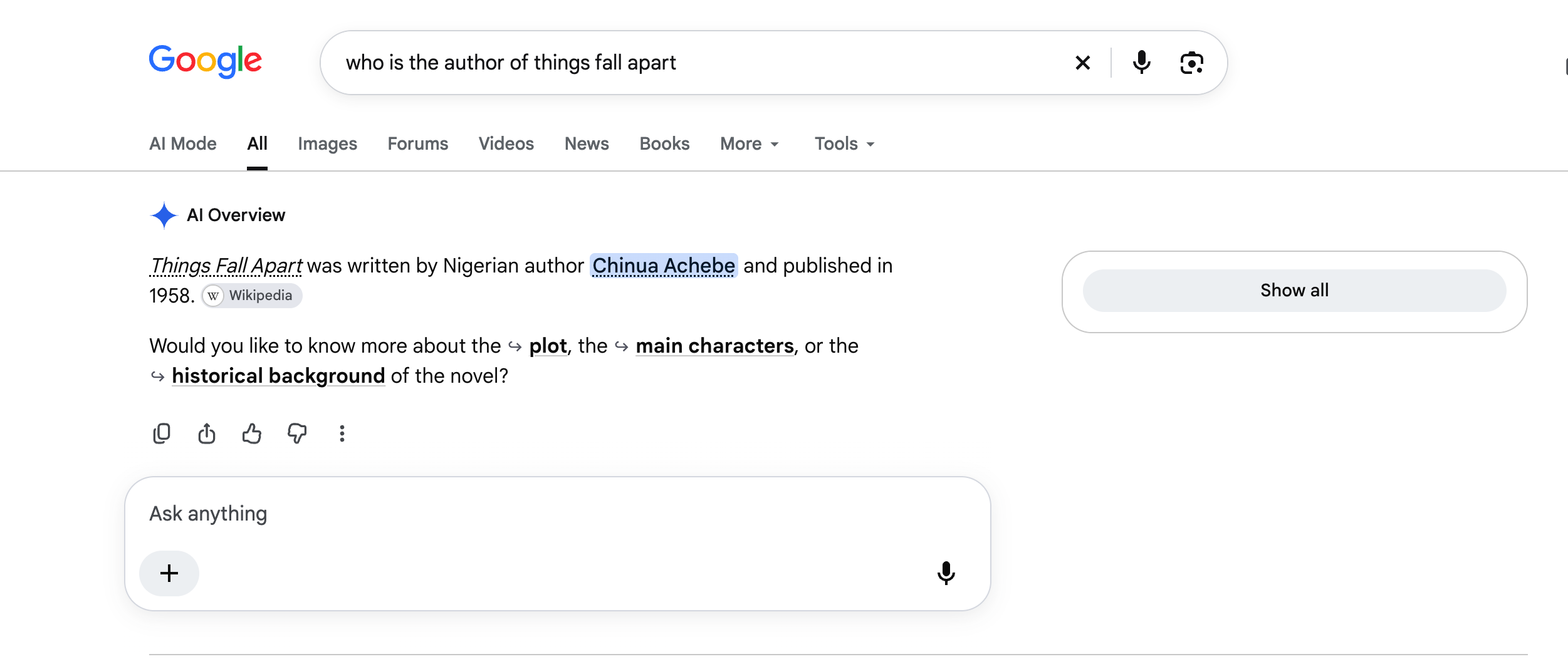
AI Search and Publishers: Who Controls Journalism's Content, Traffic and Revenue?

The New Machine Age: How AI Will Change Work and Where Humans Will Fit
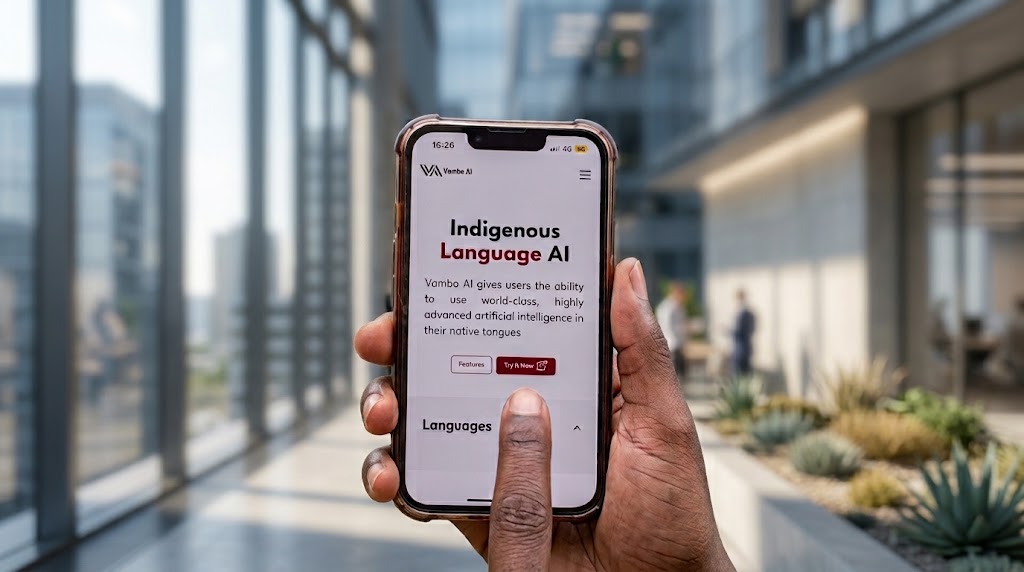
MORENA AI Supports 12 African Languages, but How Accurate Is It?
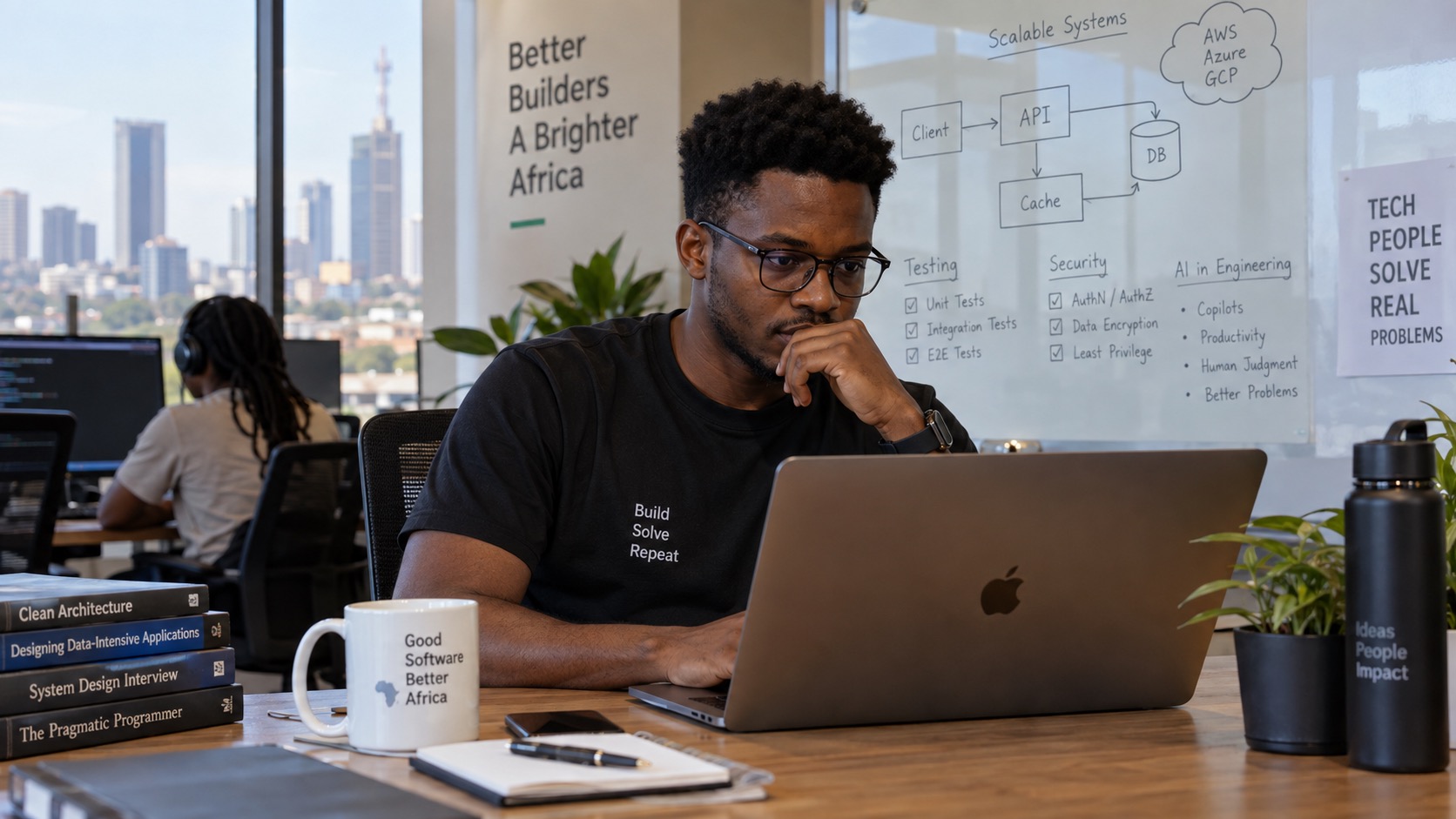
We Analysed Software Engineering Jobs in Africa: These 7 Skills Still Matter Even When AI Can Write the Code
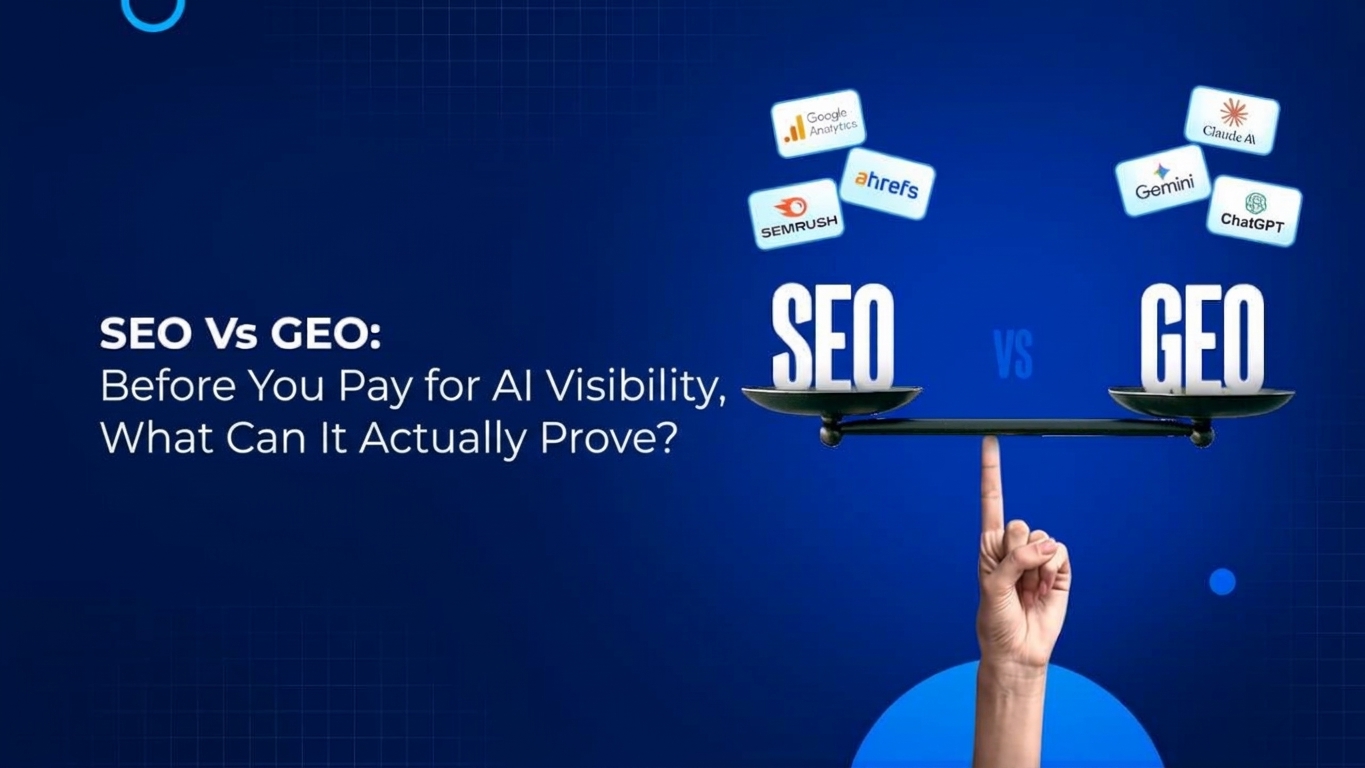
SEO vs GEO: Before You Pay for AI Visibility, What Can It Actually Prove?
Follow TechView Africa on WhatsApp
Get TechView Africa updates on WhatsApp. Follow our channel for practical technology news, product guides and digital trends from Nigeria and across Africa.
Leave a comment
Comments cannot be edited or deleted after posting. Please review your comment before submitting.
No comments yet. Start the conversation.