



A scheduled or queued payment may be cancellable before settlement, but recovering money already credited to another person is much harder. Bank-transfer recalls and mobile-money reversals depend on the country, payment provider, transaction status and applicable rules.
A transfer can sometimes be stopped before settlement, but recovering money already credited to the wrong account is different. The answer also depends on whether you use a bank account, mobile-money wallet or cross-border payment service.
“Pause a transfer” can mean disabling outgoing instant payments on an account, cancelling a scheduled or queued instruction, or trying to recall a payment that has reached another person. These are not interchangeable. This guide compares six markets: Nigeria, Kenya, Ghana, Tanzania, Uganda and South Africa. It is not a rulebook for every African country.
What can actually be paused?
A future-dated payment or standing order may be cancellable through the sending bank before its cut-off. A queued instruction may also be withdrawable under the payment system’s rules. Once settlement is complete and the recipient is credited, the sender usually cannot simply cancel it. A bank may request a return, but the outcome depends on the rail, the reason for the recall, available funds and sometimes the recipient’s authority. Card disputes, merchant payments and direct-debit mandates have separate dispute or cancellation routes.
Mobile money is different from an interbank transfer. Wallet operators may offer reversal tools, but a request can depend on timing, recipient approval or the money remaining in the wallet. If your account is debited but the intended recipient is not credited, report a pending or failed payment not a successful transfer to the wrong person. TechView Africa explains the checks in its guide to a transfer that was debited but not received.
How the rules differ by country
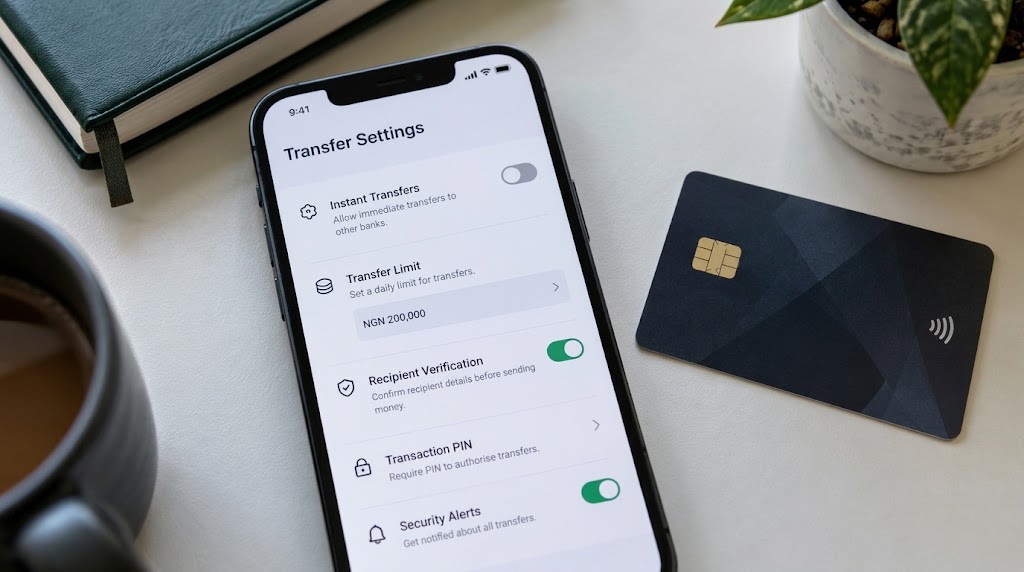
NIGERIA: an account-level pause is now required, but it does not undo a payment. A Central Bank of Nigeria circular dated 12 March 2026 requires financial institutions offering instant payments to let customers opt out for a chosen period, using multi-factor authentication. The requirement took effect on 1 July 2026. While opted out, customers cannot make online instant transfers from the account, although branch transfers remain possible. This is a preventive security control, not a way to cancel one payment after pressing send. The CBN summarises the change on its Reforms and Initiatives page; TechView Africa has a separate guide to Nigeria’s instant-transfer opt-out.
For a mistaken interbank payment, the CBN’s 2018 Regulation on Instant (Inter-Bank) Electronic Funds Transfer Services separates bank error from customer error. For a bank-caused error, the sending bank has 14 working days to request reversal and the receiving bank must reverse within one business day of a valid request. For a customer’s own mistake, the receiving bank can place a lien for up to two weeks while seeking the beneficiary’s consent; if consent is withheld, the regulation provides for internal-auditor mediation. A refund is not automatic. For Nigeria-specific recovery steps, see TechView Africa’s guide to reporting a transfer sent to the wrong account.
KENYA: KEPSS allows a queued payment to be withdrawn, not a settled one. The Central Bank of Kenya’s KEPSS Rules and Procedures, revised in June 2025, say a queued instruction may be withdrawn before settlement. Once the forwarding bank is debited and the executing bank credited, it is final and irrevocable. A bank can still request a return. For a customer-requested recall, the receiving bank seeks the beneficiary’s debit authority; where the error or fraud is attributable to the sending bank, the rules instead provide for an indemnity from that bank. Separately, Safaricom’s M-Pesa 456 channel can start a reversal request. It is not a guaranteed clawback: recipient cooperation and the status of the funds can affect the result.
GHANA: MTN offers a self-initiated request, with recipient approval. MTN Ghana’s published procedure lets customers dial *170#, select My Wallet, then Reversal, choose the transaction and confirm. The recipient receives a prompt to approve. If the recipient does not approve, MTN directs the sender to customer care to continue the request. The app-based request is limited to transactions in the previous 24 hours. These are MTN procedures, not a guarantee that every Ghanaian bank or wallet can reverse a completed payment. See MTN’s Self-Initiated MoMo Reversal instructions.
TANZANIA: complaint deadlines are specific, but they are not reversal guarantees. The Bank of Tanzania’s 2025 Financial Consumer Protection amendments, Government Notice No. 298, set complaint-resolution periods of 12 hours for mobile financial services, 24 hours for domestic interbank TISS and instant TIPS payments, and 48 hours for bank remittances and regional EAPS/SIRESS payments. These are complaint deadlines; they do not mean a completed transfer can automatically be recalled within those periods. Report the problem promptly and keep the complaint reference.
UGANDA: MTN’s terms make reversal discretionary. MTN Uganda’s consumer terms say a completed mobile-money transaction is final and that the provider is not compelled to reverse it. MTN reserves discretion to reverse a transaction for reasonable grounds such as manifest error or fraud, provided the recipient has not redeemed the money and the claim is made within seven days. Do not assume a recall code or freeze facility guarantees a refund; confirm the current process with the operator.
SOUTH AFRICA: a recall service exists, but it is limited. PayEFT’s published process allows a recall request within 30 days for eligible EFTs. The recipient’s bank must obtain authority to debit the account, and sufficient funds must remain. A fee applies whether or not the request succeeds. The service excludes Real-Time Clearing payments and transfers of R5 million or more processed through SWIFT. PayEFT says the process normally takes about five working days after instruction, but this is a provider service, not a general right to reverse every South African payment.
What about transfers across African borders?
Do not assume a cross-border transfer can be recalled under the sender’s domestic rules alone. Ask the sending bank which system carried the payment and whether it has settled. PAPSS, the Pan-African Payment and Settlement System, says a successful transfer can only be recalled where it was an escrow-service payment; a payment can be stopped only where the recipient participant is not on real-time payment. Its recall tools are for participating institutions, not a consumer-facing undo button. Contact the bank or provider that initiated the transfer immediately. PAPSS explains its cross-border payment process and recall limits.
Our Recommendation
If you have just sent money to the wrong person, contact the sending bank or wallet provider immediately. State whether the payment is scheduled, pending, successful but sent to the wrong recipient, or unauthorised. Ask for the specific action: cancellation of a queued instruction, a trace of an uncredited payment, a recall request or a fraud hold. If you did not authorise the payment, report it as fraud immediately and ask the provider to secure the account. Give the amount, date, time, transaction reference and beneficiary details, and obtain a written complaint number.
Do not send the money again until the first transaction’s status is confirmed. Never share your PIN, password or one-time code with anyone claiming to recover it, and avoid paying “recovery agents”. For recurring payments, cancel the standing order or revoke the direct-debit mandate separately; a transfer recall does not automatically stop future debits.
Some transfers can be paused, but there is no single African reversal rule. The decisive questions are which payment rail was used, whether settlement has happened, and what the relevant bank or wallet provider is authorised to do.
Sources & Verification
Central Bank of Nigeria (CBN) — Reforms and Initiatives
MTN Ghana — Self-Initiated MoMo Reversal
Pan-African Payment and Settlement System (PAPSS) — How It Works
Frequently asked questions
1. Can a bank reverse a completed transfer without the recipient's permission?
It depends on the reason for the reversal and the applicable payment rules. A customer who mistakenly sends money to the wrong account may need the recipient's authorisation. However, bank errors, certain fraud cases and specific payment-system procedures can follow different rules. A recall request does not automatically guarantee that the money will be returned.
2. Does a bank or mobile-money complaint deadline mean my money will be refunded within that period?
No. A complaint-resolution deadline is not necessarily a payment-recovery deadline. For example, Tanzania's 2025 Financial Consumer Protection amendments prescribe different periods for resolving complaints involving mobile financial services, interbank payments and remittances. Meeting a complaint deadline does not automatically reverse a completed transfer or guarantee a refund.
3. What happens if the recipient refuses to approve an MTN MoMo reversal in Ghana?
MTN Ghana allows customers to initiate a reversal request through its USSD menu. The recipient receives a prompt to approve the request. Where approval is not given, MTN directs the sender to email customer care with the transaction details so that the provider can begin its normal reversal process. This is an MTN-specific procedure, not a guarantee applicable to every mobile-money provider.
4. Can a successful PAPSS cross-border payment be recalled?
PAPSS states that a successful transfer can only be recalled where the transaction uses its escrow service. A payment can be stopped only where the recipient participant is not operating on real-time payment. Consumers should contact the sending bank or payment provider immediately rather than assume that a cross-border payment has a customer-facing reversal button.

Binance Hack: What Two Blockchain Investigations Reveal About $6.3 Billion in Outflows

Fake Bank Alert or Real Payment: Here’s How to Verify It Properly

We Analysed 200 Spam Messages Sent to Nigerians: Here’s How Fraudsters Try to Make People Act
Can You Disable Instant Bank Transfers in Nigeria? CBN Rules Explained
CBN’s January 2027 Data Rule: What Nigeria’s Banks and Fintechs Actually Have to Move

PHP2Shell Exploitation: How to Check and Patch Your Website

Before Installing a Free VPN, Check This
Follow TechView Africa on WhatsApp
Get TechView Africa updates on WhatsApp. Follow our channel for practical technology news, product guides and digital trends from Nigeria and across Africa.
Leave a comment
Comments cannot be edited or deleted after posting. Please review your comment before submitting.
No comments yet. Start the conversation.