

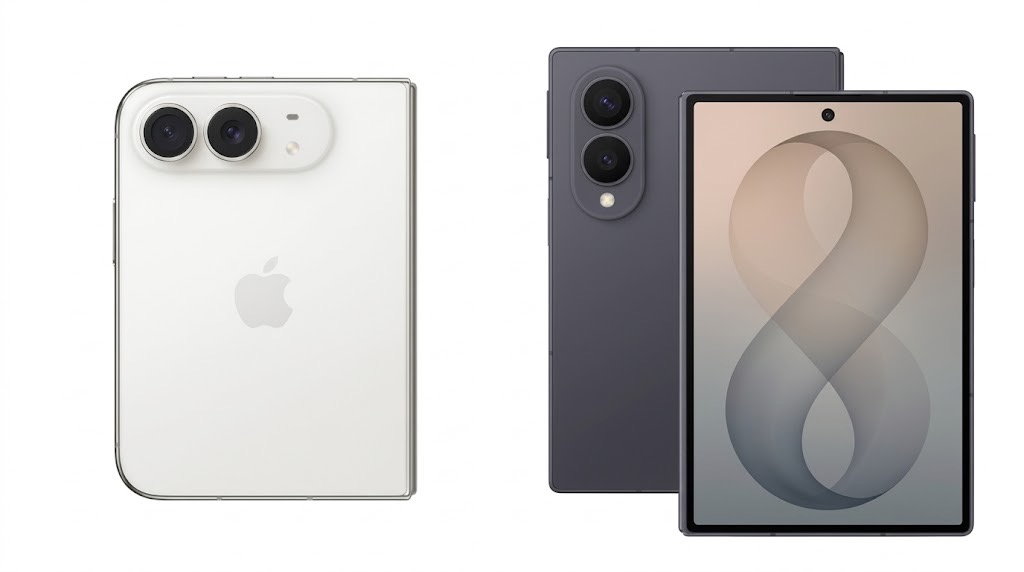
Apple appears to have learned from years of foldable-phone development, but Samsung’s biggest advantage is not one specification, it is eight generations of refinement.
iPhone Duo vs Galaxy Z Fold8 Shows What It Learned From Samsung
Apple waited seven years before entering the foldable-phone market. We compared its first attempt with Samsung’s eighth-generation Galaxy Z Fold8 to see where waiting helped and where Samsung’s experience still shows.
The iPhone Duo has several impressive specification advantages, including IP68 protection, Apple Pencil support and up to 2TB of storage. But the Galaxy Z Fold8 is dramatically lighter, cheaper, already commercially available and backed by a more mature foldable multitasking system. On the specifications and availability confirmed today, Samsung wins this comparison overall.
Samsung released the original Galaxy Fold in 2019. Apple waited until 2026. That gave Apple years to watch foldable phones struggle with thick bodies, fragile screens, awkward outer displays and software that did not always justify opening the device.
Now the $1,999 iPhone Duo is going directly against Samsung’s $1,899.99 Galaxy Z Fold8.
Reuters notes that Samsung has reached its eighth generation while Apple is making its first attempt. The question is therefore more interesting than which specification is bigger: what did Apple learn by arriving late?
TechView Africa previously examined how Apple’s arrival changes the wider foldable battle with Huawei and Xiaomi. This time, we are putting Apple directly against the company with the longest mainstream book-style foldable experience.
iPhone Duo vs Galaxy Z Fold8: specifications
| Specification | iPhone Duo | Galaxy Z Fold8 |
|---|---|---|
| Inner display | 7.6-inch OLED, 120Hz | 7.6-inch Dynamic AMOLED 2X, 120Hz |
| Outer display | 5.4-inch OLED, 120Hz | 5.5-inch Dynamic AMOLED 2X |
| Peak outdoor brightness | 3,000 nits | 3,000 nits |
| Processor | A20 Pro | Snapdragon 8 Elite Gen 5 for Galaxy |
| Weight | 254g | 201g |
| Folded thickness | 11.3mm | 9.7mm |
| Rear cameras | 48MP main + 48MP ultrawide | 50MP main + 50MP ultrawide |
| Maximum storage | 2TB | 1TB |
| Battery claim | Up to 31h video on inner display | Up to 26h video playback |
| Water/dust resistance | IP68 | IP48 |
| Stylus | Apple Pencil USB-C support | No S Pen support |
| SIM | Dual eSIM only | Nano-SIM + eSIM / dual eSIM |
| Starting US price | $1,999 | $1,899.99 |
These figures come from Apple’s official iPhone Duo specifications and Samsung Africa’s Galaxy Z Fold8 specifications.
The most striking number is not the display size. It is weight. Samsung has reduced the Fold8 to 201g, while the iPhone Duo weighs 254g. That is a 53g difference large enough to matter on a phone that buyers will carry every day.
Samsung is also thinner when folded: 9.7mm versus Apple’s 11.3mm.
Apple deserves credit for building its first foldable around a compact passport-style shape rather than simply making an enormous phone that folds. But this round belongs comfortably to Samsung.
Winner: Galaxy Z Fold8
Displays: almost impossible to separate on specifications
Both phones provide 7.6-inch inner displays, 120Hz refresh rates and stated peak brightness of 3,000 nits.
Apple adds a nano-texture treatment intended to reduce glare and make the crease less visible, while Samsung uses its own anti-reflection treatment and years of foldable-display refinement.
Without side-by-side independent testing, declaring one screen superior would be premature.
Winner: Draw
Performance: two flagship chips, no fair paper winner
Apple uses its new A20 Pro, built on a 2nm process with a 6-core CPU, 7-core GPU and dual 16-core Neural Engine.
Samsung uses Qualcomm’s Snapdragon 8 Elite Gen 5 for Galaxy, customised for the Fold8 with CPU, GPU and NPU enhancements. Manufacturer performance claims are not directly comparable, and we would need independent benchmarks and sustained-load testing before calling a performance winner.
Winner: Too early to call
Cameras: Apple and Samsung take similar approaches
Apple provides a 48MP main and 48MP ultrawide, with a 2x optical-quality crop from the main sensor.
Samsung counters with 50MP main and 50MP ultrawide cameras, also offering 2x optical-quality zoom. Megapixels alone do not determine image quality, so Samsung’s slightly larger numbers do not automatically make it the better camera.
Apple does have some interesting foldable-specific tricks: users can take high-quality rear-camera selfies while previewing themselves on the outer screen, while Samsung offers similar dual-screen shooting concepts.
Winner: Draw until real-world camera testing
Durability: Apple has the surprising paper advantage
This may be Apple’s most impressive specification. The iPhone Duo carries an IP68 rating, while Samsung rates the Fold8 IP48.
Samsung has strengthened its inner display with Flex Titanium, Armor Aluminum and Gorilla Glass, but Apple’s rating indicates better protection against dust while maintaining strong water resistance.
That does not make a flexible inner display indestructible. In fact, TechView Africa’s investigation into smartphone repair costs in Nigeria showed why display damage can become the most expensive common repair on premium devices.
Winner: iPhone Duo
Software: Samsung’s eight-generation head start matters
Apple has clearly studied why people buy foldables. iOS 27 introduces Split View, allowing two apps side by side, saved app pairs, multiple windows of the same app and interfaces that react to the phone being folded.
That is a substantial change for iPhone. But Samsung already offers two- and three-way split-screen multitasking through One UI 9, alongside mature Multi Window functionality and Samsung DeX, which can turn the Fold8 into a desktop-style workspace on an external display. Apple has built a credible first-generation foldable interface. Samsung has been refining one for years.
Apple wins stylus and storage
Samsung made an unusual decision this generation: the standard Fold8 does not support the S Pen. Apple says the Duo will support the USB-C Apple Pencil, although that support arrives later rather than being available immediately at launch. Apple also offers up to 2TB of storage, while Samsung tops out at 1TB.
Price and African availability favour Samsung
Samsung starts $100 cheaper in the US and is already available. Samsung also maintains an official African product page for the Fold8.
Apple opens iPhone Duo preorders on 16 October, with sales beginning 23 October. Its initial list covers more than 70 countries and regions, but Nigeria is not named among the markets highlighted in Apple’s launch announcement.
There is another practical difference for African users: Apple’s Duo is eSIM-only, while Samsung supports a physical nano-SIM alongside eSIM.
For buyers importing a $2,000 phone, availability, warranty and repair support can matter as much as specifications.
Winner: Galaxy Z Fold8
Final verdict: Galaxy Z Fold8 wins but Apple got surprisingly close
Apple did not arrive eight generations late and produce an experimental prototype. The iPhone Duo immediately matches Samsung on screen size, introduces strong dust and water resistance, supports a stylus and offers twice Samsung’s maximum storage.
But Samsung wins where years of refinement are hardest to shortcut. The Fold8 is 53g lighter, thinner when closed, $100 cheaper, already available, more flexible with SIM options and supported by a mature foldable multitasking ecosystem.
Overall winner: Samsung Galaxy Z Fold8
For buyers already deeply invested in Apple’s ecosystem, the Duo may still be the more attractive device and its IP68 rating and Apple Pencil support are genuine advantages.
For everyone else choosing purely between these two foldables today, the Galaxy Z Fold8 is the more complete purchase.
Apple learned a great deal by waiting. Samsung’s advantage is that it spent those same seven years learning too.
Verification Links
Apple — iPhone Duo Technical Specifications
Apple — iPhone Duo Official Announcement
Samsung Africa — Galaxy Z Fold8
Samsung Africa — Galaxy Z Fold8 Specifications
Samsung — Galaxy Z Fold8 Multitasking and Software
Reuters — Samsung Responds to Apple’s Foldable iPhone Challenge
Frequently asked questions
Is the iPhone Duo better than the Galaxy Z Fold8?
Not overall based on the specifications confirmed so far. Apple wins areas including IP68 protection, maximum storage and stylus support, while Samsung has advantages in weight, thickness, price, multitasking maturity and current availability.
Which phone is lighter?
The Galaxy Z Fold8 weighs 201g compared with 254g for the iPhone Duo—a difference of 53g.
Does the Galaxy Z Fold8 support the S Pen?
No. Samsung confirms that the standard Galaxy Z Fold8 does not support the S Pen.
Can the iPhone Duo use an Apple Pencil?
Yes. Apple says the iPhone Duo will support the USB-C Apple Pencil, although support is scheduled to arrive later.
Which phone should African buyers choose?
Samsung currently has the practical advantage because the Fold8 is already commercially available and has official African product support. Buyers considering an imported iPhone Duo should verify local eSIM support, warranty coverage and repair options before purchasing.

iPhone Duo Review: What Apple Got Right and What $1,999 Still Doesn’t Buy You
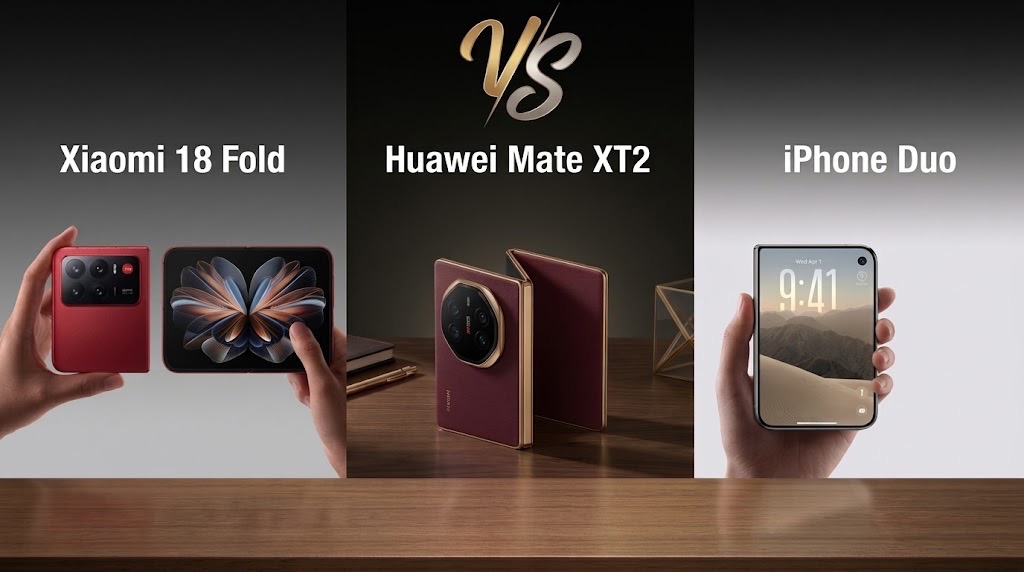
Apple Has Finally Joined Huawei and Xiaomi’s Foldable Fight But Who Are These Ultra-Premium Phones Really For?
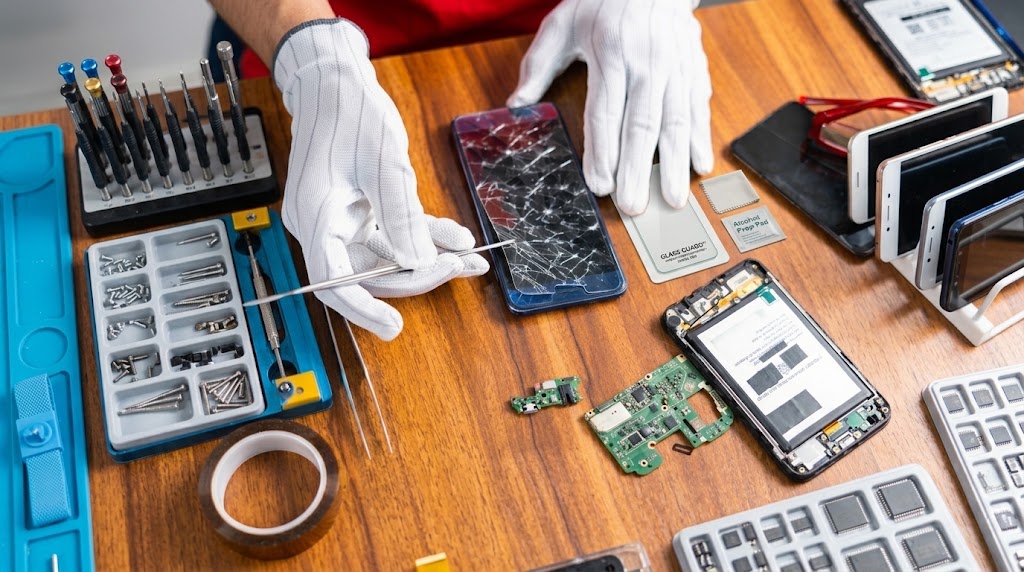
We Checked What It Costs to Repair 20 Popular Smartphones in Nigeria: Screens Are the Expensive Part
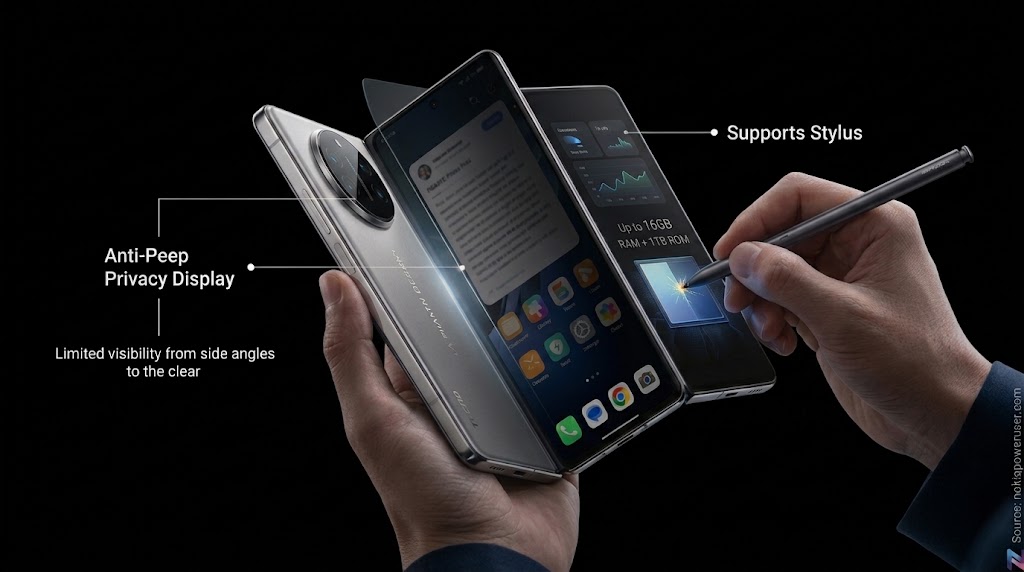
Huawei’s Mate XT2 Folds Twice and Shows How Fast Premium Smartphones Are Changing
Why Your Phone’s Screen Can Cost Almost Half the Device to Replace

Apple Has a New Boss: What to Expect From John Ternus’ First iPhone Launch on September 9

Why WhatsApp and Instagram Can Make a Great Phone Camera Look Bad
Follow TechView Africa on WhatsApp
Get TechView Africa updates on WhatsApp. Follow our channel for practical technology news, product guides and digital trends from Nigeria and across Africa.
Leave a comment
Comments cannot be edited or deleted after posting. Please review your comment before submitting.
No comments yet. Start the conversation.