

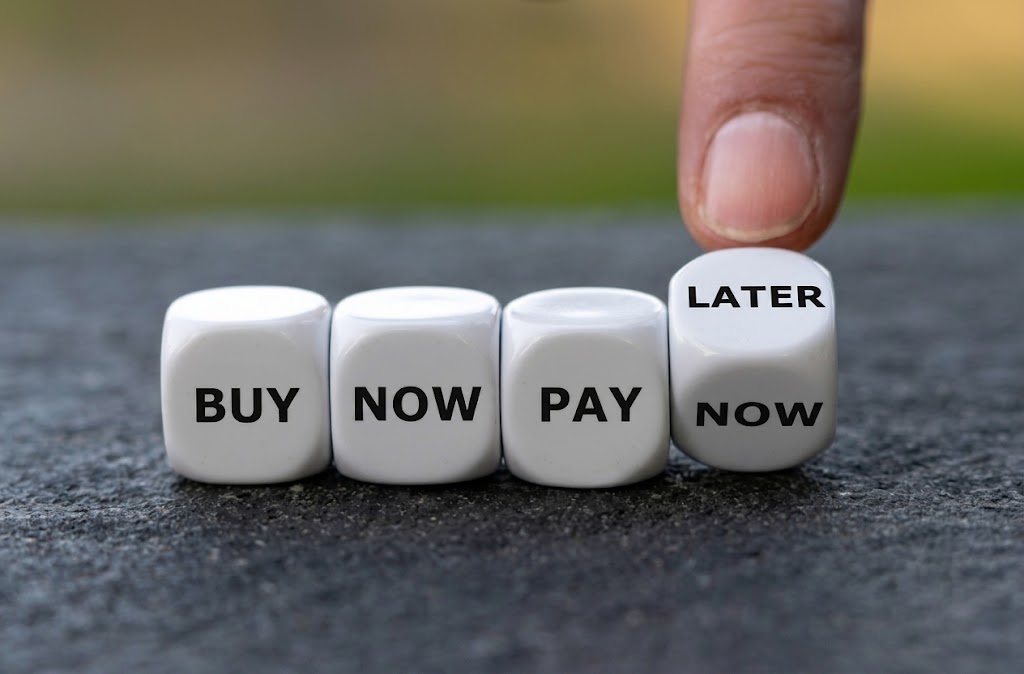
Buy Now, Pay Later does not reduce the price of something simply because the checkout screen divides it into smaller numbers. You are accepting a repayment schedule and potentially agreeing to automatic deductions, identity and credit checks, late-payment consequences and rules that can continue after the excitement of the purchase is gone.
Buy Now, Pay Later Looks Easy But Do you know What You’re Actually Agreeing To?
Splitting a purchase into four smaller payments can make an expensive item feel suddenly affordable, but Buy Now, Pay Later is still a credit agreement. Before tapping “pay later,” Nigerian shoppers should understand what happens to their bank account, personal information and repayment obligations after checkout.
The checkout screen is designed to make the payment feel smaller
Imagine you are buying a ₦240,000 phone. Paying ₦240,000 immediately feels expensive. But seeing: ₦60,000 × 4 payments
changes how the purchase feels, even though the item still costs ₦240,000.
That psychological difference is one reason Buy Now, Pay Later, commonly called BNPL, can be attractive. Instead of waiting until you have the entire amount, a provider pays or settles with the merchant while you repay according to an agreed schedule.
The important word is credit. A BNPL button may sit beside a normal debit-card option and take only a few taps to approve, but choosing it creates a financial obligation that continues after you leave the checkout page.
“Interest-free” does not mean consequence-free
Some BNPL products genuinely allow customers to divide a purchase without paying interest when repayments are made according to the agreed schedule.
For example, TechView Africa checked the current public information from Nigerian credit provider CredPal, which advertises purchases split into four interest-free instalments, payment within 30 days or longer repayment arrangements. Its current FAQ also states that late-payment fees may apply when payments are missed.
That distinction matters.
0% interest answers one question:
How much interest is being charged?
It does not necessarily answer:
What happens if I miss the due date?
Before accepting any BNPL offer, check the actual repayment schedule, late charges, processing costs and any other conditions attached to the specific plan rather than assuming the words “interest-free” settle the question.
You may also be authorising money to leave your account automatically
Repayment may not depend on you remembering to open an app every month. CredPal, for example, currently lists bank transfer, debit card and automatic bank deductions among the ways customers can repay their credit balances. That means one of the most important questions before accepting BNPL is:
What exactly have I authorised the provider to debit, and when?
Someone whose salary arrives on Monday but has an instalment scheduled for Sunday may discover that a convenient repayment plan clashes badly with actual cash flow. It is worth checking every due date before confirming the purchase and keeping enough money available for scheduled repayments.
The danger becomes clearer when several instalment plans overlap
One BNPL purchase may look manageable. Several can become difficult surprisingly quickly. Consider this simplified TechView Africa example:
| Purchase | Total price | Four-payment instalment |
|---|---|---|
| Smartphone | ₦120,000 | ₦30,000 |
| Headphones | ₦80,000 | ₦20,000 |
| Appliance | ₦60,000 | ₦15,000 |
| Combined obligation | ₦260,000 | ₦65,000 per payment cycle |
Nothing in those individual instalments looks enormous. Yet the same shopper has created a ₦65,000 repayment obligation whenever those payment dates fall together.
This is one of the traps of evaluating each purchase separately. The useful question is not simply:
“Can I afford ₦15,000?”
It is:
“How much will all my existing instalments require before my next income arrives?”
That number provides a much more realistic picture of affordability.
Your personal information can be part of the agreement too
BNPL approval can involve more information than a name and phone number. CredPal says applicants may be asked for information including a valid means of identification, Bank Verification Number (BVN) and evidence of income, while its current FAQ says applicants must meet its credit-assessment criteria.
That does not automatically make a service unsafe. Financial providers need information to identify customers and assess risk. But consumers should understand who they are giving information to, why it is being collected, how it will be used and whether the lender is legitimate.
Nigeria's Federal Competition and Consumer Protection Commission specifically tells consumers using digital lending services to examine data usage as well as interest rates, fees and repayment obligations.
Nigeria now has stronger rules around digital consumer lending
This is particularly relevant because Nigeria's regulatory framework for digital and non-traditional lending has changed substantially.
The FCCPC's Digital, Electronic, Online or Non-Traditional Consumer Lending Regulations 2025, known as the DEON Regulations, require covered lenders to meet standards around transparency, consumer protection, data privacy and responsible lending. The Commission says consumers should receive clear information on interest, fees and repayment schedules.
There was a temporary legal interruption in 2026 after a Federal High Court order suspended implementation, but on 20 July 2026 the court dismissed the challenge and the FCCPC announced that the regulations had become fully operational and enforceable again. The FCCPC also maintains information on registered digital lenders, which gives Nigerian consumers somewhere to check before trusting an unfamiliar credit app or service.
A return or refund deserves extra attention
Another question people may overlook is what happens when the purchase itself goes wrong. Suppose a phone is defective and the merchant agrees to accept a return. Do not automatically assume the BNPL repayment obligation disappears at exactly the same moment.
The merchant selling the product and the company financing the purchase can be separate parties, so customers should confirm how a refund affects the financing agreement and whether upcoming deductions have actually been cancelled. Keep receipts, refund confirmations and correspondence until both the purchase and the associated credit balance have been resolved.
What TechView Africa would check before tapping “Pay Later”
The headline repayment figure should not be the only thing you read. Before accepting a BNPL plan, check these details together:
- the full cash price of the item;
- your total amount repayable;
- the number and dates of repayments;
- whether interest applies;
- what late fees or other charges may apply;
- whether automatic deductions are authorised;
- what personal and financial data is required;
- what happens if the item is returned;
- whether missed repayments can affect future access to credit;
- whether the provider is properly regulated or registered where required.
If that information is difficult to find or the agreement becomes less clear the closer you get to accepting it, that is a reason to stop and investigate further.
Our Recommendation
Buy Now, Pay Later can be useful when the repayment schedule genuinely fits money you already expect to have, particularly for a necessary purchase whose full upfront cost would otherwise disrupt your cash flow.
But it should not be treated as a way of making an unaffordable product affordable. Before accepting the plan, ignore the smallest number on the checkout screen for a moment and look at the full purchase price, every payment date and all your other financial commitments together. If the purchase only feels affordable when you avoid looking at the total obligation, paying later may simply be postponing the problem.
Sources & Verification
CredPal — Terms and Conditions
FCCPC — DEON Digital Lending Consumer FAQs
FCCPC — Digital Lending Registration and Approved Lenders
FCCPC — Digital Lending Regulation Resumed After Federal High Court Decision
Frequently asked questions
Is Buy Now, Pay Later a loan?
BNPL is a form of consumer credit because the consumer receives the product before completing payment and agrees to repay according to specified terms. The precise legal and product structure can vary between providers. Does 0% BNPL mean I will never pay extra? Not necessarily. A plan may charge no interest when paid as agreed while still having consequences or fees for missed payments. Always examine the specific agreement. Can a BNPL provider automatically debit my bank account? Some providers support or require automatic repayment arrangements. Consumers should check the payment authorisation and repayment schedule before accepting the plan. Can BNPL affect my credit? That depends on the provider and product. Some credit providers use repayment behaviour when assessing future credit access, and some credit products may report information to credit bureaus. Check the specific provider's terms rather than assuming all BNPL services work identically. How can Nigerians check a digital lender? The FCCPC maintains information and lists relating to digital money lenders and advises consumers to confirm a lender's regulatory status, understand the repayment terms and examine how their data will be used.
We Analysed 200 Spam Messages Sent to Nigerians: Here’s How Fraudsters Try to Make People Act
CBN’s January 2027 Data Rule: What Nigeria’s Banks and Fintechs Actually Have to Move
Inside the $213 Billion Payments Business Airtel Wants to Take Public
Nigeria Is Turning SIM Swaps Into Bank Fraud Red Flags
Why Nigerian Banks May Restrict Your Account After an Unusual Transaction
Inside Nigeria’s Digital Fraud Problem: What 67,518 Cases and 2026 Cyber Alerts Reveal
OPay Says It Is Not Shutting Down in Nigeria, Here’s What Customers Should Know
Follow TechView Africa on WhatsApp
Get TechView Africa updates on WhatsApp. Follow our channel for practical technology news, product guides and digital trends from Nigeria and across Africa.
Leave a comment
Comments cannot be edited or deleted after posting. Please review your comment before submitting.
No comments yet. Start the conversation.