

Banks in Nigeria are required to monitor transactions and investigate activity that appears inconsistent with a customer’s normal profile. However, suspicious activity does not automatically mean an account must be frozen, and customers may be asked to provide information before normal access is restored.
Why Your Account May Be Restricted After A Transaction
An unexpected large transfer or transaction that differs from your normal banking activity can trigger additional checks. But an unusual transaction does not automatically mean your account must be frozen.
Why can one transaction attract attention?
Banks do not look only at the amount of money entering or leaving an account. They also consider whether transactions are consistent with what they know about the customer, the account’s normal activity and the expected source of funds.
Nigeria’s customer-due-diligence framework requires financial institutions to continue monitoring existing customers, particularly when a significant or unusual transaction occurs or the way an account is operated changes materially. That does not mean receiving a large legitimate payment is automatically suspicious. Context matters.
Banks are increasingly using automated monitoring
Transaction monitoring is also becoming more automated. In March 2026, the Central Bank of Nigeria introduced baseline standards requiring regulated financial institutions to strengthen automated anti-money-laundering systems capable of detecting and analysing suspicious activity in real time.
The CBN also introduced a temporary BVN watchlist mechanism for suspected fraudulent transactions. Under the new framework, an affected BVN may remain on the temporary watchlist for up to 24 hours while the account holder is contacted for clarification.
This helps explain why a customer may suddenly be asked to confirm a transaction or provide additional information after activity that appears unusual.
Does a suspicious transaction automatically freeze your account?
No, this distinction is particularly important because “flagged,” “restricted” and “frozen” are often used as though they mean the same thing. The Nigeria Financial Intelligence Unit says financial institutions are required to report suspicious transactions regardless of value. However, the NFIU also states that filing a Suspicious Transaction Report does not automatically require the institution to freeze the account, unless specifically instructed under applicable law.
A bank may nevertheless apply appropriate security or compliance restrictions while investigating suspected fraud, responding to a regulatory instruction or verifying customer information. Some freezes can also result from court orders, sanctions requirements or other legal processes, which are different from an ordinary automated fraud alert.
Why might the bank ask about the source of money?
Know Your Customer and anti-money-laundering rules require banks to understand their customers and, where necessary, the sources and purposes of funds moving through accounts.
If an unusual transaction does not fit the information the bank already holds, it may ask for clarification or supporting documentation. A genuine customer should respond through the bank’s official channels. Do not send banking passwords, PINs, one-time passwords or card credentials to someone simply because they claim your account is under investigation.
What should you do if your account is restricted?
Start by contacting the bank directly and ask what information or verification it requires. Keep the complaint or case reference and copies of any relevant transaction records.
If the issue is not satisfactorily resolved, the CBN’s complaint guidance says customers should first lodge the matter with their financial institution. If the institution fails to resolve an eligible complaint within the applicable period, it can then be escalated to the CBN’s Consumer Protection Department.
Our Recommendation
If your account is restricted after an unusual transaction, do not assume immediately that the bank has accused you of wrongdoing. Contact the institution through verified channels, find out what information is required and keep records of your communication. At the same time, never provide passwords, PINs or OTPs to callers claiming they need them to “unfreeze” an account.
Understanding the difference between a transaction review, temporary restriction and legally mandated freeze can make an already stressful banking problem much easier to navigate.
Sources & Verification
Central Bank of Nigeria — Reforms and Initiatives
Nigerian Financial Intelligence Unit — Frequently Asked Questions
Frequently asked questions
Does receiving a large transfer automatically freeze a Nigerian bank account?
No. An unusual or significant transaction may trigger additional monitoring or verification, but size alone does not automatically mean the account must be frozen.
Can a bank ask where money came from?
Yes. Customer-due-diligence requirements can require financial institutions to understand the source and purpose of funds, particularly where activity is unusual or inconsistent with the customer’s profile.
Does an STR mean I have been accused of a crime?
Not necessarily. A Suspicious Transaction Report is part of financial monitoring. The NFIU also makes clear that filing one does not automatically require an account freeze.
CBN’s January 2027 Data Rule: What Nigeria’s Banks and Fintechs Actually Have to Move
Inside the $213 Billion Payments Business Airtel Wants to Take Public
Nigeria Is Turning SIM Swaps Into Bank Fraud Red Flags
Inside Nigeria’s Digital Fraud Problem: What 67,518 Cases and 2026 Cyber Alerts Reveal
OPay Says It Is Not Shutting Down in Nigeria, Here’s What Customers Should Know
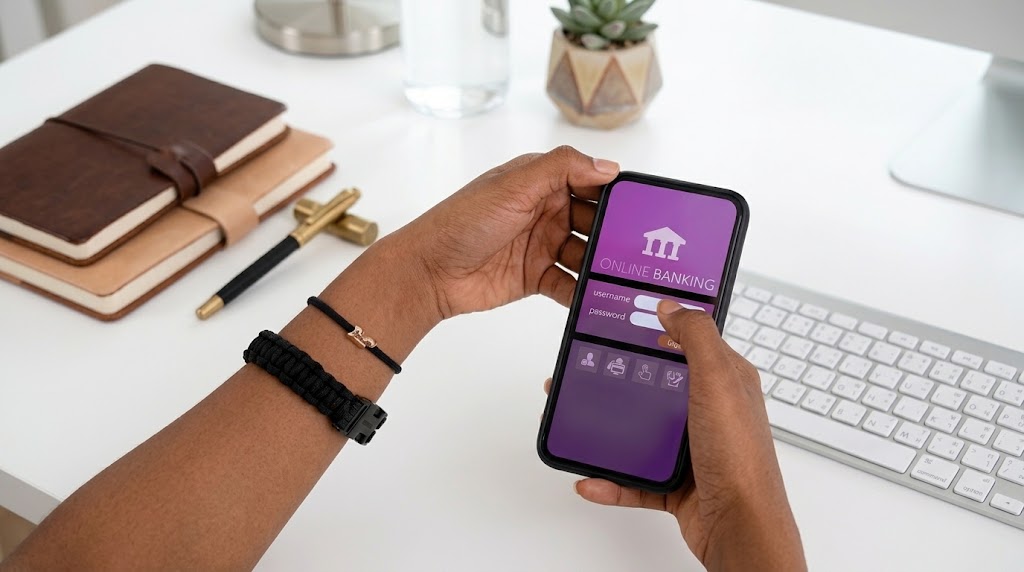
What Happens to Customer Money When a Fintech App Shuts Down?

Buy Now, Pay Later Looks Easy But Here is What You’re Really Agreeing To
Follow TechView Africa on WhatsApp
Get TechView Africa updates on WhatsApp. Follow our channel for practical technology news, product guides and digital trends from Nigeria and across Africa.
Leave a comment
Comments cannot be edited or deleted after posting. Please review your comment before submitting.
No comments yet. Start the conversation.