

AI is already useful for some everyday tasks in languages such as Hausa, Yoruba, Igbo, Swahili and Afrikaans, but performance is not consistent enough to assume that every translation, voice input or culturally specific expression will be understood correctly.
Can AI Keep Up With Africa’s Languages?
AI tools are becoming much better at handling African languages, but support is still uneven. For simple translation, short questions and familiar phrases, they can already be useful; for dialects, code-switching, proverbs and important decisions, human verification still matters.
Yes, but with limits. AI can often translate straightforward sentences, explain common words and respond to simple prompts in several African languages, although the quality may vary substantially between languages and even between different ways of speaking the same language.
That matters because everyday communication across Africa is rarely perfectly standardised. A conversation may move between English and Yoruba, Hausa or Igbo, include Nigerian Pidgin, or rely on slang, proverbs and expressions whose meaning depends heavily on context.
African language support is expanding
The technology has improved considerably. In 2024, Google added 110 languages to Google Translate, with roughly a quarter of the additions coming from Africa, including Fon, Kikongo, Luo, Ga, Swati, Venda and Wolof.
Meta has also developed No Language Left Behind, whose NLLB-200 research model covers 200 languages, including more than 50 African languages. Meanwhile, Mozilla Common Voice allows communities to contribute and validate speech recordings that can help researchers build better speech-recognition systems. Greater coverage, however, does not automatically mean equal accuracy.
Where AI still struggles
A major problem is the amount and quality of available data. AI systems generally perform better in languages with large collections of digital text and speech, while many African languages remain comparatively underrepresented online.
In April 2026, UNESCO described African languages as a significant blind spot for AI, noting that systems trained predominantly on content from dominant languages can be less effective when dealing with languages such as Hausa and Zulu.
The 2025 AfroBench study evaluated large language models across 64 African languages and 15 tasks, finding substantial performance gaps between English and African languages across most of the tasks tested. Another 2025 study using the Sahara benchmark similarly found that some African languages performed reasonably well while many others remained disadvantaged by sparse data.
Everyday code-switching creates another challenge. Research on African code-switched language data notes that switching between languages is common in multilingual communities but remains inadequately represented in high-quality datasets. An AI system may therefore recognise individual words while still misunderstanding the intended tone or meaning of the whole sentence.
What can you safely use it for?
For low-risk tasks, AI can already be genuinely helpful. It can provide the rough meaning of a message, help with vocabulary practice, translate simple phrases, suggest alternative wording and let users experiment with communicating in their preferred language.
The important distinction is between convenience and reliability. If the translation concerns health, law, money, school admissions, an official document or another important decision, do not rely on the AI output alone; have a fluent speaker or qualified professional verify it first. Fluent looking grammar is not proof that the underlying meaning is correct.
Our Recommendation
Test AI with the African language you actually use, including normal spelling, informal expressions and the way you naturally combine languages. If it consistently understands your everyday prompts, it can be a useful assistant for low-stakes tasks, but important information should still be checked independently.
African-language AI is clearly improving, yet the answer is not simply yes or no: for some languages and everyday tasks it is already useful, while truly dependable understanding across Africa’s full linguistic diversity remains a work in progress.
Sources & Verification
Google — 110 New Languages Added to Google Translate
Meta AI — No Language Left Behind
Mozilla Common Voice — Speech Datasets
UNESCO — African Languages, the Blind Spot of AI
ACL Anthology — AfroBench: How Good Are Large Language Models on African Languages?
ACL Anthology — Where Are We? Evaluating LLM Performance on African Languages
Frequently asked questions
Does AI understand Yoruba, Hausa and Igbo?
Many current AI systems can process text in these languages, but accuracy varies by task, wording and dialect, so important translations should still be checked.
Why do some African languages perform worse?
Many have less high-quality digital text, speech and evaluation data available than heavily represented global languages, giving models fewer examples to learn from.
Will African-language AI get better?
Probably, as researchers, technology companies and community projects expand datasets and evaluation, although progress will depend heavily on native-speaker participation and better local-language data.

Google Is Giving Nigerian Students Google AI Plus Free for One Year: Here’s How to Claim It
Meta Wants Muse to Help Run Small Businesses. Here’s What Owners Should Keep Under Human Control
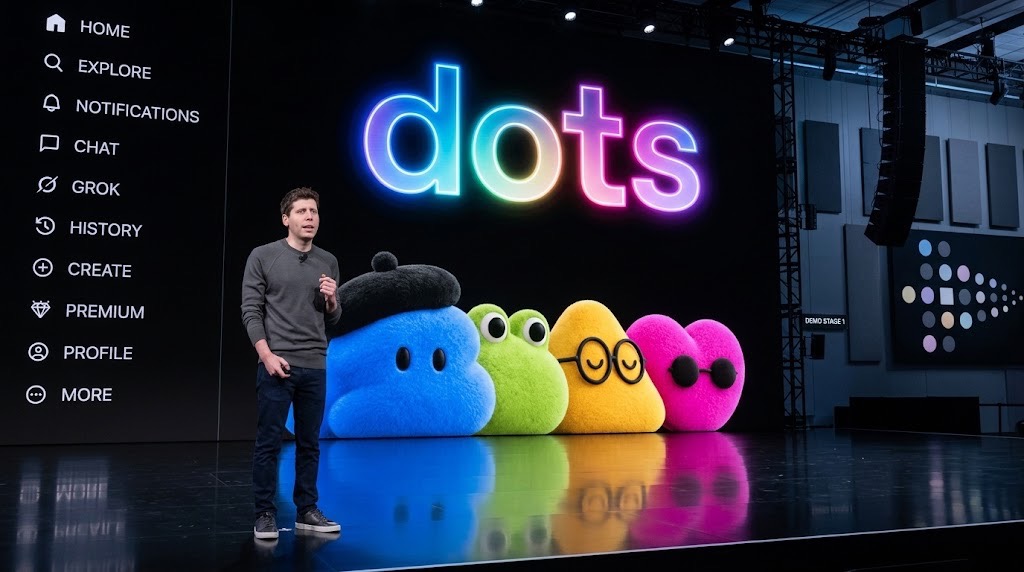
OpenAI’s Dots Can Keep Working After You Leave ChatGPT. That Changes What Using AI Means

50 Remote AI Jobs and Expert Projects Open Across Micro1, Mercor, Outlier and Handshake AI
16,326 Supabase Databases Had Readable Tables. The AI App Boom Is Scaling an Old Security Mistake
Claude Went From Leading Under 1% of Anthropic’s AI R&D to 26% in Six Months. Here’s What That Means

As AI Agents Gain More Control, Cybersecurity Rules Are Being Rewritten
Follow TechView Africa on WhatsApp
Get TechView Africa updates on WhatsApp. Follow our channel for practical technology news, product guides and digital trends from Nigeria and across Africa.
Leave a comment
Comments cannot be edited or deleted after posting. Please review your comment before submitting.
No comments yet. Start the conversation.