

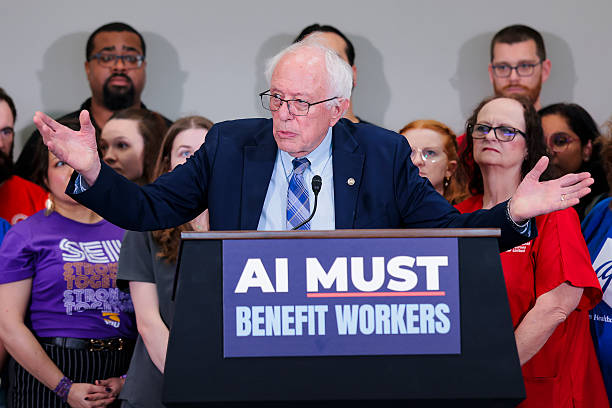
AI will transform work faster than entire occupations disappear. But the real challenge will be ensuring that workers, particularly young people, can gain the experience, expertise and opportunities needed to benefit from the new forms of employment that emerge.
AI is changing how businesses operate, which tasks people perform and how workers build their careers. Over the next decade, the bigger question will not simply be which jobs disappear, but what new forms of work emerge and who gets the opportunity to do them.
The future of work and AI is often reduced to two questions: how AI will change work and whether AI and jobs can coexist without widespread displacement. “Will AI take my job?” and “Will AI create more jobs than it replaces?” capture the anxiety, not the process. AI's impact on jobs, the future of jobs and the future of employment depend on three differently paced processes.
TVA’s three-clock framework examines three connected processes: how AI transforms tasks, how occupations adapt, and whether workers can access the new opportunities that emerge. It provides an editorial perspective on how AI is reshaping employment and the world of work, rather than presenting an established academic model.
The first clock: AI automation and jobs, tasks change before occupations
The International Labour Organization’s 2025 occupational exposure index estimated that one in four workers globally was in an occupation with some generative-AI exposure; 3.3% of global employment was in the highest exposure category. AI exposure by occupation measures potential task change, not job losses. Jobs exposed to AI are not necessarily eliminated.
Which tasks AI can automate is the key question. AI task automation can handle routine processing; AI augmentation can help employees research, analyse and respond faster. Automation versus augmentation depends on how employers redesign workflows, measure AI workplace productivity and organise human-AI collaboration.
The ILO’s June 2026 review found uneven productivity gains, limited large-scale displacement and no consistent translation of reported time savings into output, earnings or employment. Jobs affected by AI are not redundancies: AI changing job roles does not automatically make an occupation disappear, and AI job displacement must be measured rather than assumed.
The second clock: new jobs created by AI may emerge within existing work
New jobs created by AI are often imagined as emerging occupations with technology-focused titles. But jobs created by technology can also appear as specialist responsibilities and new forms of work inside established industries. Occupational change does not always require a new job title.
In What Makes New Work Different from More Work?, David Autor, Caroline Chin, Anna Salomons and Bryan Seegmiller report that 18.3% of US workers in 2011–2023 held jobs introduced since 1970. These roles disproportionately employed younger, more educated workers and carried premiums linked to scarce expertise. Those premiums declined as knowledge spread: new expertise and jobs gain value while skills are scarce, not simply because a role is new.
In the CEPR paper What the History of (New) Jobs Can Tell Us, William Skoglund, Jakob Molinder and Kerstin Enflo find that more than 70% of Swedish employment in 2019 remained in occupations whose core functions existed in the late nineteenth century. Much new work arose through specialisation within established functions; occupations directly tied to new technologies were comparatively small and unstable.
The studies use different countries, periods and definitions: the US research counts occupations introduced since 1970, while the Swedish study tracks whether core functions were historically new. Together, they suggest future occupations may grow through AI-driven specialisation inside familiar industries. The value of human expertise may lie in new combinations of domain knowledge and responsibility.
The third clock: AI and entry-level jobs, who can access new work?

Access is the slowest clock. The future of entry-level work depends on whether people can gain experience and judgement for new responsibilities. Re-skilling and up-skilling matter, but lifelong learning at work cannot replace the first chance to practise.
The evidence reveals a tension. A 2025 Quarterly Journal of Economics study of 5,172 customer-support agents found AI assistance raised issues resolved per hour by 15%; less experienced workers improved in speed and quality.
Stanford’s August 2026 study of US ADP payroll data found no economy-wide displacement. However, employment among workers aged 22–25 in AI-exposed occupations was 19% below the comparison trend for similarly aged workers in less-exposed occupations. The gap was associated mainly with reduced hiring, not increased separations. The authors called these early descriptive indicators, not causal proof; the gap weakens with education controls and is stronger in ADP than national survey benchmarks.
The studies measure different settings; one does not explain the other. Together, they raise a possibility: AI may help junior employees perform better once hired while allowing employers to recruit fewer beginners for routine tasks. That makes AI hiring trends, AI and graduate employment, AI impact on young workers, early-career opportunities and entry-level career pathways as important as layoffs. AI workplace training, supervised projects and apprenticeships in the AI era may replace learning once gained through routine assignments. WEF’s 2026 framework likewise flags job access, job design, talent pipelines and education alignment. TVA has examined how AI is changing entry-level technology jobs.
Future of work in Africa: lower exposure, unequal access to the gains
The African labour market and AI face different conditions from richer economies. The IMF’s July 2026 paper estimates about 22% of sub-Saharan African employment is potentially affected by current AI: around 13% of all jobs have significant replacement exposure, while almost 10% may benefit through complementarity. These are modelled estimates, not observed job losses. Agriculture, informal services and physical tasks help explain lower exposure; Nigeria’s occupational mix is among the region’s more exposed.
This is the paradox of AI employment in Africa: lower exposure may reduce disruption but also limit AI productivity in Africa if firms cannot adopt the technology. AI and jobs in Africa, AI adoption in Africa and AI readiness in Africa depend on electricity, connectivity, data, computing capacity, skills and institutions. The World Bank’s October 2026 Africa Economic Update emphasises these foundations. Digital skills in Africa cannot offset weak infrastructure.
The Africa Youth Employment Outlook 2026 estimates 532 million Africans were aged 15–35 in 2025, with 304 million working; 90% of employed young Africans (273 million) were in informal jobs. More than 10 million enter the labour market annually, against roughly three million formal jobs generated under current growth patterns. These figures describe African youth employment, not AI losses. Informal employment in Africa means AI and youth employment cannot be separated from job quality and access to secure work; this is central to youth employment in Africa.
For Nigeria, the future of work in Nigeria is a question of Nigeria jobs and AI: can businesses use AI to expand output and create specialist work? AI and Nigerian workers will experience change differently across finance, agriculture, health and services. TVA’s reporting on Africa’s AI skills gap and AI literacy for African jobseekers covers practical skills; this analysis examines the employment structure those skills must connect to.
Where humans fit: judgement, accountability and physical work
Human contribution will not be secured by a list of AI-proof careers. In AI workplaces, people must check outputs, identify exceptions, explain decisions and accept responsibility. Human judgement at work matters when AI-assisted loan, medical or fraud decisions affect someone’s money, health or rights. Human accountability in AI workplaces requires clear decision-makers and routes to challenge flawed recommendations.
Physical work and AI will coexist unevenly: AI can improve crop planning, diagnosis, routing and maintenance, but applying advice still involves unpredictable physical conditions. What skills will matter as AI advances? Domain knowledge, AI literacy at work, communication and verification. Future skills for work, skills in the AI era and human skills in the AI era differ by occupation; no checklist makes a worker safe.
Who benefits from the future of human work?
The evidence cannot yet settle whether AI will create more jobs than it replaces, especially in Africa. It does show that task transformation, occupational change and access are separate: firms can automate without eliminating occupations, and productivity can rise without creating entry-level openings.
Employers must redesign junior roles around supervised problem-solving; educators need work-based projects; governments need infrastructure that supports productive adoption. Workers need domain expertise alongside AI literacy, but cannot create opportunities alone. The future of human work will depend on whether the access clock catches up.
Frequently asked questions
1. How will AI change the future of work?
AI will change the future of work by automating some tasks, improving productivity in others and creating new responsibilities within existing occupations. Rather than eliminating entire professions immediately, AI is likely to reshape how businesses organise work, recruit employees and value human expertise.
2. Will AI create more jobs than it replaces?
It is not yet possible to determine whether AI will create more jobs than it replaces. Although technological change can generate new occupations and specialisations, those opportunities may not emerge quickly enough or be accessible to workers whose existing tasks are automated. The outcome will depend on business investment, job creation, education and access to new employment opportunities.
3. Which jobs are most affected by artificial intelligence?
Jobs involving routine information processing, document preparation, data analysis, customer support and administrative tasks are among those exposed to current generative AI capabilities. However, exposure does not automatically mean job loss. The extent of disruption depends on how much of an occupation's work can be automated and how employers reorganise the remaining responsibilities.
4. What skills will workers need as AI becomes more widespread?
Workers will increasingly need AI literacy, critical thinking, communication, adaptability, specialist knowledge and the ability to verify AI-generated information. Practical experience and professional judgement will also matter because employees must understand when to rely on AI, when to challenge its outputs and when human decisions are necessary.
5. How will AI affect employment opportunities in Africa?
AI could improve productivity and support new employment opportunities across African industries, but its benefits will depend on infrastructure, education, business adoption and access to digital tools. Although current AI exposure is relatively lower across much of sub-Saharan Africa, informal employment and limited access to productive, secure jobs mean that creating opportunities for workers will remain a major challenge.

ChatGPT Ads Arrive in Nigeria: What ₦3,250 a Day Really Means

We Analysed Software Engineering Jobs in Africa: These 7 Skills Still Matter Even When AI Can Write the Code
We Checked 20 Humanoid Robot Deployments. Only Two Published Quantified Operating Results
We Analysed AI Job Listings Across Africa: Here’s What We Found

Google and AWS Are Making AI Chips Easier to Use. Is NVIDIA’s Software Advantage Narrowing?
MORENA AI Supports 12 African Languages, but How Accurate Is It?

Remote AI Jobs for Africans: Where You Can Apply, Pay and Eligibility Rules
Follow TechView Africa on WhatsApp
Get TechView Africa updates on WhatsApp. Follow our channel for practical technology news, product guides and digital trends from Nigeria and across Africa.
Leave a comment
Comments cannot be edited or deleted after posting. Please review your comment before submitting.
No comments yet. Start the conversation.