

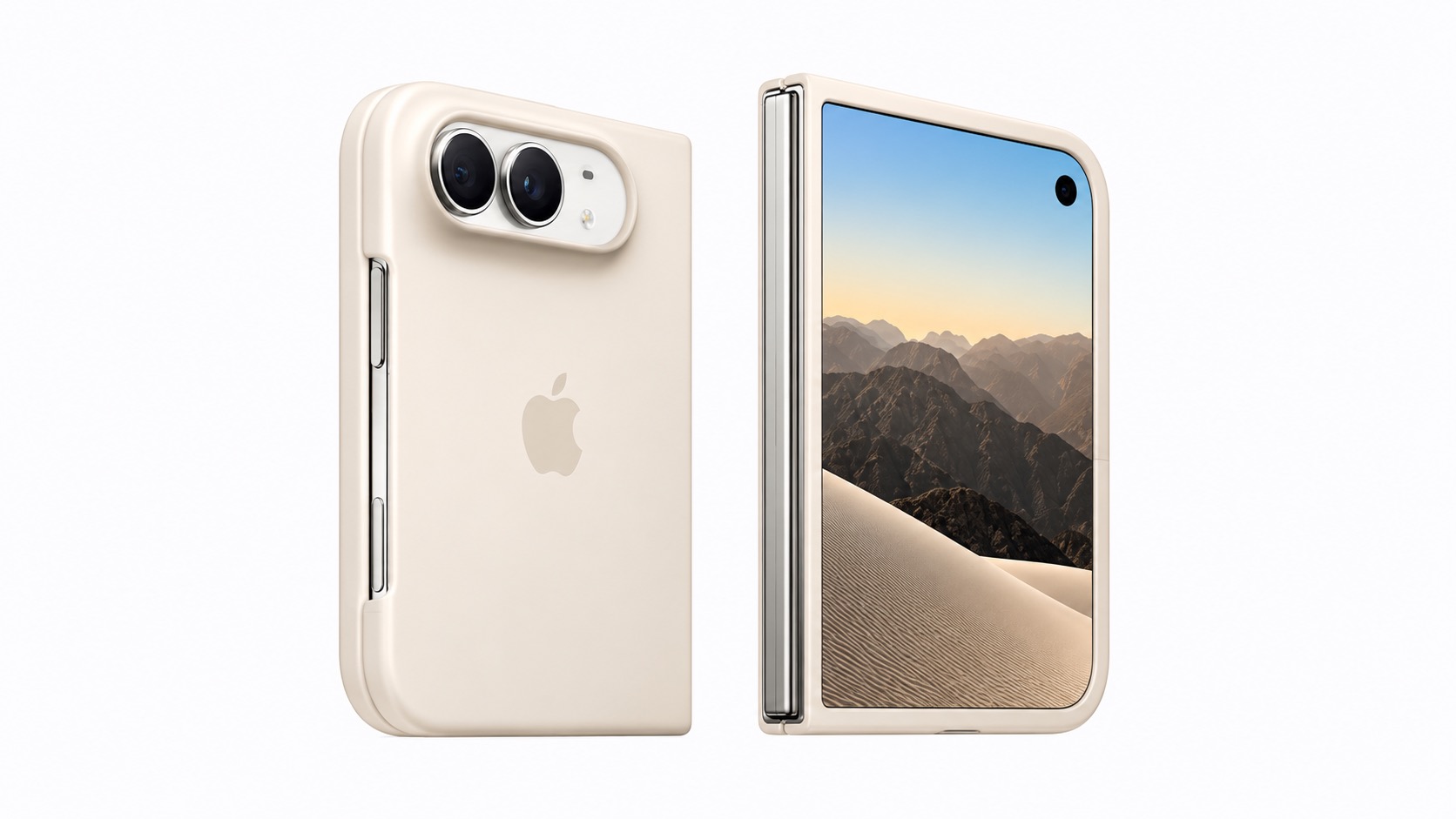
What Apple Got Right and What $1,999 Still Doesn’t Buy You
Apple’s first foldable iPhone gets several difficult things right, but the $1,999 Duo also asks buyers to accept compromises that are easy to overlook when the screen first unfolds.
The iPhone Duo combines an impressive folding display, strong performance and thoughtful iOS integration, but its missing dedicated telephoto camera, Touch ID instead of Face ID, eSIM-only design and uncertain Nigerian retail support make it difficult to recommend broadly.
TechView Africa has not yet physically tested a retail iPhone Duo. This review combines Apple’s confirmed specifications with independent hands-on impressions from journalists who used pre-release devices after the September 9 launch.
Apple’s first foldable iPhone is finally real, but the interesting part is not simply that it folds. Samsung, Huawei and others have already proved the format. Apple’s challenge is making it useful enough to justify $1,999 for 256GB, rising to $3,199 for 2TB.
The display is the reason to buy it
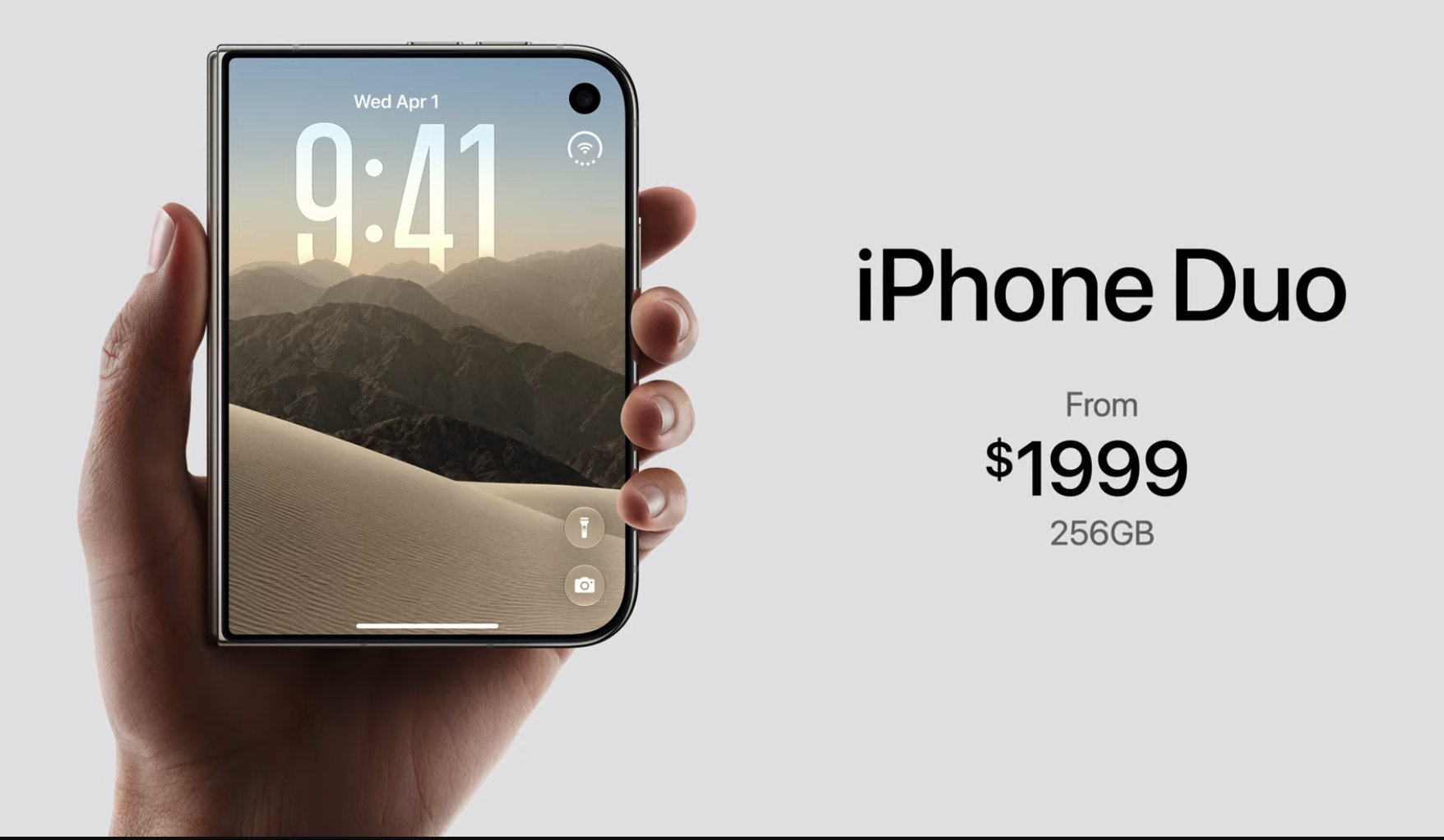
Closed, the Duo has a 5.4-inch outer display. Open it and you get a 7.6-inch Super Retina XDR OLED with ProMotion up to 120Hz and 3,000 nits peak outdoor brightness. At 5.2mm when open, it is remarkably thin, though the 254g weight is noticeable.
MacRumors found the crease still visible but far less distracting than expected, helped by the nano-texture finish. Apple says the hinge uses more than 100 components and the phone carries an IP68 rating. That sounds reassuring, but launch-week impressions cannot tell us how the flexible display will age after thousands of folds.
iOS makes the fold useful
MacRumors — iPhone Duo Hands-On
Apple has redesigned iOS 27 around the Duo rather than simply stretching ordinary iPhone apps.
Split View lets two apps run side by side, app pairs can be saved, and the phone can sit partially folded for video calls or photography. Apple Pencil USB-C support arrives later in 2026.
The limitation is flexibility. Apple’s multitasking remains more controlled than on some Android foldables, so buyers expecting desktop-like window management may find it restrictive.
The cameras expose the biggest compromise
This is Apple’s most expensive iPhone, but not its most versatile camera phone. The Duo has a 48MP Fusion Main camera and 48MP Ultra Wide, with a 2x optical-quality crop from the main sensor. There is no dedicated telephoto camera. Face ID is absent too; authentication comes through Touch ID in the side button.
The folding design adds useful tricks. Duo Preview lets the person being photographed see the framing on the outer display, while the phone can support itself for hands-free shots.
Battery life looks respectable
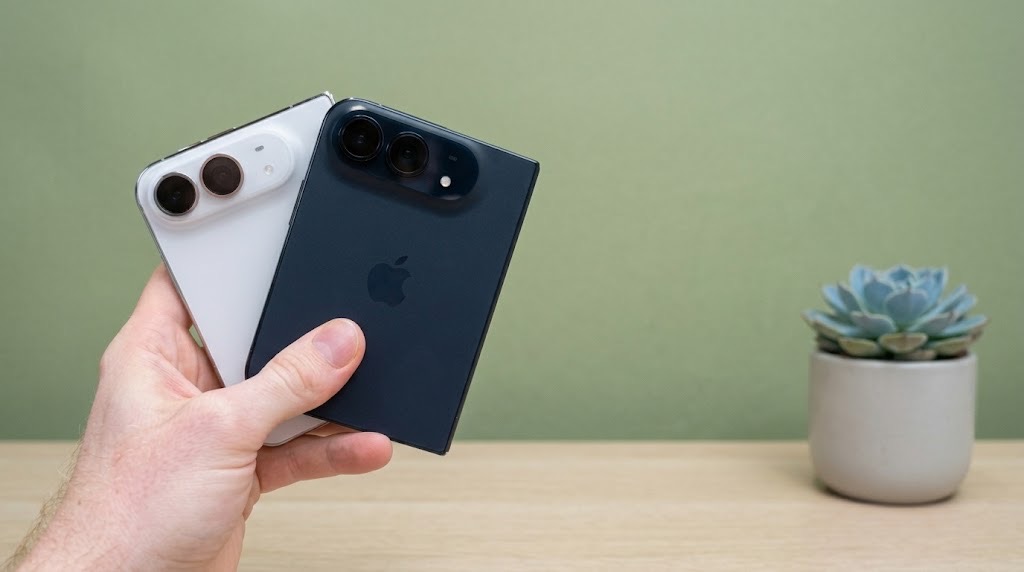
The A20 Pro is paired with a vapour chamber and two batteries that work as one system. Apple rates the Duo for up to 24 hours of mixed use, 31 hours of video on the inner display and 44 hours on the outer display. Fast charging can reach 50% in around 20 minutes with the required charger.
Nigeria changes the buying calculation
The Duo is eSIM-only worldwide. Apple’s current Nigeria carrier page marks 9mobile, Airtel and Globacom as supporting eSIM on iPhone. Buyers should still verify compatibility directly with their network before importing one.
Apple’s Nigeria “Where to buy” page also does not currently list the Duo. Nigerian buyers should therefore not simply convert the US price into naira and assume that represents local pricing, warranty coverage or repair access.
TechView Africa’s analysis of smartphone repair costs in Nigeria found displays among the most expensive common repairs. A flexible inner screen makes authorised service especially important.
Our earlier comparison of Apple, Huawei and Xiaomi’s premium foldables also shows that Apple is entering an established category rather than inventing one.
Our Recommendation
The iPhone Duo looks unusually polished for a first-generation Apple foldable, especially its display, hinge and software integration. But it asks buyers to pay almost $2,000 while accepting no dedicated telephoto camera, Touch ID instead of Face ID and the uncertainty of a new folding design.
For most African buyers, waiting is sensible. Give durability testing time to mature, watch for confirmed local distribution and find out what screen or hinge repairs actually cost.
Buy now only if the folding display solves a real problem for you and the total cost is comfortably within your budget.
Sources & Verification
Apple — iPhone Duo Technical Specifications
Apple — Official iPhone Duo Announcement
Apple — iPhone Carrier Support in Africa
Apple — iPhone Availability in Nigeria
Frequently asked questions
Does the iPhone Duo have Face ID?
No. Apple uses Touch ID in the side button.
Does it support a physical SIM?
No. The iPhone Duo is eSIM-only worldwide.
When does the iPhone Duo launch?
Pre-orders begin October 16, with availability from October 23.
Tecno Phone Prices in Nigeria (2026): What Current Models Actually Cost
Huawei Phones in Nigeria in 2026: The Price Is Only Half the Buying Decision
The Same iPhone Can Be Different by Region: What Nigerian Buyers Should Know

Spotify Audiobooks Are Now in Nigeria: Prices, Listening Limits and How It Works
iPhone 18 Pro vs iPhone 17 Pro: What Changed, and Is It Worth Upgrading?
iPhone Duo vs iPhone 18 Pro Max: Foldable Screen or Apple’s Best Conventional iPhone?
Selling Your Phone? Factory Reset Should Be the Last Step, Not the First
Follow TechView Africa on WhatsApp
Get TechView Africa updates on WhatsApp. Follow our channel for practical technology news, product guides and digital trends from Nigeria and across Africa.
Leave a comment
Comments cannot be edited or deleted after posting. Please review your comment before submitting.
No comments yet. Start the conversation.