

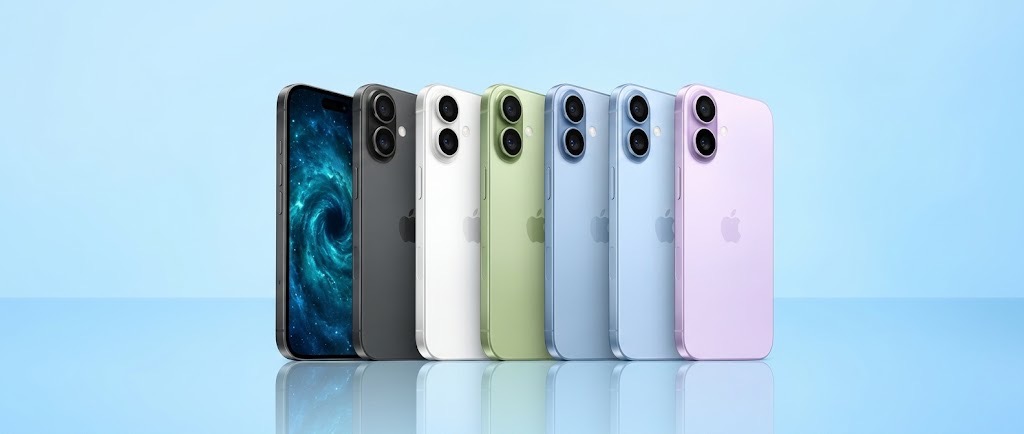
Buying an Imported iPhone in Nigeria? We Compared What Changes by Region
Two iPhones with the same name and storage can still have important regional differences. We compared the versions commonly imported from the US, UK, UAE, Japan and China to see what actually matters in Nigeria.
For most Nigerian buyers, models that retain a physical SIM while also supporting eSIM provide the least complicated ownership experience. US models from the iPhone 14 generation onward are eSIM-only, while some Chinese-market iPhones support two physical SIMs. Warranty and satellite services can also depend on where the phone was originally sold.
Imported iPhones are common in Nigeria, but the country printed on the original sales paperwork can affect more than resale value.
Apple manufactures different regional variants of the same iPhone generation, and the differences can include SIM hardware, cellular bands, satellite features and warranty service. That means two shops can sell apparently identical iPhones while offering slightly different ownership experiences.
The SIM setup is the biggest difference
Apple says iPhone 14 and later models sold in the United States use eSIM only. There is no physical SIM tray, so a Nigerian buyer depends entirely on eSIM activation.
That is less restrictive than it once was. Apple currently lists 9mobile, Airtel, Glo and MTN among Nigerian networks offering eSIM activation on compatible iPhones through methods such as QR codes or carrier apps. Apple's worldwide eSIM carrier list confirms that support.
UK and many other international variants still combine a physical nano-SIM with eSIM, giving users a fallback if they want to move a SIM quickly between devices.
China, Hong Kong and Macao are different again. Apple documents certain regional iPhones that support two physical nano-SIM cards, although the exact configuration depends on the model and generation.
| Source market | Typical SIM difference on recent models | What it means in Nigeria |
|---|---|---|
| United States | eSIM-only from iPhone 14 onward | Works with supported Nigerian eSIM networks, but no physical-SIM fallback |
| United Kingdom | Physical nano-SIM + eSIM on many models | Flexible for Nigerian physical SIM and eSIM use |
| UAE | Configuration varies by generation | Check the exact model before buying |
| Japan | Configuration varies by generation | Check model number and regional specification |
| China mainland | Some models support two physical nano-SIMs | Useful for buyers who prefer two physical lines |
Network compatibility is not identical either
Regional iPhones can carry different Apple model numbers because their cellular hardware is designed for different markets. The practical question is not whether one version has “more 5G.” It is whether its supported LTE and 5G bands match the Nigerian network you intend to use. Before paying, buyers can use Apple's iPhone model-identification guide to confirm the model number and intended region.
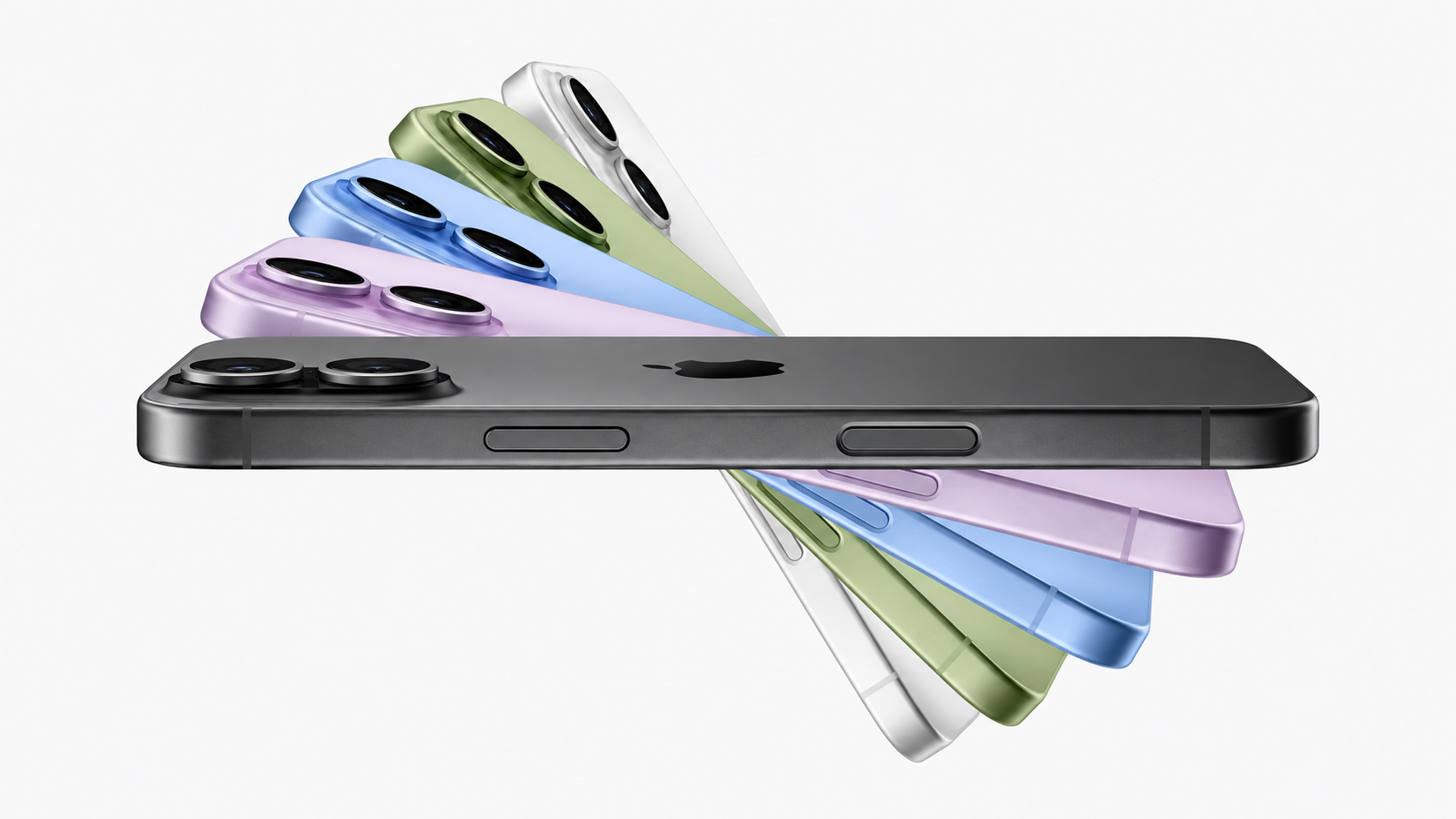
Satellite features are another hidden limitation
Modern iPhones from the iPhone 14 generation onward can contain satellite hardware, but service availability depends on location.
Apple currently lists Emergency SOS via satellite in selected countries including the US, UK, Japan, Australia and several European markets; Nigeria is not currently included. Apple's satellite availability documentation also explains that expansion depends on regulation and market-specific approvals.
So buying an imported iPhone with satellite capability does not automatically give a Nigerian user satellite SOS while using it in Nigeria.
Warranty can depend on where the phone came from
Regional origin also matters when something goes wrong. Apple's iPhone warranty terms state that the company may restrict warranty service to the country where Apple or an authorised distributor originally sold the device. Parts availability and service options can also vary between countries.
For an expensive imported phone, that makes proof of purchase and source market worth checking before payment. Buyers should also verify that the device is genuinely new. TVA's guide on how to identify a smartphone being sold as new when it may actually be refurbished covers the checks worth making before purchase.
Regional feature differences are not unique to Apple either; TVA has previously examined how advertised Pixel features can change outside the US.
Our Recommendation
For most Nigerian buyers, an imported iPhone with both a physical SIM tray and eSIM support offers the simplest ownership experience because it provides flexibility without depending entirely on digital SIM activation.
An eSIM-only US model can still work perfectly well for users comfortable with eSIM, while selected Chinese-market models may appeal to buyers who strongly prefer dual physical SIMs.
The important step is to stop treating every regional iPhone as interchangeable. Before paying, verify the model number, original sales region, SIM arrangement, carrier-lock status and warranty position.
Verification Links
Apple — Identify Your iPhone Model
Apple — Remove or Switch the SIM Card in Your iPhone
Apple — Using Dual SIM With Two Nano-SIM Cards
Apple — Worldwide iPhone eSIM Carrier Support
Apple — Use Dual SIM on iPhone
Frequently asked questions
Do US iPhones work in Nigeria?
Yes, provided the device is unlocked and compatible with the network. Recent US models rely on eSIM, which is supported by major Nigerian operators.
Is a UK iPhone better for Nigeria?
Not automatically, but a physical SIM plus eSIM can make ownership more flexible for buyers who regularly swap SIM cards.
Can I use two physical SIMs in an iPhone?
Some iPhones originally sold in China mainland, Hong Kong or Macao support two nano-SIM cards. Check the exact model because support varies by generation.
Does satellite SOS work in Nigeria?
Not currently. Nigeria is not on Apple's present Emergency SOS via satellite availability list.

iPhone Duo Review: What Apple Got Right and What $1,999 Still Doesn’t Buy You
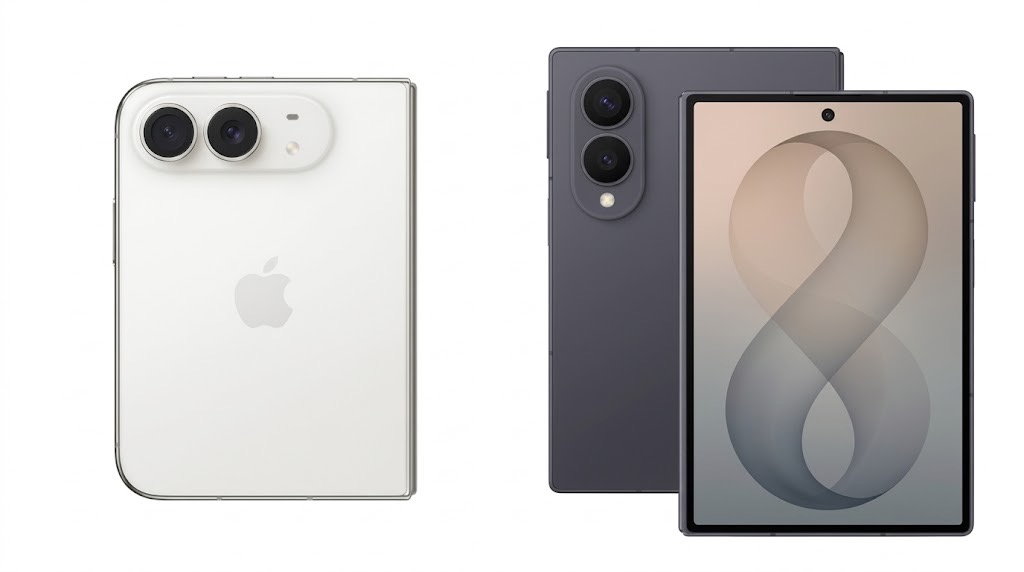
Apple Arrived Eight Generations Late: iPhone Duo vs Galaxy Z Fold8 Shows What It Learned From Samsung
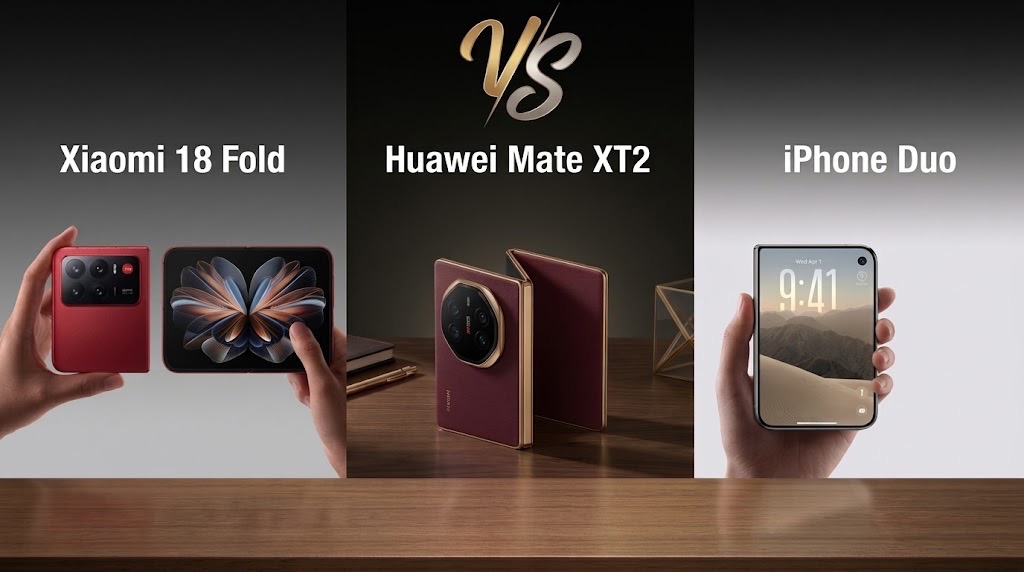
Apple Has Finally Joined Huawei and Xiaomi’s Foldable Fight But Who Are These Ultra-Premium Phones Really For?
We Checked What It Costs to Repair 20 Popular Smartphones in Nigeria: Screens Are the Expensive Part
Huawei’s Mate XT2 Folds Twice and Shows How Fast Premium Smartphones Are Changing
Why Your Phone’s Screen Can Cost Almost Half the Device to Replace
Apple Has a New Boss: What to Expect From John Ternus’ First iPhone Launch on September 9
Follow TechView Africa on WhatsApp
Get TechView Africa updates on WhatsApp. Follow our channel for practical technology news, product guides and digital trends from Nigeria and across Africa.
Leave a comment
Comments cannot be edited or deleted after posting. Please review your comment before submitting.
No comments yet. Start the conversation.