


Compare your actual distribution of order values: two businesses with the same monthly revenue can face different payment-processing costs.
Paystack vs Flutterwave in Nigeria: How Payment Fees Affect What Your Business Earns
For standard local online payments where the merchant absorbs processing charges, Paystack is cheaper below ₦2,500 and above approximately ₦15,384.62. Flutterwave is cheaper between those points under the published rates modelled here. These results exclude refunds, negotiated pricing and separately applicable charges.
Choosing between Paystack and Flutterwave requires more than comparing two percentages. Fixed charges, fee caps and VAT change what a Nigerian merchant retains from each sale. The cheaper option can change with the order amount.
For a ₦5,000 standard local online payment, our calculations leave the merchant with ₦4,825 through Paystack or ₦4,892.50 through Flutterwave. At ₦50,000, the result reverses: ₦49,150 through Paystack, against ₦48,925 through Flutterwave.
These are proceeds after the processing deductions described below, not business profit or guaranteed final bank credits. Product costs, delivery, refunds and any separately applicable charges still matter.
What we compared
TechView Africa reviewed official pricing, tax and support documents and calculated seven order values plus one illustrative month of sales. This is a documentation-based comparison, not a live payment-success or settlement-speed test.
The numerical model covers successful local online card payments charged in Naira at standard advertised rates, with the merchant absorbing fees. It excludes international cards, physical POS terminals, dedicated virtual-account products, negotiated discounts, refunds, chargebacks, outgoing transfers and separately applicable bank charges or government levies.
Those boundaries matter: a provider’s cheaper specialist collection product should not be silently compared with another provider’s general checkout rate.
The published fees and the VAT difference
Paystack’s Nigerian pricing lists 1.5% plus ₦100, with the ₦100 waived for transactions below ₦2,500. The local processing fee is capped at ₦2,000 per transaction.
Flutterwave’s Nigerian pricing page lists 2%, comprising a 1.4% transaction fee and 0.6% platform fee. Comparing Paystack against 1.4% alone therefore understates Flutterwave’s published charge.
VAT creates another distinction. Paystack’s Nigerian terms say its fees include applicable taxes unless expressly stated otherwise. We therefore do not add another 7.5% to the standard Paystack fee.
Flutterwave’s VAT guidance explicitly adds 7.5% VAT to its fees. When the merchant absorbs the standard local charge, the calculation is: 2% × 1.075 = 2.15% of the payment amount.
For a ₦10,000 payment, that means ₦200 in processing fees and ₦15 in VAT, leaving ₦9,785. The VAT calculation concerns the provider’s fee, not 7.5% of the entire sale. Tax obligations on the merchant’s own goods or services are a separate question.
| Pricing component | Paystack | Flutterwave |
|---|---|---|
| Standard local processing fee | 1.5% plus ₦100 | 2% |
| Small-payment adjustment | ₦100 waived below ₦2,500 | No fixed charge in the published standard rate |
| Processing-fee cap | ₦2,000 | No cap stated on the current Nigeria pricing page |
| VAT treatment used here | Included under published terms | 7.5% added to fees |
For Flutterwave, the calculations apply the published percentage without a cap. A merchant-specific agreement can change either provider’s result.
What remains from different order values?

The table shows the payment amount minus the processing deductions above. Figures are rounded to two decimal places.
| Customer pays | Merchant retains: Paystack | Merchant retains: Flutterwave |
|---|---|---|
| ₦2,000 | ₦1,970.00 | ₦1,957.00 |
| ₦2,500 | ₦2,362.50 | ₦2,446.25 |
| ₦5,000 | ₦4,825.00 | ₦4,892.50 |
| ₦10,000 | ₦9,750.00 | ₦9,785.00 |
| ₦20,000 | ₦19,600.00 | ₦19,570.00 |
| ₦50,000 | ₦49,150.00 | ₦48,925.00 |
| ₦200,000 | ₦198,000.00 | ₦195,700.00 |
Source: TechView Africa calculations from the published rates; these are illustrative transactions.
Paystack’s ₦100 charge begins at ₦2,500, creating a noticeable change at that threshold. At higher amounts, its lower percentage and eventual fee cap become more valuable.
For payments subject to Paystack’s fixed charge but below its cap, the crossover follows this equation: 1.5% of the order + ₦100 = 2.15% of the order.
That produces approximately ₦15,384.62. Below ₦2,500, Paystack’s waived fixed charge makes it cheaper in this model. Between ₦2,500 and the crossover, Flutterwave is cheaper. Above the crossover, Paystack is cheaper.
These are processing-cost comparisons under stated assumptions, not a verdict on overall service quality.
One month of sales: why the order mix matters
Consider a fictional business processing 300 successful local payments:
| Order group | Number of payments | Sales value |
|---|---|---|
| ₦2,000 orders | 100 | ₦200,000 |
| ₦5,000 orders | 100 | ₦500,000 |
| ₦20,000 orders | 80 | ₦1,600,000 |
| ₦200,000 orders | 20 | ₦4,000,000 |
| Total | 300 | ₦6,300,000 |
Applying the fee to each individual transaction gives:
| Monthly result | Paystack | Flutterwave |
|---|---|---|
| Processing deductions, including the VAT treatment above | ₦92,500 | ₦135,450 |
| Proceeds after those deductions | ₦6,207,500 | ₦6,164,550 |
Paystack leaves ₦42,950 more in this particular scenario. The twenty ₦200,000 transactions strongly influence that outcome because Paystack’s cap limits each processing charge.
A business concentrated around ₦5,000 orders would obtain a different result. Applying a percentage to total monthly revenue cannot accurately reproduce Paystack’s per-transaction fixed charge, waiver and cap.
As TVA’s guide to turning online visibility into sales explains, sales revenue also needs to be distinguished from profit. A payment-cost saving improves the amount retained from a sale; it does not establish the profitability of the business.
Passing fees to customers changes the comparison
Both providers allow merchants to pass transaction charges to customers. Paystack documents an automatic setting that adds the charge at checkout and preserves the listed product amount for the merchant.
Flutterwave also supports passing transaction charges to customers, but its VAT guidance says the merchant bears VAT and cannot pass it through that fee setting. Switching on customer-paid fees therefore does not necessarily eliminate every merchant deduction.
Compare the customer’s final checkout total alongside the merchant’s proceeds. If you incorporate charges into product prices yourself, remember that percentage fees can apply to the increased amount; simply adding the original fee estimate may leave a shortfall.
Collection fees are different from transfer fees
A collection fee concerns receiving a customer payment. An outgoing transfer fee concerns sending money through the provider’s transfer service. Do not automatically add an outgoing transfer charge to every incoming sale.
Both public pricing pages list Naira transfer tiers of ₦10, ₦25 and ₦50, depending on the amount sent. Those figures require separate consideration of applicable VAT and levies; they are not included in our collection tables.
When reconciling proceeds, identify the transaction, processing deduction and settlement separately. TVA’s guide to verifying that a payment genuinely arrived also explains why a customer’s screenshot is insufficient evidence.
Refunds can leave costs behind
Paystack’s refund guidance explicitly states that the original transaction charge is not returned when a customer is refunded. A refunded sale therefore does not necessarily undo its processing cost.
Flutterwave’s international-processing FAQ excludes transaction and international-processing fees from its refund schedule. However, the documents reviewed did not conclusively establish the treatment of every fee component and VAT reversal for a standard domestic refund. We have therefore excluded refunds from the calculations and do not declare a refund-adjusted winner.
Businesses with frequent returns should obtain written confirmation for their payment channel before relying on the standard-payment comparison.
Our Recommendation
Use your actual order values to calculate costs transaction by transaction. Under the published rates modelled here, Paystack favours very small payments below ₦2,500 and larger payments above approximately ₦15,384.62; Flutterwave favours the intervening range.
Before choosing, confirm your exact collection product, merchant-specific pricing, fee-bearing settings and refund treatment. Then assess checkout usability, integration requirements and settlement arrangements. This research establishes processing-cost differences under stated conditions; it does not establish that either provider is more reliable.
Sources & Verification
Paystack — Transaction pricing and passing fees to customers
Paystack — Terms, including fees and taxes
Flutterwave — Local NGN fee increase
Flutterwave — VAT for merchants
Flutterwave — International-processing fees and refund guidance
Frequently asked questions
Does Paystack’s ₦2,000 fee cap apply to the whole month?
No. The cap applies to each eligible local transaction. A business processing multiple payments can therefore pay more than ₦2,000 in total monthly fees.
Does Paystack waive the ₦100 charge on a payment of exactly ₦2,500?
No. The waiver applies to payments below ₦2,500. At exactly ₦2,500, the standard charge is ₦137.50: 1.5% of the payment plus ₦100.
Is Flutterwave’s 7.5% VAT charged on the entire customer payment?
No. In this comparison, VAT is calculated on Flutterwave’s processing fee. For a ₦10,000 payment, the 2% fee is ₦200 and VAT on that fee is ₦15, bringing the processing deduction to ₦215.
Do these calculations apply to international cards?
No. The tables cover standard local online card payments in naira. International cards have different pricing, and settlement currency or currency conversion can introduce further differences.
Will passing transaction fees to customers remove every merchant deduction?
Not necessarily. Flutterwave’s published guidance says merchants still bear VAT when transaction fees are passed to customers. Separately applicable charges may also remain, so check your fee settings and settlement records.
Are the amounts retained after payment fees my business profit?
No. They are proceeds after the processing deductions included in the calculation. Product costs, delivery, advertising, refunds, other expenses and applicable business taxes must still be considered before calculating profit.

Inside the $213 Billion Payments Business Airtel Wants to Take Public
OPay Says It Is Not Shutting Down in Nigeria, Here’s What Customers Should Know
What Happens to Customer Money When a Fintech App Shuts Down?
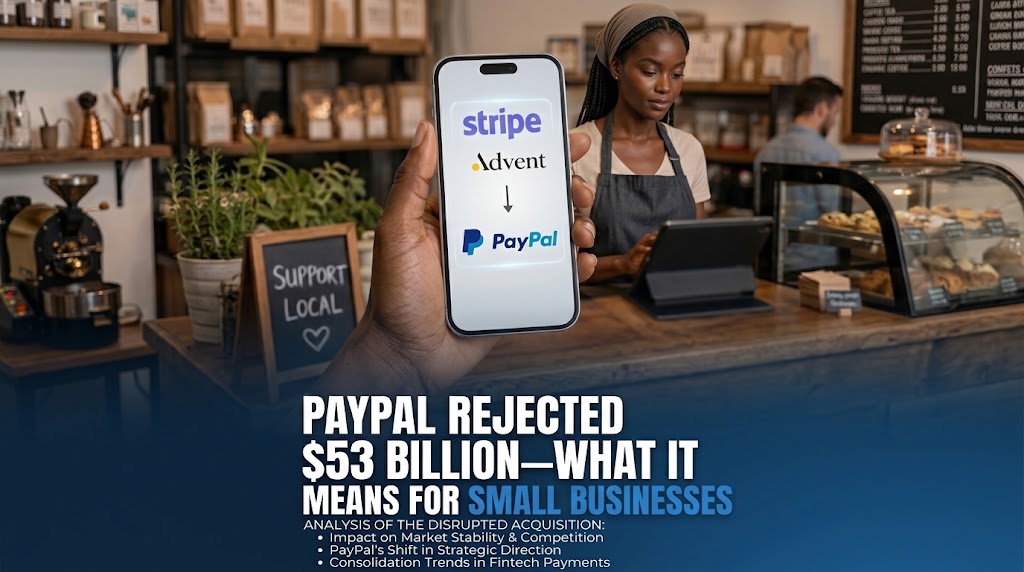
Stripe and Advent Drop $53 Billion PayPal Pursuit: What It Means for African Online Payments
Could Stripe Buying PayPal Finally Make Online Payouts Easier in Africa
Africa Is Connecting Payment Systems: What That Could Eventually Change for Consumers
CBN’s January 2027 Data Rule: What Nigeria’s Banks and Fintechs Actually Have to Move
Follow TechView Africa on WhatsApp
Get TechView Africa updates on WhatsApp. Follow our channel for practical technology news, product guides and digital trends from Nigeria and across Africa.
Leave a comment
Comments cannot be edited or deleted after posting. Please review your comment before submitting.
No comments yet. Start the conversation.