

Africa needs substantially more computing infrastructure, but the Cape Town case shows that building it requires more than investment: cities also need electricity, cooling capacity and planning rules capable of assessing unusually resource-intensive facilities.
The Hidden Infrastructure Cost of Africa’s AI Boom: Inside Cape Town’s 174MW Data Centre Plan
Cape Town has given an early planning approval to a huge proposed data-centre development near its airport. The dispute around its electricity and water requirements shows why Africa’s AI ambitions are increasingly becoming an infrastructure question.
The proposed Cape Town facilities have a reported electrical demand of about 174MW, but important details including project-specific water consumption remain unresolved as the planning decision faces a challenge.
Africa’s AI ambitions increasingly depend on something less glamorous than models and apps: electricity, cooling and planning permission. A land-use application covering two proposed data centres at King Air Industria near Cape Town International Airport has now become a test case. Cape Town’s Municipal Planning Tribunal approved the land-use, subdivision and consolidation application in July, clearing an early planning hurdle for facilities covering more than 120,000 square metres. The Financial Times puts the proposed development at about 122,500 square metres.
Reporting on the application puts its electrical demand at about 174MW. Campaign material notes that planning documents have also used MVA, which measures apparent rather than real power, so the two figures should not be treated as technically interchangeable.
Crucially, this is not final approval to start construction. The tribunal said details would still need examination through a Site Development Plan and subsequent building approvals, while opponents are challenging the decision.
Why 174MW matters for Africa’s AI ambitions
AI infrastructure is turning computing into an energy issue worldwide. The International Energy Agency says global data-centre electricity consumption increased 17% in 2025, while consumption from AI-focused facilities climbed 50%. It expects the pressure on electricity systems to continue as AI deployment expands.
Africa starts from a much smaller base. The African Actors of Data Center Association estimates that the continent represents only 0.6% of global data-centre capacity, with about 360MW active, 238MW under construction and 656MW planned. More importantly, it identifies power availability not connectivity, as the leading constraint on further expansion.
TechView Africa has previously examined why data centres are becoming one of Africa’s most important AI stories. The Cape Town dispute shows what that infrastructure push looks like when digital investment collides with finite physical resources.
The water figure needs an important qualification
The land-use application did not state how much water the proposed facilities would require for cooling. That omission became one of the central objections raised by Housing Assembly and technology justice organisation Foxglove.
A figure of roughly 4.4 billion litres annually has subsequently appeared in reporting. But that is not a disclosed forecast from the project. It was calculated by opponents using an estimate of 25.5 million litres annually for every megawatt used by a traditionally cooled data centre. Actual consumption could be substantially different depending on the cooling technology eventually selected.
The defensible conclusion is therefore simpler: the development’s actual water requirement remains unknown publicly.
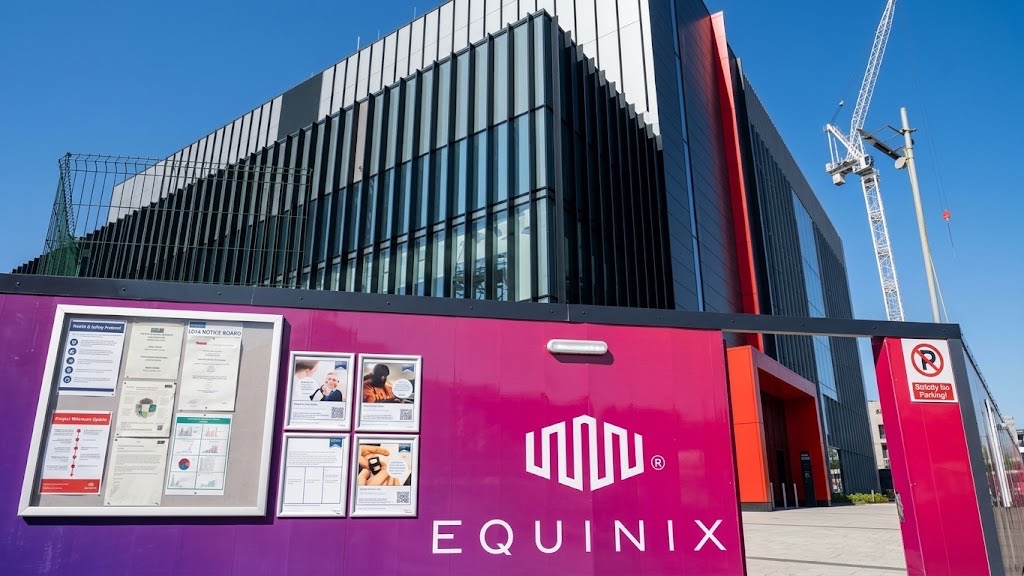
Equinix’s involvement is now disputed
Earlier planning coverage and campaign materials identify US data-centre company Equinix with the development. However, the Financial Times reported on 13 September that Equinix says it has no active development plans for the site, despite planning documents reviewed by the newspaper identifying the company as the developer.
Africa needs compute but it also needs rules for the infrastructure behind it
More African data centres could improve cloud availability, latency and the ability of businesses to host workloads closer to their users. Investment is already accelerating. MTN, for example, is pursuing AI-ready data-centre infrastructure in Nigeria and South Africa.
But every hyperscale facility eventually becomes an electricity, land, cooling and regulatory question as well as a technology project. Cape Town’s 174MW proposal therefore illustrates the harder part of Africa’s AI ambition: the continent needs more compute, but cities need enough information to understand its physical cost before approving the infrastructure that provides it.
Verification Links
Financial Times — Cape Town hyperscale data-centre challenge
GroundUp — Cape Town tribunal grants initial approval
African Actors of Data Center Association — Data Centres in Africa 2026
International Energy Agency — Key Questions on Energy and AI
Frequently asked questions
Has Cape Town approved construction of the data centres?
Not fully. The Municipal Planning Tribunal approved an early land-use application, but further planning and building approvals are still required.
Will the facilities definitely use 4.4 billion litres of water each year?
No. That figure is an estimate based on traditional cooling assumptions, not confirmed project-specific consumption.
Is Equinix definitely building the project?
That is now disputed. Planning documents identify Equinix, but the company told the Financial Times it has no active development plans for the site.

OpenAI Reported Its AI-Agent ‘Wiki Incident’ to the EU: Here’s What Happened
What Happens After an AI Event Ends? AfricAI Is Building a System to Track It

The Safest Way to Use AI for Research Without Repeating Its Mistakes

Can AI Understand African Languages Well Enough for Everyday Use?

AI Detectors Keep Flagging Human Writing: Should Schools and Employers Trust Them?

Smaller AI Models Can Run on Ordinary Computers: Why That Could Change AI Access

AI Agents Can Now Act for You: What You Should Never Let Them Do Unsupervised
Follow TechView Africa on WhatsApp
Get TechView Africa updates on WhatsApp. Follow our channel for practical technology news, product guides and digital trends from Nigeria and across Africa.
Leave a comment
Comments cannot be edited or deleted after posting. Please review your comment before submitting.
No comments yet. Start the conversation.