



A Microsoft 365 outage can disrupt business operations even when internet connectivity remains available. African businesses need more than cloud backups: they need independent communication channels, documented recovery procedures and tested business continuity plans to keep essential work running when cloud services fail.
A SaaS outage can leave a business with working internet and still no practical way to work. If email, calendars, customer records and approvals depend on one cloud service or sign-in layer, one failure can interrupt several processes. A second app on employees’ phones is not automatically a recovery plan.
The Microsoft 365 disruption that began on 12 November 2026 is a useful case study. Microsoft logged Exchange Online incident EX1550543 from 16:17 UTC, followed by a wider Microsoft 365 incident, MO1550821, from 18:26 UTC. Its service-health updates described servers becoming unavailable after failing automated health checks, shifting load onto the remaining infrastructure. By the morning of 13 November, Microsoft reported improved server-capacity stability after applying a patch to an upstream authentication/routing configuration component. As of the 13 November research cut-off, both incidents remained service degradations; Microsoft had not published its full post-incident review.
The disruption did not make every Microsoft 365 feature unavailable. Microsoft said features that depended on Exchange Online were affected, while some functions that did not rely on it continued to work. The impact therefore differed across Outlook, Teams, Copilot, SharePoint and other services. Nor did the outage, by itself, establish data loss or a cyberattack: Microsoft said it had found no indication of malicious activity.
The reports reviewed did not establish the scale of Nigerian business impact. For African businesses, the lesson is to plan how essential work continues when a cloud service or one of its dependencies stops responding.
Cloud backup is not a continuity plan
Three issues are often confused. Service availability is whether staff can access and use an application. Backup and recovery concern restoring data after it is deleted, damaged or corrupted. Business continuity is how an organisation keeps priority work moving while a system is unavailable.
A backup may preserve a copy of a file; it cannot make Outlook, a customer-management platform or cloud accounting software available during a provider outage. File synchronisation is not automatically an independent backup either. Microsoft's Microsoft 365 Backup FAQ explains why disaster-recovery copies and point-in-time data restoration solve different problems.
Build cloud resilience around work, not software
Start with the business process, not an app inventory. An invoice approval, customer complaint or payroll run may depend on email, identity controls, shared files and finance software. One failed dependency can stop the process even when other apps still open.
Use five checks for each important workflow:
- Name the work that cannot wait. Identify priority activities such as urgent customer support, safety notifications, payment approvals, payroll deadlines or order fulfilment. Give each one an owner and a clear urgency threshold.
- Map its dependencies. Record the applications, cloud provider, sign-in and multi-factor authentication, internet connection, devices, data and external partners required. Two apps are not independent if both rely on the same identity service or network.
- Set recovery limits. A recovery time objective (RTO) is the maximum acceptable time a process can remain unavailable. A recovery point objective (RPO) is the maximum acceptable amount of data that could be lost, expressed as time. A customer-support queue may need a shorter RTO than an internal archive; not every system needs the same target.
- Choose a separate fallback. Decide how staff will communicate and continue limited work if the main platform fails. Options may include a phone tree, SMS, an approved alternate mailbox, a manual form or a controlled paper process. The fallback should not depend on the same tenant, sign-in system or network path that has failed.
- Reconcile after recovery. Log every manual approval, customer request and transaction. When systems return, enter and check those records to prevent duplicate payments, missed requests or conflicting versions.
For example, a weak fallback for an invoice approval is a second app that still requires the same company sign-in. A more independent arrangement is a pre-authorised phone route to named approvers, with each decision recorded in a controlled log and entered into the finance system after recovery.
A fallback must still respect security and record-keeping rules. Do not move sensitive business conversations to personal email or WhatsApp simply because the main service is unavailable. Keep normal financial authorisation controls; an outage is not a reason to bypass dual approval or fraud checks.
Does every business need a second cloud provider?
Not necessarily. A second subscription can add cost and complexity without creating a usable fallback. If both services depend on the same internet provider, identity platform, administrator account or staff device, the apparent redundancy may fail at the same time.
Multi-cloud can reduce some provider-specific risks only if data, identity, applications and staff can move between services and people can operate the alternative. It also requires relevant technical expertise. TVA's review of 100 African technology vacancies found demand across AWS, Azure and Google Cloud, illustrating why a second platform also requires relevant skills.
For a smaller company, a tested manual process and an independent way to contact staff and customers may be more realistic than duplicating its software stack. If mobile voice or data is the fallback, remember that telecoms are another dependency: power, coverage and congestion can affect the alternative route too. TVA has examined climate risks to Africa's mobile networks.
Local hosting can support procurement or data-governance goals, but it does not by itself prove that failover, identity, network access and recovery have been tested. TVA's explainer on Nigeria's Cloud First policy examines the infrastructure and procurement questions behind that strategy.
Test the plan before the next outage
Run an exercise around one critical workflow. Assume the main email and collaboration service is unavailable for half a working day. Can staff find the approved contact list? Can a manager authorise urgent work without the failed system? Can requests be recorded securely? Who updates customers? Who checks for duplicates when the service returns?
Record how long each step takes and what fails. Fix the gaps and repeat the exercise after major supplier, identity or process changes.
Also decide how the business will verify an incident. Microsoft's guide to checking Microsoft 365 service health explains how administrators can check service status and distinguish an ongoing incident from restoration. Review the applicable Microsoft online-services service-level agreement for its availability commitment, exclusions, claim process and remedies. A service credit, where the contract provides one, does not keep orders moving or answer customers while staff are locked out.
Cloud services can reduce the burden of running business technology, but they do not transfer responsibility for every business risk to the provider. The continuity question is practical: which work must continue, what does it depend on, and what will staff do when one of those dependencies fails?
Frequently asked questions
1. How can a business tell whether a cloud outage is affecting its employees?
Check the cloud provider's official service-health dashboard or administrator portal for reported incidents. Compare the problem across multiple employees, devices and network connections. If users in different locations experience the same service disruption, a provider-side issue becomes more likely. If the problem affects only one employee or network, investigate local connectivity, device settings and account access as well.
2. Can a cloud outage cause businesses to lose emails or other files?
A service outage does not automatically mean that emails or files have been lost. It may temporarily prevent users from accessing or synchronising information while the provider restores service. Data loss, deletion and corruption are separate issues that require investigation. Businesses should maintain appropriate backups and verify that important records are accessible after service restoration.
3. What is the minimum cloud continuity plan a small business should have?
A small business should identify its essential operations, document the applications and services those operations depend on, maintain an independent emergency communication channel, assign recovery responsibilities and establish manual procedures for urgent work. It should also keep necessary contact information and recovery instructions accessible without relying on the cloud service that might fail.
4. Does storing business data in a Nigerian data centre prevent cloud outages?
No. Local data hosting can support data-residency and governance requirements, but it does not guarantee uninterrupted access. Power failures, network disruptions, software faults, identity-service problems and infrastructure failures can still affect locally hosted services. Businesses need tested backups, geographically separated recovery arrangements where appropriate and independent access procedures.
5. How often should a business test its cloud disaster recovery plan?
Businesses should test their recovery procedures regularly and whenever significant changes are made to their applications, cloud providers, identity systems or operational processes. A practical starting point is to conduct a continuity exercise at least annually, with more frequent testing for critical services. Tests should establish whether employees can access fallback communication channels, continue priority work and reconcile outstanding records after normal services return.

ChatGPT Ads Arrive in Nigeria: What ₦3,250 a Day Really Means
NDPC Registration in Nigeria: Does Your Business Need to Register?
Can African Startups Survive Their Founders? Why Succession Planning Must Start Early

Facebook Monetisation in Africa: What Makes Content Original Enough to Earn?

Nigeria, Benin and Cameroon Want Linked Customs Systems. Why Are Borders Still Slow?

Why African Startups Struggle to Win Their First Enterprise Customer Even After Building a Good Product
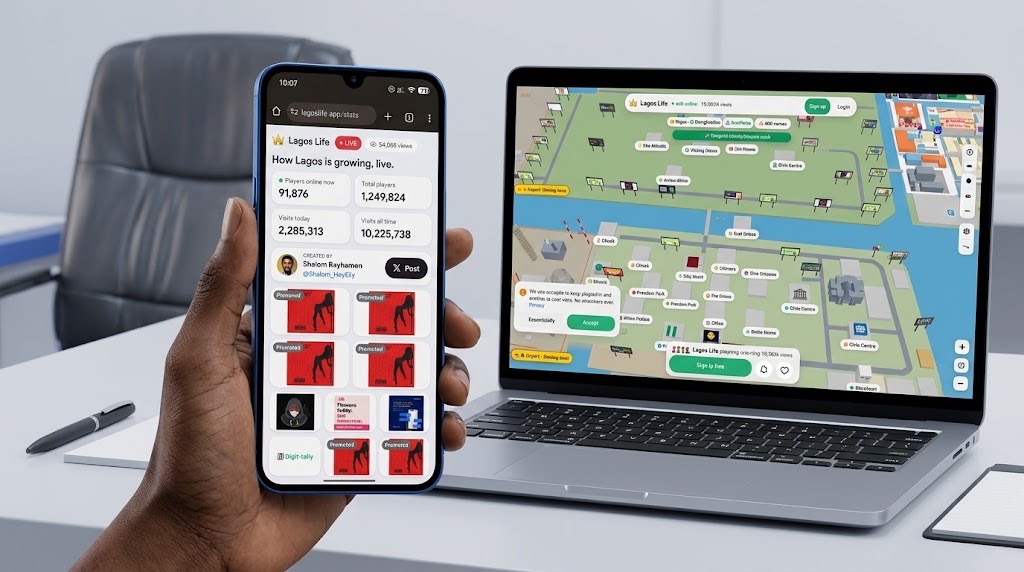
Lagos Life’s Virtual Billboards: Can a Nigerian Browser Game Build a Sustainable Business?
Follow TechView Africa on WhatsApp
Get TechView Africa updates on WhatsApp. Follow our channel for practical technology news, product guides and digital trends from Nigeria and across Africa.
Leave a comment
Comments cannot be edited or deleted after posting. Please review your comment before submitting.
No comments yet. Start the conversation.