


Owning a vehicle can reduce a driver’s repayment burden. It does not guarantee sufficient bookings, affordable running costs or dependable income.
Moove Is Leaving Nigeria: What Its ₦35 Billion Vehicle Transfer Means for Drivers
Moove has announced its Nigerian exit and a vehicle-transfer programme for eligible customers. Scheduled vehicle payments from 1 October 2026 are being waived, but earlier remittances must be settled and ownership documentation completed.
Moove’s departure from Nigeria could leave eligible customers owning the vehicles they have been paying to operate. It also exposes a difficult question for technology-enabled transport: how secure is a driver’s route to ownership when the financing model depends heavily on another company’s platform?
On 8 October, Moove announced that it would conclude its Nigerian operations and transfer eligible vehicles it values at approximately ₦35 billion to their current users. The company, founded in Lagos in 2020 by Ladi Delano and Jide Odunsi, calls the initiative “Thank You Nigeria”. The announcement establishes a commitment; it does not demonstrate that every transfer has already been completed.
Why is Moove leaving Nigeria?
In an interview with BusinessDay, Delano identified Uber’s departure as the disruption that made Moove’s Nigerian model unsustainable. He said the company considered alternatives before deciding to withdraw. That is management’s explanation, rather than an independently audited assessment of its Nigerian finances.
Uber had announced its own withdrawal effective 2 September 2026, citing a review of business priorities and investment across Africa. Its statement, reported by Premium Times, said the decision was unrelated to the airport controversy involving the Federal Airports Authority of Nigeria.
The distinction matters. Neither announcement establishes that one regulation, fuel prices alone or a general absence of transport demand caused both exits.
Are drivers receiving completely free cars?
The programme concerns eligible existing customers, not a public giveaway. Delano told BusinessDay that outstanding remittances accrued before 1 October must still be settled, while scheduled vehicle payments from that date are waived. Customers must also complete the transfer documentation.
Drivers should therefore obtain an individual account reconciliation. A headline cannot establish whether a particular vehicle qualifies, whether a disputed charge remains payable or whether a customer has completed the requirements.
The material reviewed does not provide a comprehensive eligibility schedule, a universal completion deadline or detailed treatment of deposits, disputed balances and previously repossessed vehicles. Nor does it settle who bears every possible administrative expense. Those questions require written clarification rather than assumptions.
What do the ₦35 billion and ₦57 billion figures mean?
Moove’s statement puts the estimated value of eligible vehicles at approximately ₦35 billion. Separately, it says more than 9,000 customers have used its Nigerian rental and Drive-to-Own products, generating approximately ₦57 billion in revenue through financed vehicles. These are company-reported figures.
Three distinctions prevent misleading conclusions:
- Vehicle value is not the outstanding debt being forgiven. The announcement does not establish that customers collectively owed ₦35 billion.
- Historical customers are not confirmed beneficiaries. The 9,000-plus figure cannot be treated as the number receiving vehicles.
- Revenue is not take-home income. It does not reveal what remained after operating costs and repayments.
Without the eligible fleet count, valuation method and remaining account balances, calculating an average benefit per driver would produce an unreliable result.
The deeper problem: financing a vehicle is not financing a livelihood
Our analysis is that Moove’s exit illustrates dependence on a platform as a financing risk. A driver can retain the skill, willingness and vehicle needed to work while losing an important channel for finding paying passengers.
A finance provider must assess more than whether someone can drive. Repayment capacity depends on achievable earnings, operating expenses and the resilience of the arrangements that connect drivers to customers.
Ownership can improve that calculation by removing future vehicle instalments. Nevertheless, fuel, maintenance, insurance, downtime and eventual replacement still require money. A vehicle producing fares can remain unprofitable once those costs are counted.
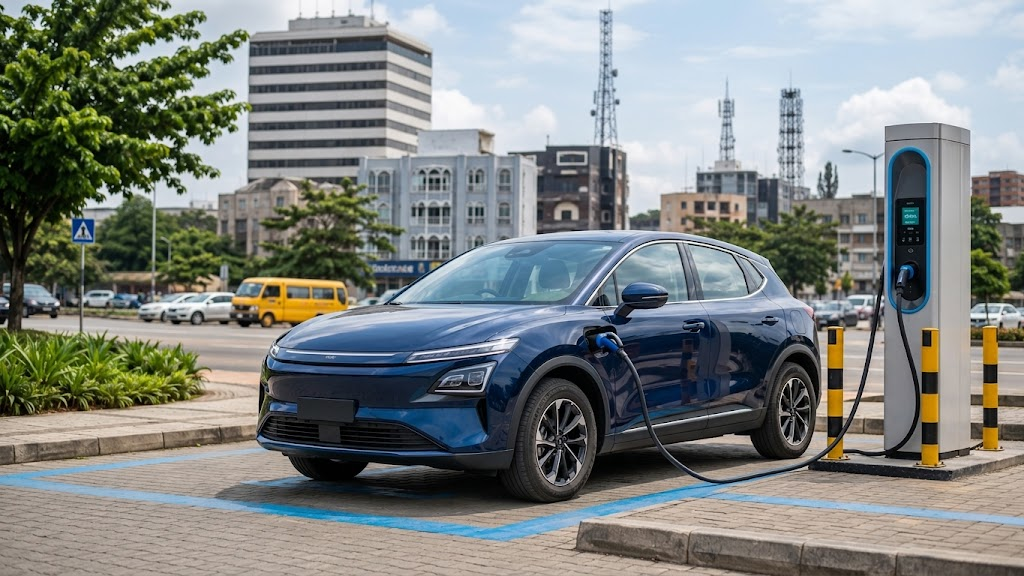
There is a related lesson in TVA’s examination of Nigeria’s EV charging challenge: providing vehicles is only one part of a functioning transport business. The supporting infrastructure determines how reliably those assets can earn.
For future financing agreements, drivers should ask what happens if the main booking platform exits, whether working across platforms is permitted and how payment obligations respond to prolonged interruptions.
Is Moove shutting down globally or replacing Nigerian drivers with robots?
The Nigerian announcement is not a global closure. Moove’s official funding announcement of 5 August reported a $250 million Series C at a $2.1 billion valuation, with investment directed towards autonomous fleets, depots and international expansion.
That provides strategic context, but does not prove that autonomous vehicles directly displaced Nigerian drivers. International fundraising also does not establish that every national operation is profitable or that investors intend to subsidise it indefinitely.
For employees, Moove’s exit statement promises cars as well. It does not provide enough information to assess final employment settlements, and the vehicle benefit should not be assumed to describe the entire package.
What should affected drivers establish now?
Before treating the transition as complete, ask Moove for:
| Question | Written confirmation to request |
|---|---|
| Does my vehicle qualify? | Eligibility tied to your account and vehicle |
| What remains outstanding? | An itemised statement separating earlier remittances from waived payments |
| How does ownership transfer? | Required documents, responsible parties and completion date |
| What happens to existing support? | Arrangements for maintenance, insurance and any installed tracking equipment |
| Who resolves a disagreement? | A named contact, complaint reference and escalation process |
These are verification questions, not a claim that Moove has published a uniform procedure covering every case.
Preserve contracts, receipts and correspondence. Verify unexpected payment instructions through an established company contact. TVA’s coverage of the false OPay shutdown notice explains why forwarded messages should not substitute for authenticated instructions.
For passengers, the announcement alone cannot establish whether fares will rise or vehicle availability will fall. Transferring ownership could keep vehicles working, but there is no verified outcome data yet.
Our Recommendation
Affected drivers should prioritise written confirmation of eligibility, account balances and completed ownership transfer. Then prepare a realistic operating budget, including maintenance reserves and days without earnings.
For prospective borrowers, scrutinise the exit provisions and platform restrictions before signing a vehicle-financing agreement. The practical test is whether the arrangement remains workable when bookings weaken or a major partner leaves.
Sources & Verification
BusinessDay: Interview with Ladi Delano on Moove’s exit and repayment conditions
Premium Times: Moove’s Nigerian exit announcement and vehicle-transfer commitment
Moove: Official August 2026 funding and autonomous-mobility announcement
Frequently asked questions
Can someone who is not already a Moove customer apply for a free car?
The announced programme concerns eligible existing customers and employees. It is not a public giveaway, and the announcement does not offer a free-car application route for new customers.
Will drivers receive refunds for vehicle payments already made?
The material reviewed does not announce refunds of previous instalments. Waiving future scheduled vehicle payments is different from returning money already paid. Customers with deposits or disputed payments should request written clarification about their individual accounts.
What if a driver cannot clear outstanding remittances?
Moove has said earlier remittances must be settled before the ownership transfer is completed. The reviewed information does not explain whether customers unable to pay immediately will receive extensions or repayment arrangements. Affected drivers should ask Moove directly rather than assume they are automatically eligible or excluded.
Can drivers use their transferred vehicles on another ride-hailing platform?
The transfer announcement does not establish automatic approval to work on another platform. Drivers should confirm any remaining contractual restrictions and check the receiving platform’s vehicle, documentation and onboarding requirements before relying on it for income.
Will Moove continue paying for maintenance and insurance?
The reviewed announcement does not specify a universal arrangement for these services after transfer. Drivers should obtain written confirmation of when existing cover or support ends, who becomes responsible and whether any current claims or repairs remain outstanding.
Does the vehicle-transfer offer prove that Moove is bankrupt?
No. A withdrawal from one market and a vehicle-transfer programme do not, by themselves, establish bankruptcy. Moove has announced the conclusion of its Nigerian operations while continuing its international business.
South Africa’s Air-Traffic Agency Found Malware in Operational Technology. Here’s Why That Matters

Apple TV Arrives in Nigeria Through a ₦1,300 iCloud+ Bundle

Want to Buy Dangote Refinery Shares at ₦525? Here’s Where and How
Dangote Refinery IPO Gets SEC Approval at ₦525 Per Share

Nvidia Already Dominates AI Chips. Now It’s Buying Hugging Face for $12.9 Billion

Why Data Centres Are Becoming One of Africa’s Most Important AI Stories
Nigeria Wants More Electric Vehicles But Where Will Drivers Charge Them?
Follow TechView Africa on WhatsApp
Get TechView Africa updates on WhatsApp. Follow our channel for practical technology news, product guides and digital trends from Nigeria and across Africa.
Leave a comment
Comments cannot be edited or deleted after posting. Please review your comment before submitting.
No comments yet. Start the conversation.