

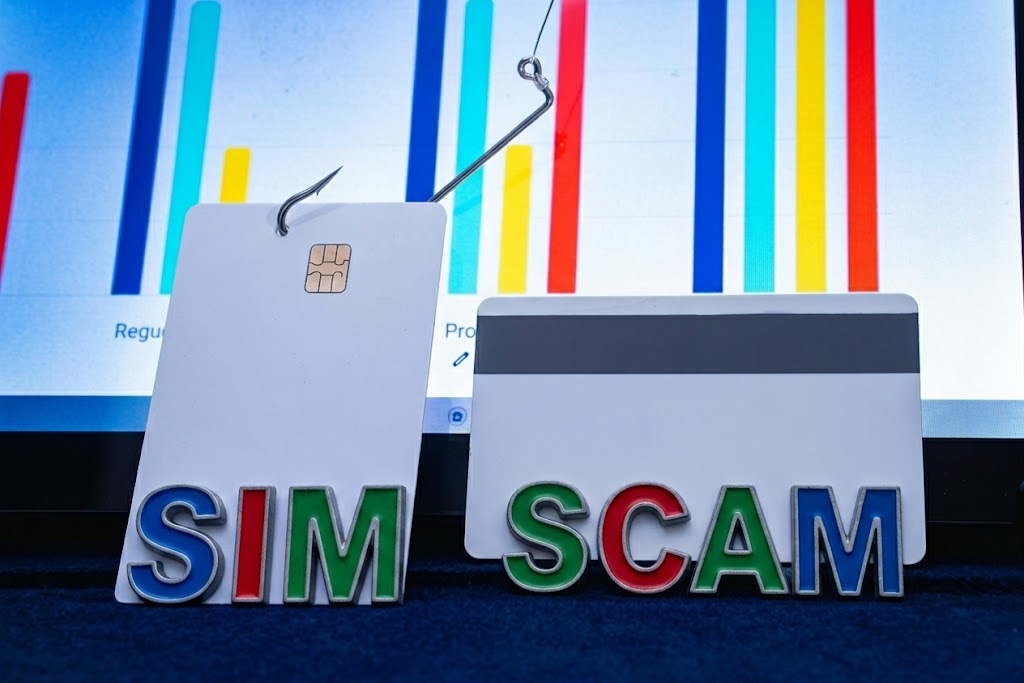
SIM swap fraud targets your phone number, not necessarily your handset. Unexpected loss of service can be an early warning. Use stronger authentication than SMS wherever possible and secure your email account first.
Your smartphone can still be sitting in your hand while a criminal takes control of your mobile number. SIM swap fraud turns an ordinary phone number into a route towards banking, email, messaging and other accounts.
A SIM swap attack can begin while your phone is still in your hand. Your handset has not been stolen. Your SIM card may still be physically inside it. Yet suddenly the phone loses network service, calls stop arriving and one-time passwords no longer reach you. The problem may be that your mobile number has been moved to another SIM. That matters because a phone number is tied to bank alerts, USSD banking, password resets, WhatsApp, email recovery and two-factor authentication. If an attacker takes control of the number, they may gain a shortcut into several other accounts.
The Nigerian Communications Commission's SIM Replacement Guidelines were specifically designed to establish procedures and minimum safeguards against unauthorised SIM replacement. Nigeria's telecommunications enforcement framework also treats unauthorised SIM replacement as a regulatory violation. The financial sector takes the threat seriously too. The Central Bank of Nigeria's security framework for USSD financial services identifies the date of a SIM swap as one of the signals that financial institutions can consider when authenticating transactions.
What a SIM swap actually is
A legitimate SIM replacement is completely normal. You may need one after losing your phone, damaging a SIM card or replacing an old SIM while keeping the same number. A fraudulent SIM swap happens when someone succeeds in having your existing mobile number transferred to another SIM or eSIM without your permission. Once the replacement is activated, your original SIM can lose service. Calls and SMS messages intended for you may then be delivered through the replacement instead. This is what makes SIM-swap fraud different from ordinary phone theft. The criminal is targeting the number, not necessarily the phone.
NCC's guidelines require network providers to verify information before completing SIM replacements and place responsibility on operators for replacements improperly carried out by their agents or dealers. Those protections make fraudulent replacements more difficult, but they do not mean subscribers should ignore unexplained loss of service.
Why criminals want your phone number
One of the most valuable things connected to a mobile number is an SMS one-time password. Banks, email providers, social networks and other online services may use phone numbers to verify identities or recover accounts. Control of the number can therefore make other stolen information significantly more dangerous. A SIM swap by itself does not magically reveal your bank PIN, password or account balance. An attacker will normally need additional compromised information or another weakness. But your phone number can become one piece of a wider account-takeover attempt.
That risk is particularly serious when someone:
- reuses passwords across different services;
- depends entirely on SMS for two-factor authentication;
- exposes excessive personal information publicly;
- has an email account with weak security.
Nigeria's telecom and financial infrastructure increasingly recognises this relationship.
The NCC's Telecom Identity Risk Management System allows approved service providers such as banks, fintech companies and insurers to verify phone-number status. The system can identify numbers recorded as swapped, churned or blacklisted, helping institutions apply additional caution around sensitive activities.
The warning sign people may mistake for poor network coverage
The biggest immediate warning is surprisingly simple: Your phone suddenly loses mobile service for no obvious reason. This becomes more suspicious if people around you using the same network still have normal coverage.
Other warning signs can include:
- your SIM unexpectedly displaying No Service;
- calls and SMS suddenly failing;
- notifications about SIM, device or account changes you did not request;
- unexpected password-reset or login alerts;
- banking activity you do not recognise;
- friends receiving strange messages that appear to come from you.
None of these signs proves that a SIM swap has happened. A damaged SIM, network outage or ordinary technical problem can produce similar symptoms. The important distinction is that an unexplained loss of service should not simply be ignored for hours.
What to do if your number suddenly stops working
Start with your mobile network operator. Contact the provider through an official channel and ask whether a SIM replacement or another significant change has recently been made to your number. If an unauthorised change is suspected, ask the network to secure the line and create a formal complaint record. Then consider the financial consequences.
If that number is linked to your bank accounts, contact your bank immediately. The CBN's fraud and scam guidance advises customers who suspect their financial information has been compromised to contact their financial institution promptly.
Next, secure accounts that depend on the number. Change important passwords using a trusted device, beginning with your main email account because email frequently acts as a recovery route for other services. Review active sessions and sign out devices you do not recognise where the service allows it. Do not assume that recovering your phone number automatically fixes everything. If someone gained access before the line was restored, passwords, recovery information or authenticated sessions elsewhere may already have been changed.
Make your phone number less useful to an attacker
Consumers cannot control every telecom verification process, but they can reduce the damage that losing control of a number might cause. Use strong, unique passwords for important accounts. Where a service offers stronger authentication options, consider an authenticator app or passkey instead of depending entirely on SMS codes.
Your primary email account deserves particular protection because compromising it can create access to several other accounts. You should also be cautious about unnecessary personal information online. Details that look harmless individually can sometimes become more useful when combined. And never give an unsolicited caller or message sender your OTP, account password, banking PIN or account-recovery code.
Our Recommendation
Treat your mobile number as part of your digital identity, not simply as the SIM card that provides calls and data. If your phone unexpectedly loses service while other people on the same network still have coverage, investigate it promptly rather than assuming it is another temporary network problem.
The strongest protection is layered. A SIM swap becomes far more damaging when one phone number can unlock everything else. Unique passwords, stronger non-SMS authentication where available, a securely protected email account and fast reporting can all reduce the potential chain reaction.
Your phone can still be in your pocket while someone else controls your number. That is exactly why an unexplained SIM failure deserves more attention than many people give it.
Verification Links
Sources & Verification
Central Bank of Nigeria — USSD Security Framework
Nigerian Communications Commission — Guidelines on SIM Replacement
Nigerian Communications Commission — Telecom Identity Risk Management System
Frequently asked questions
Can someone swap my SIM without stealing my phone?
Yes. A SIM swap concerns the mobile number assigned by the network, not possession of the physical handset. Your phone can remain with you while the number is transferred to another SIM without your authorization.
Does losing network signal mean my SIM has been swapped?
Not necessarily. Network outages, damaged SIM cards and technical problems can also cause loss of service. The warning becomes more serious when the outage affects only your line or happens alongside unexpected account or security notifications.
Can a SIM swap give someone access to my bank account?
Not automatically. A SIM swap does not reveal your banking password or PIN by itself. However, control of your number may allow an attacker to receive SMS security messages and can make other stolen credentials considerably more dangerous.
Should I stop using SMS authentication completely?
Use stronger alternatives where they are available, especially for important accounts. Authenticator apps and passkeys can reduce dependence on your mobile number, although SMS authentication is still better than leaving an account without additional protection.
What should I do first if I suspect a SIM swap?
Contact your mobile network operator immediately to establish whether your SIM has been replaced or your line modified. If the number is connected to financial accounts, contact your bank as well and begin securing important online accounts from a trusted device.
Truecaller Says a Call Is Spam or Fraud. How Much Should You Trust It?
That Customer Care Account in Your DMs May Be Fake: Here’s How to Check
Your Email Appeared in a Data Breach: What Does That Actually Mean

Google Search Can Lead You to Scam Phone Numbers: Why You Should Verify Support Lines

WhatsApp Is Making Suspicious Account Linking Harder—Here’s Why It Matters
Before Installing a Free VPN, Check This
CBN’s January 2027 Data Rule: What Nigeria’s Banks and Fintechs Actually Have to Move
Follow TechView Africa on WhatsApp
Get TechView Africa updates on WhatsApp. Follow our channel for practical technology news, product guides and digital trends from Nigeria and across Africa.
Leave a comment
Comments cannot be edited or deleted after posting. Please review your comment before submitting.
No comments yet. Start the conversation.