

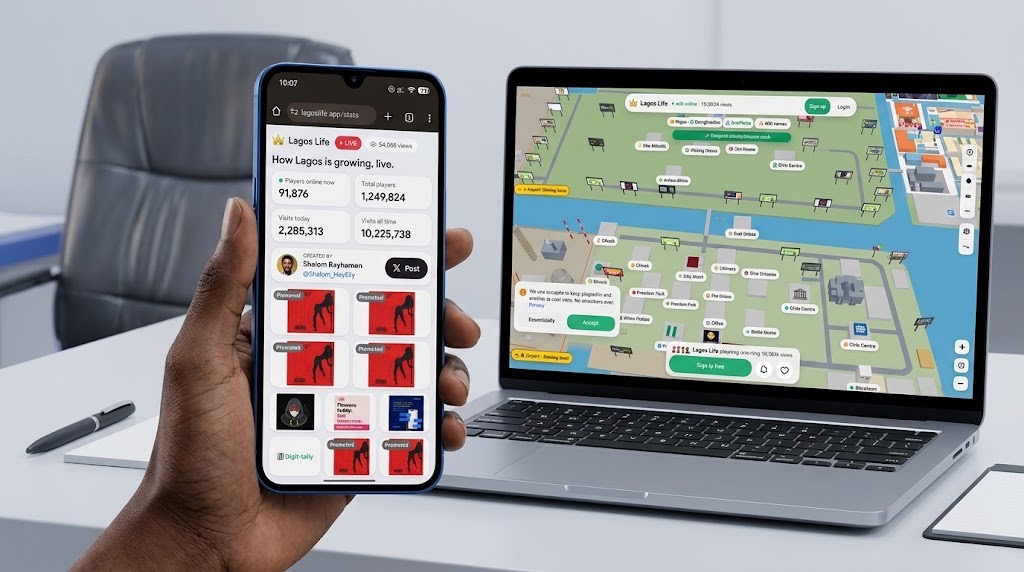
Lagos Life’s virtual billboards offer a way to turn player attention into advertising revenue, but lasting success depends on returning players, repeat advertisers and income exceeding operating costs. Businesses should assess campaign results before treating the game’s audience figures as proof of advertising value.
Lagos Life Is Selling Virtual Billboards. Can It Turn Player Attention Into a Lasting Business?
Lagos Life has an advertising model, but its long-term sustainability remains unproven. That depends on returning players, advertiser renewals and revenue exceeding operating costs not simply a growing public counter.
Lagos Life’s commercial proposition is easy to understand: build a virtual city people want to revisit, then charge businesses to appear inside it. The harder question is whether those placements deliver enough value for advertisers to keep paying after the initial excitement fades.
There is a business model here. There is not yet enough public evidence to establish profitability. Our inspection found a changing advertising offer, public audience counters and terms that explicitly separate buying space from receiving guaranteed results.
What makes the game recognisably Lagos?
Techpoint’s 5 October report describes a browser-based simulation where players create characters, work, pay rent and meet others. It reported an October 1 launch and creator claims of more than one million players within days. Those figures were not independently audited.
The local identity extends into the commercial design: advertising occupies city roads, lagoon plots and locations labelled as Nigerian airports. The public entry screen also displayed housing, a governor role and a simulated minimum-wage announcement during our check.
Our assessment is that this familiarity gives advertisers a setting in which their messages can feel relevant. It does not, by itself, establish that players notice an advert or buy anything.
What does advertising cost now?
The official advertising page displayed the following prices on 9 October:
| Placement | Listed price | Duration |
|---|---|---|
| Standard digital billboard | ₦250,000 each | Seven days |
| 6×6 lagoon plot | ₦18,000 each | Seven days |
| Public statistics-page advert | ₦150,000 | Seven days |
| Airport billboard | ₦500,000 | Seven days |
These are advertised prices, not completed-purchase totals. Checkout charges and any separately negotiated arrangements were not tested.
The standard billboard offer now describes 20 digital boards, with adverts rotating for 15 seconds each. This differs from Techpoint’s earlier report of 38 billboards at ₦5,000 weekly. Because both the format and inventory have changed, treating that as a straightforward price increase for an identical product would mislead readers.
Rotation makes the allocation important. An advertiser needs to know which board carries the creative, how many campaigns share it and how frequently it appears. A seven-day booking does not mean seven days of exclusive visibility.
“Players” and “visits” answer different questions
During our 9 October browser inspection, the public statistics page displayed approximately 4.73 million total players, 92,360 players online and 33.35 million all-time visits. These were site-reported counters at one moment, not TVA-verified audience measurements.
The displayed labels do not establish how the service distinguishes people, accounts, devices or repeat sessions. A cumulative player count cannot substitute for daily active users; visits can include returns; an online count is a snapshot.
For advertisers, the missing connection is placement-level exposure. Total game traffic does not show how often a particular billboard was visible, how many distinct people noticed it or how many subsequently became customers.
TVA’s guide to turning raw data into a useful report explains the broader discipline: define the question and the measure before drawing a conclusion from a large number.
What can an advertiser reasonably demand?
Lagos Life’s terms say advertising does not guarantee impressions, interactions, sales or other commercial results unless agreed in writing. They also generally make commercial payments non-refundable once inventory is reserved, work begins or delivery occurs, subject to the stated exceptions and applicable law.
Before booking, request a sample delivery report covering placement, dates, rotation, measured exposure and clicks, including how repeat or invalid activity is handled. Our inspection did not establish access to an advertiser reporting dashboard.
Businesses can separately measure enquiries or completed purchases through a dedicated landing page or offer code. These provide useful signals, although neither automatically proves that every resulting sale was caused by the advert.
Creative quality matters too. TVA’s brand-identity guide offers a useful preparation step: keep the logo, message and destination recognisably consistent.
The test is repeat business after operating costs
Selling space establishes a route to revenue. Sustainability requires enough income to cover hosting, development, moderation, support, payment processing and other expenses.
The materials reviewed did not provide verified operating costs, collected revenue or advertiser-renewal rates. Multiplying advertised prices by available boards would therefore describe hypothetical sales capacity, not actual earnings particularly when placements rotate.
The useful measures are returning-player rates, paid inventory, advertiser renewals and operating margin. More advertising could raise income while making the city less enjoyable; fewer returning players could then reduce its commercial appeal.
Privacy also deserves attention. The current privacy policy describes account, gameplay, communication and technical data, including device fingerprinting for security. It states that the service is intended for adults. These are policy disclosures, not findings from a technical privacy audit.
Our Recommendation
Advertisers should treat Lagos Life as an experimental channel and agree delivery, reporting and refund terms before committing money. Use a capped campaign with a measurable objective.
For readers following Nigerian game development, watch whether players return and advertisers renew. Those outcomes will tell us more about durability than a cumulative audience milestone.
Sources & Verification
Lagos Life: Current advertising formats and listed prices
Lagos Life: Public audience statistics
Lagos Life: Privacy and Cookie Policy
Techpoint Africa: Original reporting on Lagos Life’s launch, audience claims and advertising
Frequently asked questions
Are Lagos Life’s virtual billboards real outdoor adverts?
No. They are advertising placements inside the game’s digital environment. Booking a billboard labelled with a Nigerian location does not purchase advertising space at that real-world location.
Does buying an advert guarantee that every player will see it?
No. The terms do not guarantee impressions, interactions or sales unless agreed in writing. Standard digital billboards also rotate between advertisers, so buyers should confirm placement and frequency before paying.
Does a brand appearing in Lagos Life mean it sponsors the game?
Not necessarily. Lagos Life’s disclaimer says the appearance of a real-world brand does not establish a commercial relationship unless it is expressly identified as a partner, sponsor, advertiser or equivalent.
Can advertisers get a refund if their campaign produces no sales?
Poor sales alone do not establish a refund entitlement under the published terms. Commercial payments are generally non-refundable once inventory is reserved, work begins or the service is delivered, subject to the agreement and applicable law. Buyers should clarify remedies for non-delivery before booking.
Is Lagos Life intended for children?
The current privacy policy states that Lagos Life is intended for people aged 18 and over. Its colourful presentation should not be treated as evidence that it is designed for children.
Has TechView Africa verified Lagos Life’s profitability?
No. TVA inspected public pages, advertised prices, terms and audience counters, but did not obtain independently verified revenue, operating costs or advertiser-renewal data. The article assesses the business model; it does not establish that the game is profitable.
What Should Your Business Fix First? A Practical Guide to Analysing Customer Feedback With AI
WhatsApp Business Platform Charges Are Live: What Nigerian SMEs Need to Check Now
How to Apply for Builders Festival ’26: Build Your Case Around One Institutional Problem

Moove Is Leaving Nigeria: What Drivers Gain and What Its Exit Reveals
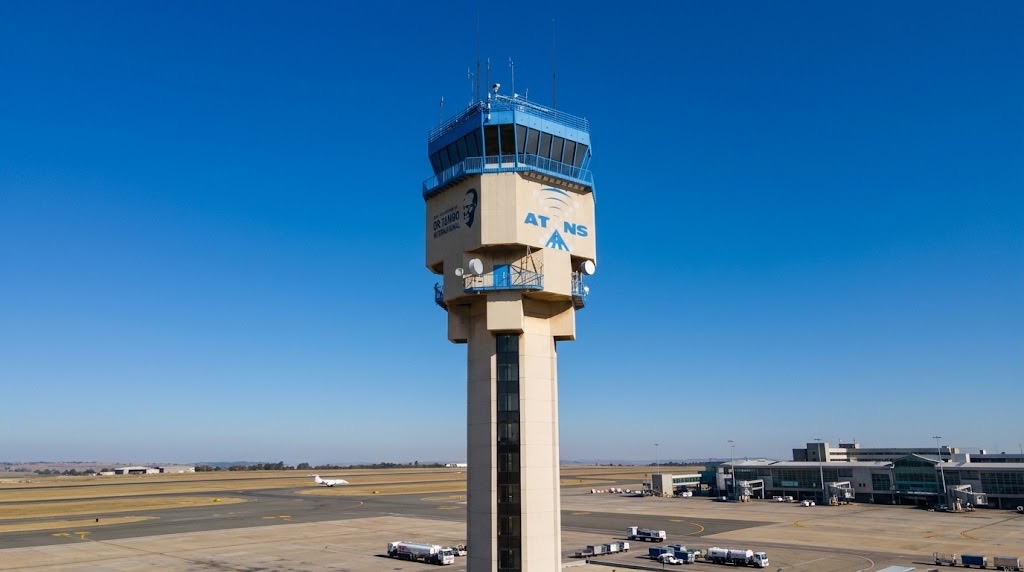
South Africa’s Air-Traffic Agency Found Malware in Operational Technology. Here’s Why That Matters
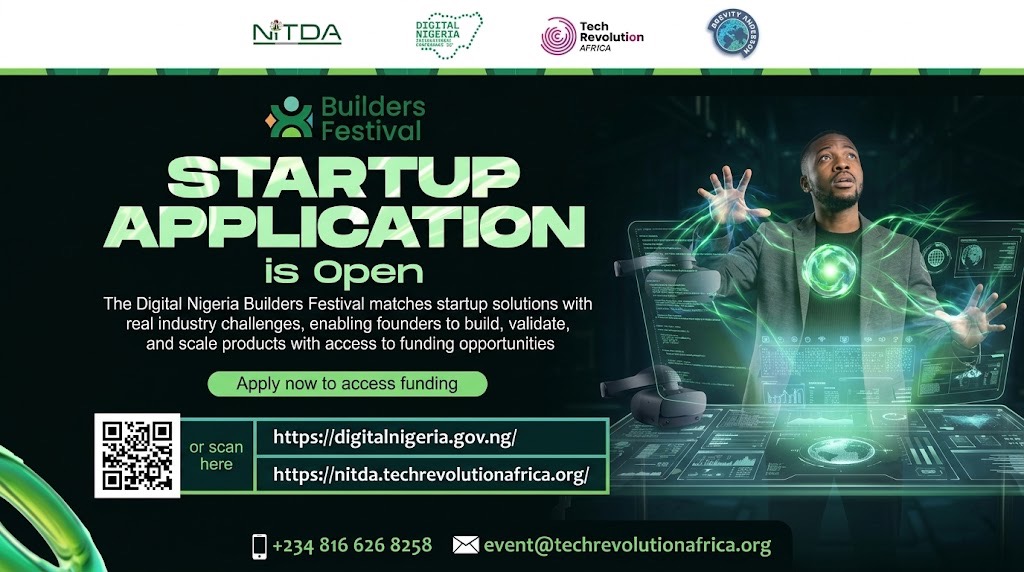
Builders Festival ’26 Targets a ₦3 Billion Startup Pipeline: What Nigerian Founders Are Actually Applying For
Apple TV Arrives in Nigeria Through a ₦1,300 iCloud+ Bundle
Follow TechView Africa on WhatsApp
Get TechView Africa updates on WhatsApp. Follow our channel for practical technology news, product guides and digital trends from Nigeria and across Africa.
Leave a comment
Comments cannot be edited or deleted after posting. Please review your comment before submitting.
No comments yet. Start the conversation.