


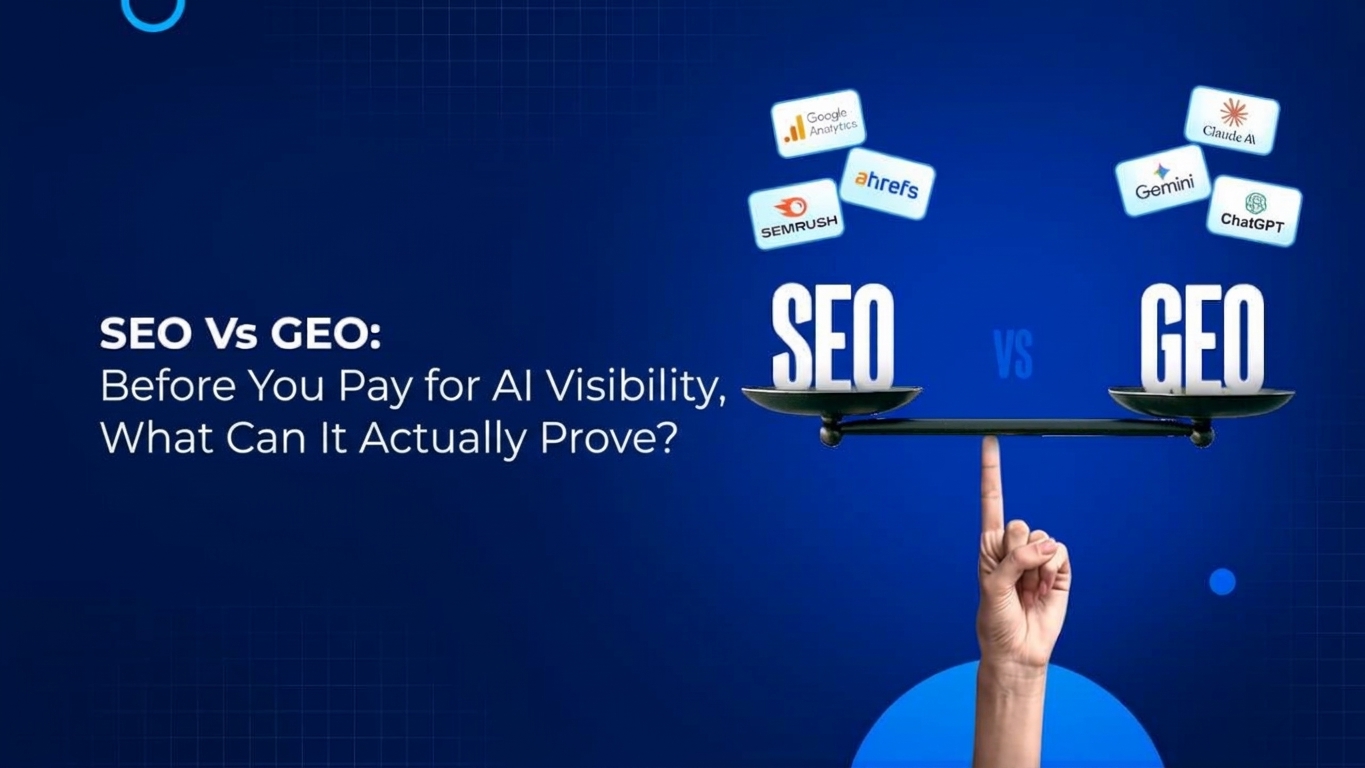
GEO is changing how businesses approach online discoverability, but it does not replace SEO. Companies should invest in technically sound websites, original and useful content, credible brand authority and measurable customer acquisition. An AI mention or citation is a visibility signal, not proof of increased traffic, leads or revenue.
AI search is changing how customers discover businesses, but a brand mention is not a sale. TechView Africa examines what generative engine optimisation can measure, what the evidence supports and where businesses should spend.
A new market is selling businesses a way to appear in answers from ChatGPT, Gemini, Perplexity and other AI search tools. It is called generative engine optimisation (GEO), answer engine optimisation (AEO) or, more broadly, AI search optimisation.
The opportunity is real: customers can ask an AI system to compare providers and receive a synthesised answer rather than a page of links. But businesses should be cautious about paying for promises to “rank in ChatGPT”. There is no universal AI ranking position, and visibility, citation, website traffic and revenue are different outcomes.
Is GEO a new discipline or SEO with a new name?
GEO became a defined research concept in a 2024 Princeton-led paper, which tested ways to increase content visibility in generative answers. The researchers reported gains of up to 40% in their benchmark. That was an experimental visibility result, not a promise of 40% more visitors, leads or sales.
Google’s own guidance is more conservative. Its AI Overviews and AI Mode use existing Search systems, and its documentation says traditional SEO fundamentals remain relevant: pages need to be crawlable, eligible for indexing and useful to people. For Google Search, there is no special schema, llms.txt file or mandatory content-chunking technique for appearing in generative features.
GEO is therefore a useful name for work focused on AI discovery, but not proof that businesses need an entirely separate marketing discipline. The work still overlaps with technical SEO, content quality, digital PR and brand reputation.
The AI Visibility-to-Revenue Gap
Businesses should assess AI visibility in five stages. Each needs its own evidence.
| Stage | What it means | What to measure |
|---|---|---|
| Accessibility | Can the relevant system access the page? | Crawl controls, index eligibility and technical access |
| Mention | Does the AI name the business in an answer? | Repeated, dated tests using relevant customer questions |
| Citation | Does it link to the business’s page as a source? | Cited URLs and platform citation reports |
| Referral | Does someone click through? | AI-referred sessions in web analytics |
| Conversion | Does the visit generate a lead or sale? | Qualified enquiries, purchases and attributable revenue |
This is the AI Visibility-to-Revenue Gap: a result at one stage does not prove success at the next. A business can be mentioned without a link, cited without receiving clicks, or receive visits that do not convert.
Microsoft’s Bing Webmaster Tools AI Performance report illustrates the limits. It shows cited pages, citation trends and aggregated grounding queries across supported AI experiences. Microsoft says the data does not show individual prompts or why a page was cited, and citation counts are not clicks, traffic, rankings or a measure of authority.
Commercial evidence is more nuanced than “AI traffic does not convert”. A study published in Marketing Science in April 2026 analysed 12 months of first-party data from 973 e-commerce websites, including more than 50,000 ChatGPT-referred transactions. It found that AI referrals converted better than paid social but below other traditional channels; their overall volumes and revenue per session remained modest. The authors describe AI referrals as a developing, not yet broad, conversion channel. The sample is not a forecast for Nigerian SMEs, but it shows why businesses should measure both quality and scale.
What is worth paying for and what is not?
Prioritise work that improves several discovery channels at once:
- Technical SEO: make important pages accessible, indexable, mobile-friendly and clearly linked within the site.
- Useful, original information: publish accurate service details, prices, locations, product comparisons, case studies and evidence that answer real customer questions.
- Credible reputation: earn genuine coverage, reviews and expert references. Do not buy fabricated mentions or links.
- Measurement: establish a baseline for AI mentions and citations, then connect referral visits to leads and sales.
Do not pay extra for claims that a vendor can guarantee ChatGPT rankings, force citations with a special schema, or improve Google AI visibility merely by creating llms.txt. Google says that file does not affect its Search visibility. Nor should businesses confuse paid placement with organic recommendation: TVA’s guide to ChatGPT advertising in Nigeria covers a separate, paid route to visibility.
Technical access is platform-specific. OpenAI, for example, documents OAI-SearchBot for ChatGPT search and GPTBot for potential model training; the two controls serve different purposes. Businesses should check the crawler guidance for each platform rather than assume one setting governs every AI search engine.
Our Recommendation
Do not replace SEO with GEO or accept a second bill for the same foundational work under a new label. Fund one discoverability strategy: sound technical SEO, original information, credible brand authority and clear conversion paths.
Before hiring a GEO agency, ask for a dated baseline, the exact platforms and questions tested, the pages cited, repeat-test results, referral sessions and attributable leads or sales. Ask how the provider separates content changes from model updates, query changes and normal variation. A dashboard of mentions is not proof of commercial return.
For Nigerian businesses, the first question is not how to dominate every AI answer. It is whether the company’s services, prices, locations and customer evidence are accurate and easy to find online. Our guide to how branding, digital marketing and technology work together to turn online visibility into sales explains why discovery is only the start of a customer relationship. Publishers face a related challenge: AI search can generate citations without guaranteeing traffic or revenue.
GEO is worth monitoring and measuring, but not yet a licence to buy guarantees. Businesses should pay for verified access, useful work and accountable outcomes.
Sources & Verification
Google Search Central – Optimising websites for generative AI features
Microsoft Bing Webmaster Tools – AI Performance
Kaiser and Schulze – ChatGPT Referrals to E-Commerce Websites, Marketing Science (2026)
Frequently asked questions
1. What is generative engine optimisation (GEO)?
Generative engine optimisation is the practice of making a website's information more discoverable, useful and referenceable in AI-generated answers. It involves content quality, technical accessibility, brand credibility and understanding how generative search platforms retrieve information.
2. Is GEO replacing traditional SEO?
No. GEO builds on several established SEO principles. Technical accessibility, useful content, reliable information and credible external references remain important. Businesses should develop their AI search strategy alongside SEO rather than abandon existing search optimisation.
3. Does appearing in ChatGPT answers increase website traffic?
Not necessarily. An AI platform may mention a company without linking to its website. Even when it provides a citation, users may obtain the information they need without clicking. Businesses should measure AI referrals and actual conversions rather than assume mentions translate into customers.
4. Does llms.txt improve a website's visibility in Google AI search?
Google says it does not use llms.txt as a requirement or ranking mechanism for its generative Search features. Businesses should prioritise accessible pages, useful information and established technical SEO practices rather than purchase services promising guaranteed improvements from this file.
5. Can a GEO agency guarantee that a business will appear in ChatGPT or Gemini recommendations?
No credible agency can guarantee permanent inclusion in AI-generated recommendations. Responses can vary according to the question, platform, available sources and retrieval systems. A responsible provider should demonstrate its methods, report repeatable visibility and citation measurements, and distinguish those results from actual commercial performance.
ChatGPT Ads Arrive in Nigeria: What ₦3,250 a Day Really Means
MORENA AI Supports 12 African Languages, but How Accurate Is It?
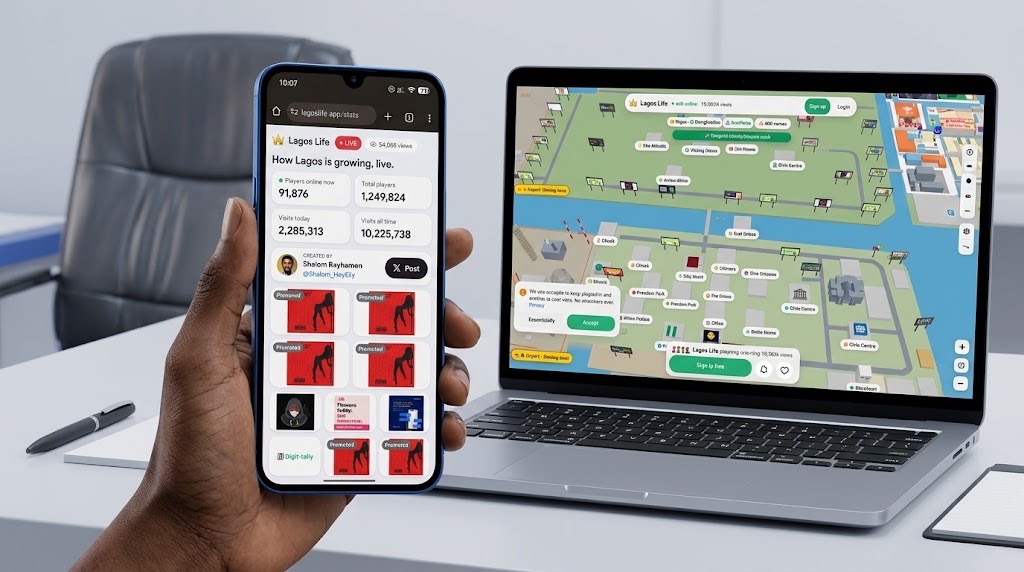
Lagos Life’s Virtual Billboards: Can a Nigerian Browser Game Build a Sustainable Business?
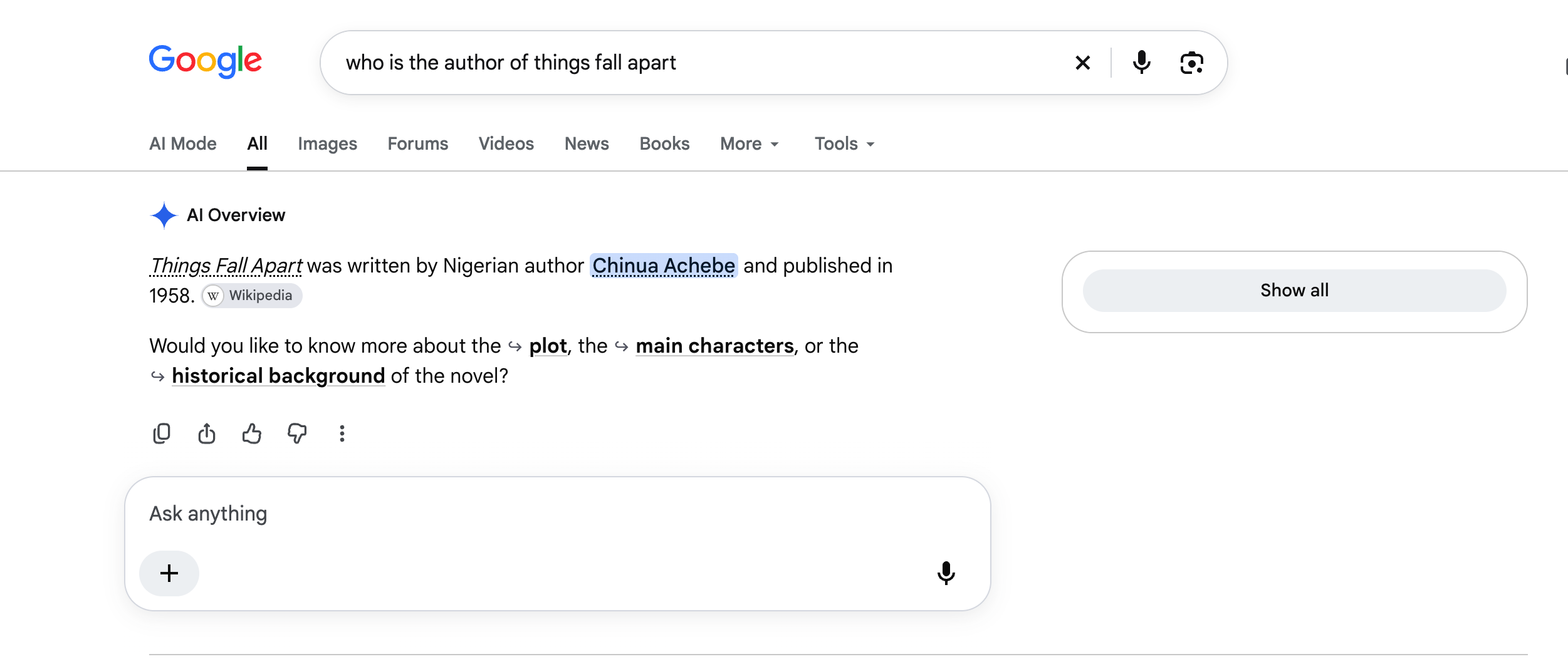
AI Search and Publishers: Who Controls Journalism's Content, Traffic and Revenue?

The New Machine Age: How AI Will Change Work and Where Humans Will Fit
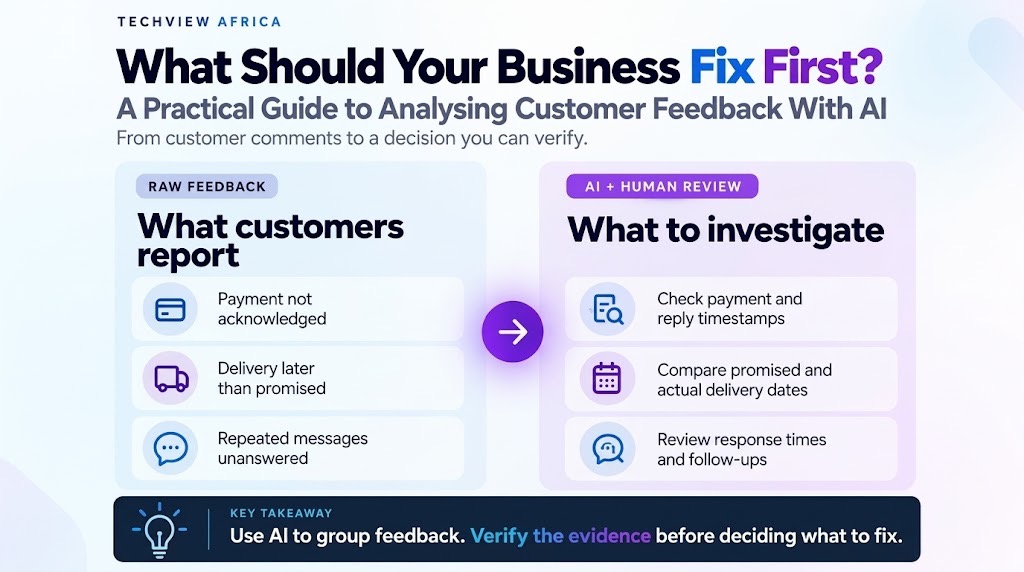
What Should Your Business Fix First? A Practical Guide to Analysing Customer Feedback With AI

We Checked 20 Humanoid Robot Deployments. Only Two Published Quantified Operating Results
Follow TechView Africa on WhatsApp
Get TechView Africa updates on WhatsApp. Follow our channel for practical technology news, product guides and digital trends from Nigeria and across Africa.
Leave a comment
Comments cannot be edited or deleted after posting. Please review your comment before submitting.
No comments yet. Start the conversation.