

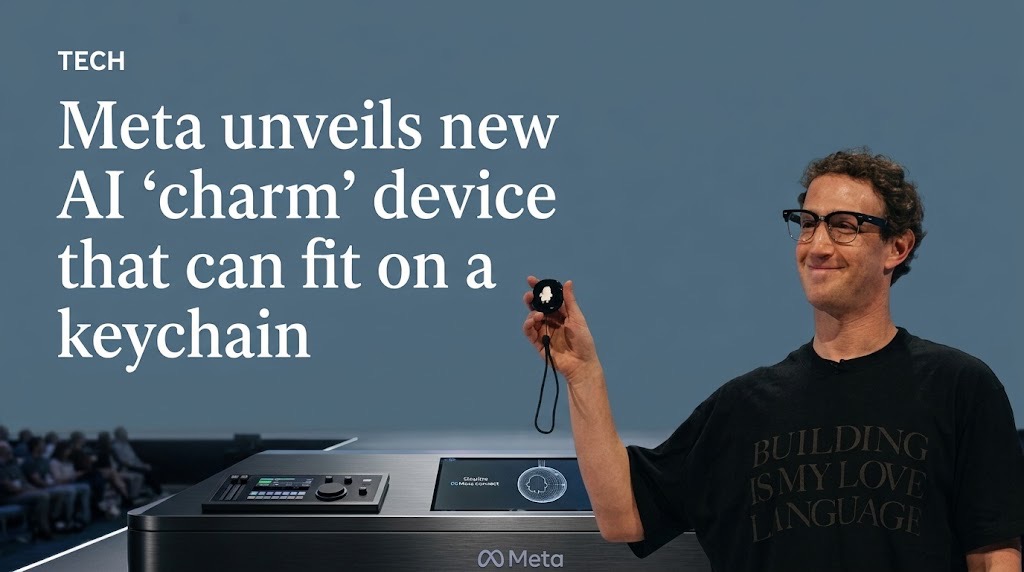
Meta Charm removes the smartphone as Muse’s connectivity intermediary, but it has not yet removed the smartphone as the more capable computing platform.
Beyond the smartphone: What the Meta Charm's independent 5G connection means for users
*Meta Charm’s clearest advantage is access: it gives Muse a dedicated screen, real-time voice interface and independent 5G connection without relying on a phone for connectivity. But Meta has not disclosed enough about battery life, pricing, cellular plans, apps or regional availability to call it a smartphone replacement. *
Meta has spent years trying to move computing away from the phone and onto the body. Its newest attempt takes another route: Meta Charm gives the company’s Muse AI agent a small screen and its own 5G connection.
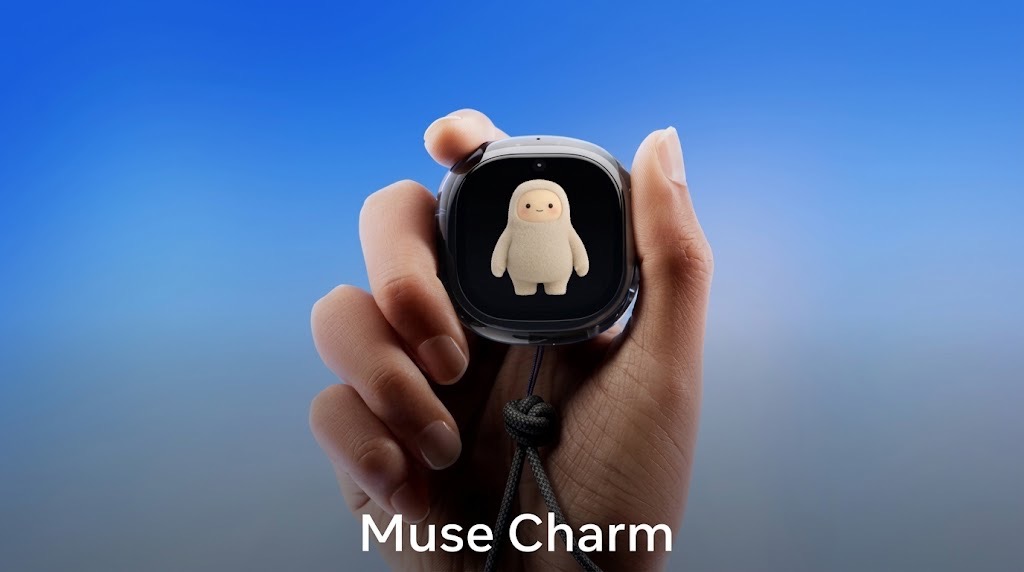
Unveiled at Meta Connect on 23 September, Charm is roughly the size of an AirPods case and has an approximately two-inch touchscreen. Reuters reports that Meta intends to ship it in December, although the company has not announced a price.
The important detail is not its size. It is the modem.
A built-in 5G connection means Charm does not need a smartphone to provide its internet connection. That gives Meta something closer to an independent AI terminal: a device designed primarily around maintaining access to an agent rather than around the conventional collection of apps that defines a smartphone. That still does not make it a smartphone replacement.
What Charm actually removes from the phone
Muse already runs on iOS, Android and the web. Meta says the agent can browse websites, complete forms, make purchases and work across connected services through Muse Secure VM, a persistent cloud-based virtual machine with its own browser. Users can also interact with Muse through WhatsApp.
Charm therefore does not introduce the intelligence itself. It changes the interface to it. Meta says Charm brings Muse and its real-time voice system into a pocket-sized dedicated device. Instead of unlocking a phone, finding an app and moving between interfaces, the proposition is that the agent is immediately available from hardware designed around that single relationship. That distinction matters because useful AI already lives on smartphones. TechView Africa has previously examined seven AI tools that are already useful on a smartphone. Charm faces a harder test: it must remove enough phone dependence to justify carrying another object.
5G solves one dependency but creates several others
Independent connectivity is potentially Charm’s biggest advantage, but Meta has left the details that determine its usefulness unanswered. As of 24 September, the company has not publicly specified Charm’s battery life, processor, storage capacity, SIM or eSIM arrangement, cellular partners or whether its 5G connection will require a separate mobile plan. Meta has also not confirmed whether Charm supports conventional calling and messaging, third-party apps, meaningful offline functions or an app store.
Those omissions matter more than the screen size. A reasonably priced device with inexpensive connectivity could work as a dedicated interface for people who use Muse heavily. A high hardware price combined with a Muse subscription and another cellular bill would face a much harder question: why not use the smartphone already providing Muse alongside thousands of other functions?
Meta says Muse itself is free for most uses but offers subscription plans for heavier use. How those subscriptions interact with Charm has not yet been detailed.
Meta’s glasses reveal the larger strategy
Charm makes more sense when viewed alongside Meta’s expanding glasses business. Meta is bringing Muse to its AI glasses for hands-free interaction and has introduced Ray-Ban Meta Audio, which removes the camera while retaining AI and open-ear audio. Meta says it expects more than 100 AI-glasses options across its brands by the end of 2026.
Removing the camera is particularly interesting. Wearable cameras create a problem that belongs not only to the person wearing them but also to everyone around them. TechView Africa has already examined what smart glasses mean for bystander privacy.
Taken together, Meta’s strategy looks less like one device immediately replacing the smartphone and more like placing the same AI agent across several physical surfaces: phones and computers for conventional screen-based work, glasses for ambient and hands-free interaction, and Charm for a dedicated pocket interface.
The first stage of a post-smartphone world may therefore be making the phone unnecessary for some interactions rather than replacing it outright.
Nigeria is not yet part of the confirmed rollout
African availability remains uncertain. Meta’s current Muse announcement says the agent is rolling out in the United States on iOS, Android and the web. The company has not announced Nigerian availability for Charm, Naira pricing or African carrier support.
Meta has separately named South Africa among markets expected to receive some of its AI glasses later this year, but that does not establish Charm availability in South Africa, Nigeria or elsewhere on the continent.
For Nigerian buyers, the sensible position is therefore to treat Charm as an announced product whose local compatibility, connectivity and price remain unknown.
Our Recommendation
Treat Meta Charm as a dedicated AI access device, not yet as evidence that the smartphone is being replaced.
Its independent 5G connection is the feature worth watching because it allows Muse to move beyond phone tethering. But the decisive questions are still battery life, connectivity cost, price, regional availability and what Charm can genuinely do without falling back on a smartphone.
If Meta answers those well, Charm could reduce how often people reach for their phones. If it does not, 5G may simply give consumers one more connected device to charge.
Sources & Verification
Meta — Ray-Ban Meta Audio and expanded AI glasses lineup
Reuters — Meta launches AI gadget Charm as post-smartphone hardware race heats up
Frequently asked questions
What is Meta Charm?
Meta Charm is a pocket-sized AI device built around Meta’s Muse personal AI agent. It has an approximately two-inch touchscreen and its own 5G connection, allowing it to access the internet without depending on a smartphone for connectivity.
Does Meta Charm replace a smartphone?
Not based on what Meta has confirmed so far. Charm can provide dedicated access to Muse, but Meta has not shown that it can replace core smartphone functions such as conventional calling, messaging, third-party apps, photography, navigation or a full app ecosystem.
Why does Meta Charm have 5G?
The built-in 5G connection gives Charm independent internet access. That means users should not need to tether it to a smartphone simply to reach Muse or online services. The exact SIM, eSIM and carrier arrangements have not yet been disclosed.
When will Meta Charm be available?
Meta says it plans to begin shipping Charm in December 2026. The company has not yet announced detailed country-by-country availability.
How much will Meta Charm cost?
Meta had not announced a retail price as of 24 September 2026. Subscription costs, mobile-data requirements and any separate connectivity charges also remain unclear.
Will Meta Charm be available in Nigeria or Africa?
Meta has not confirmed Nigerian or wider African availability for Charm. Buyers should not assume that a global launch automatically includes local 5G compatibility, carrier support, warranty coverage or access to Muse.
What is the difference between Meta Charm and Meta’s AI glasses?
Charm is a dedicated pocket device with a touchscreen and independent 5G connection. Meta’s AI glasses are designed primarily for hands-free interaction through wearable audio, cameras or voice, depending on the model. Both are part of Meta’s broader attempt to make Muse available beyond conventional smartphone and computer interfaces.
Best Affordable Smartwatches for Notifications and Basic Fitness Tracking
Budget Smartphones Could Become More Expensive, Here’s What Buyers Should Watch
Your Phone Storage Is Full but You Barely Have Any Files
Best Budget Smartphones for Students: What to Buy and What to Avoid
That “New” Smartphone May Be Refurbished—Here’s How to Find Out
Apple Has Finally Joined Huawei and Xiaomi’s Foldable Fight But Who Are These Ultra-Premium Phones Really For?
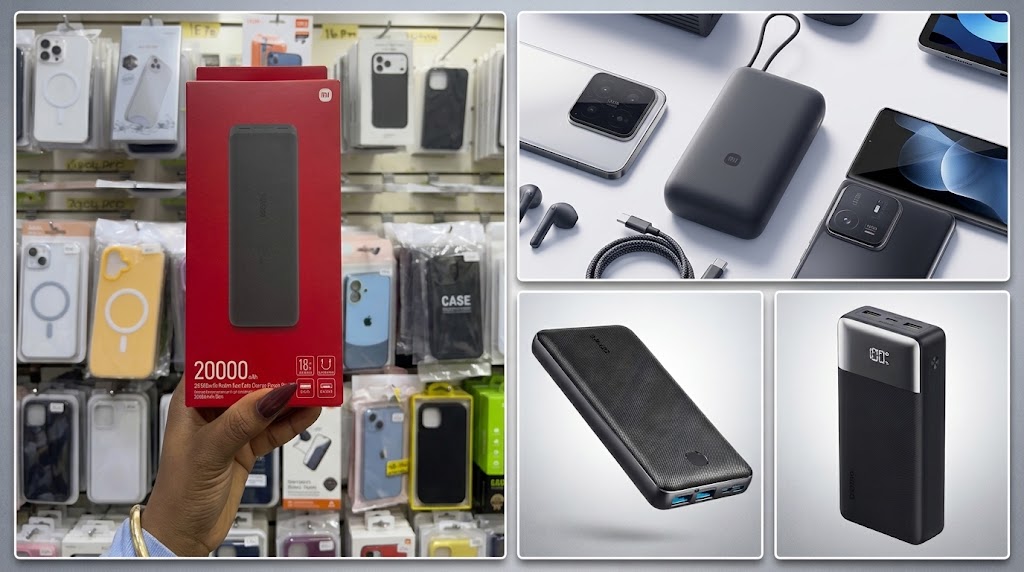
20,000mAh on the Box, Far Less at the USB Port: What African Buyers Should Know About Power Banks
Follow TechView Africa on WhatsApp
Get TechView Africa updates on WhatsApp. Follow our channel for practical technology news, product guides and digital trends from Nigeria and across Africa.
Leave a comment
Comments cannot be edited or deleted after posting. Please review your comment before submitting.
No comments yet. Start the conversation.